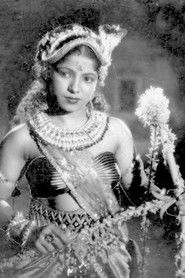
Chintamani

no information on the genres

0.0

no information on the tagline

Chintamani (Tamil: சிந்தாமணி) is a 1937 Tamil-language film directed by Y. V. Rao starring M. K. Thyagaraja Bhagavathar, Serugulathur Sama and Aswathamma.[2] It was the first Tamil film to run for a year in a single theatre. Chintamani was based on the legendary story of a Sanskrit poet and devotee of Lord Krishna named Bilwamangal (M. K. Thyragaraja Bhagavathar). Bilwamangal, a resident of Varanasi, was a Sanskrit scholar, who gets infatuated towards a courtesan called Chintamani (Aswathamma), a woman of ill-fame. As a result, he deserts his wife. However, Chintamani is an ardent devotee of Lord Krishna (Serugalathur Sama) and spends most of her time singing bhajans in praise of Lord Krishna. His attraction towards Chintamani eventually draws Bilwamangal closer towards Lord Krishna and transforms his life forever. Bilwangal, himself, becomes a devotee of Lord Krishna and pens a monumental Sanskrit work Sri Krishna Karnamritam.

Y. V. Rao

Director

No information

Producers

$0

Budget

$0

Revenue

12-03-1937

Release Date

IN

Country

-

Rating

-

Votes

-

Age Rating

215 min

Runtime

Released

Status

Tamil

Language

Popular actors
Media

View all media:

All Media

Нет информации по фоновой картинке

Медиа изображениеМедиа изображениеМедиа изображение
Director
Y. V. Rao

Y. V. Rao

Yaragudipati Varada Rao (30 May 1903 – 13 February 1973), also known as Y. V. Rao was an Indian film producer, director, thespian, screenwriter, editor and actor known for his works predominantly in Telugu, Kannada and Tamil cinema. One of the pioneers of Telugu cinema, Rao plunged into drama and did a few stage plays before moving to Kolhapur and Bombay to act in silent films. R. S. Prakash Rao, son of Raghupathi Venkaiah Naidu, cast him as lead actor in many silent films such as Garuda Garva Bhangam, Gajendra Moksham and Rose of Rajasthan. Rao moved into film direction and made silent films such as Pandava Nirvan (1930), Pandava Agnathavaas (1930) and Hari Maya (1932). In 1940, he directed the Telugu magnum opus Viswa Mohini. Rao and, R. S. Prakash have established a long-lasting precedent of producing films exclusively on religious themes; Nandanar, Gajendra Moksham and Matsyavatar, three of their Telugu productions, centred on religious figures, parables and morals.
Related Movies

There are no similar films yet.

You might like it

There are no recommended films yet.