Аватар персоны Aldo Tambellini

Aldo Tambellini

Director
Aldo Tambellini is an Italian American artist. He was the first to pioneer electronic intermedia, is a painter, a sculptor and a poet. Tambellini has over 1400 pieces of artwork and 1000 poems. He has worked in bronze. He works with coal, acrylic and oil paints for his paintings. His earliest intermedia works involved the painting of cellulose slides and the use of projectors and televisions. His electromedia performances were collaborative efforts, utilizing jazz, poetry and dance along with painted slides. Tambellini is also a film editor and creates visual poems.

20-04-1930

Birthday

Taurus

Zodiac Sign

-

Genres

0

Total Films

Also known as (male)

Syracuse, New York, USA

Place of Birth

Popular works


Creative career

actor

0 Works

producer

0 Works

director

29 Works

writer

0 Works

other

0 Works

Tambellini: Communications from Other Space

Tambellini: Communications from Other Space

M. Woods, a mentee of Aldo Tambellini, conducted the only interview with him in virtual reality. This interview has been expanded to include an immersive view of some of Tambellini’s work as well as a VR experience influenced by Tambellini. Included in this installation is a stand-alone VR headset where the participant can witness one of the final interviews with Tambellini as conducted and filmed by M. Woods.
0.0

Year:

2024

Black Video 3

Black Video 3

This work was recently discovered and will have its world premiere at AAFF. A free-wheeling, long-form trance as Tambellini distorts the imagery from a cathode ray television, recording the results. M. Woods accompanies the film with a live soundtrack performance.
0.0

Year:

2024

Black Matters

Black Matters

Black Matters is the first full solo exhibition of American artist, Aldo Tambellini, who is one of the pioneers of intermedia art of the 1960s and 1970s. Aldo Tambellini (born 1930 in Syracuse, NY, USA) lives and works in Cambridge. Together with Otto Piene, he founded the Black Gate Theatre in 1967, which was the first Electro-Media theatre of New York. Between 1976 and 1984, he was a fellow at the legendary Center for Advanced Visual Studies (CAVS) at the MIT in Cambridge.
0.0

Year:

2017

Cathodic Works

Cathodic Works

"Presenting, for the first time, a selection of the cathodic experimental works from the seminal Italo-American artist Aldo Tambellini; A selection of classic documents of one of the first pioneers of video art and audiovisual experimentation from New York east side scene of the '60s and '70s. Unreleased and classic works available for the first time." Works included: Black Video 1, Black Video 2, Black Spiral, Black Video Projections, 6673, Minus One, Clone, Interview at the Black Gate Theatre.
10.0

Year:

2012

Listen

Listen

After spending years working at MIT and having left the NYC art scene of the 1960s, Tambellini, like many artists, experienced a time of less prolific output. However, his association with his second wife, Anna Salamone, led to their collaboration on Listen, a politically militant anti-Bush attack on the illegal wars on Iraq and Afghanistan. Tambellini used the low-fidelity of digital media, interspersed with long frames of Black, to poetically respond to the atrocities once again committed by the US military industrial complex.
0.0

Year:

2007

Listen

Listen

Winner of the New England Film Festival, Best Experimental Film 2005; Winner of the Syracuse International Film Festival, Best Experimental 2006. As a survivor of WWII in Italy, when at the age of 13 ½, my neighborhood was bombed by the B-23 on the Day of the Epiphany, 44. Twenty-one of my neighbors were killed and many wounded. LISTEN to the collateral damage of war! The killing fields, the young soldiers wasted lives.. Why War? Asks a child.
0.0

Year:

2005

Clone

Clone

Clone creates a non-narrative sensory experience where TV images repeat, cloning themselves sometimes with mutations. The sound in Clone is the live interaction between my heavy breathing into a microphone, the modulation of my voice and audio feedback. Clone incorporated those elements of media usually edited out, considered not appropriate for viewing: German film leader, the rough breakup from the in-camera edits, and noise on the tape.
0.0

Year:

1976

6673

6673

It was difficult to find labs where I could make copies of my first tape; however, I found a place near LaGuardia Airport called Video Flight. They agreed to copy my tape. And while they were doing this I saw test patterns and other electronic images on the monitors that excited me. I spoke with the young engineers and decided to collaborate with them, returning to make a second tape of the electronic images. This manipulation of the test patterns became my second tape. The sound heard on the tape was from an oscilloscope, which I controlled, and through the sound I manipulated the images; later in the tape there is the sound of my own voice improvising as I reacted to the images. In 1973, Public Television in New York City, Channel 13, opened a new television lab and gave some artists access to it. The 55-minute black and white tape from 1966 described above was reprocessed in 1973 at Channel 13 using the Paik-Abe Video Synthesizer; thus the title 6673.
0.0

Year:

1973

The Day Before the Moon Landing

The Day Before the Moon Landing

The Day Before the Moon Landing (1969) is the first in a series of videos Tambellini made to capture broadcast television as it was experienced live. Unlike more involved works such as Black TV, the video simply records Tambellini channel surfing between the networks on July 19, 1969, the day before Apollo 11 landed.
0.0

Year:

1969

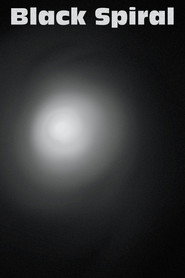
Black Spiral

Black Spiral

A high-contrast spiraling white light [which] shimmers, radiates, contracts, twists in orgasmic ecstasy, dwindles to nothing, and blazes forth again on the black video field.
0.0

Year:

1969

Black

Black

Produced by WGBH-TV in Boston, THE MEDIUM IS THE MEDIUM is one of the earliest and most prescient examples of the collaboration between public television and the emerging field of video art in the U.S. WGBH commissioned artists – Allan Kaprow, Nam June Paik, Otto Piene, James Seawright, Thomas Tadlock, and Aldo Tambellini – to create original works for broadcast television. Their works explored the parameters of the new medium, from image processing and interactivity to video dance and sculpture.
10.0

Year:

1969

Minus 1

Minus 1

This videotape was originally made in the television studio in Rochester, NY on a 2-inch Quad broadcast tape in 1969 with a grant from the New York State Council of the Arts as part of a program series which was produced and aired by New York State Educational Television. I created a live event in the television studio using an urban classroom of children and my films and videos. The sound was the children’s spontaneous songs mixed with the repeated countdown of a rocket launching; the conversation between the astronauts and Mission Control and U.S. troops engaged in battle in the Vietnam War. This tape is shown as a non-scripted improvisation. The studio environment and the children were bombarded by media.
0.0

Year:

1969

Black Gate Cologne (A Light Play)

Black Gate Cologne (A Light Play)

Often cited as the first television program made by artists, "Black Gate Cologne" is a live event involving films, light objects and the participation of the studio audience, comprised of footage from two consecutive 45-minute broadcasts with different audiences filmed at the WDR "Electronic Studio' in Cologne, Germany.
0.0

Year:

1968

The Medium Is the Medium

The Medium Is the Medium

Produced by WGBH-TV in Boston, the Medium Is the Medium is one of the earliest and most prescient examples of the collaboration between public television and the emerging field of video art in the U.S. WGBH commissioned artists — Allan Kaprow, Nam June Paik, Otto Piene, James Seawright, Thomas Tadlock and Aldo Tambellini — to create original works for broadcast television. Their works explored the parameters of the new medium, from image processing and interactivity to video dance and sculpture.
0.0

Year:

1968

Moonblack

Moonblack

This handmade ‘sensory experience’ by American film artist Tambellini is created without the use of a camera.
0.0

Year:

1968

Black TV

Black TV

Black TV is the title of Tambellini’s best-known videographic film, which is part of a large intermedia project about American television. Compiled from filmed television news programs and personal experimental videotapes, Black TV has been seen in many versions during the four-year period in which Tambellini constantly re-edited it (1964-68).
5.4

Year:

1968

Black Trip 2

Black Trip 2

“An internal probing of the violence and mystery of the American psyche seen through the eye of a black man and the Russian revolution.”– A.T.
0.0

Year:

1967

Black '67

Black '67

Beginning in 1965 with Black Is, Tambellini launched a series of politically charged experimental films that explore the expressive possibilities of black as a dominant color and idea. For the most part Tambellini’s seven “black films” are made without the use of a camera but rather by carefully manipulating the film itself by scorching, scratching, painting and treating the film stock as a type of sculptural and painterly medium.
0.0

Year:

1967

Black Plus X

Black Plus X

Tambellini here focuses on contemporary life in a black community. The extra, the “X” of Black Plus X, is a filmic device by which a black person is instantaneously turned white by the mere projection of the negative image. The time is summer, and the place is an oceanside amusement park where black children are playing in the surf and enjoying the rides, quite oblivious to Tambellini’s tongue-in-cheek “solution” to the race problem.
0.0

Year:

1966

Sunblack

Sunblack

The Black Film Series, a sequence of seven films made between 1965-69, is a primitive, sensory exploration of the medium, which ranges from total abstraction to the assassination of Bobby Kennedy, the Vietnam War, and black teenagers in Coney Island.
0.0

Year:

1966

Black Video 1

Black Video 1

7-inch reel, 1/2-inch videotape.
0.0

Year:

1966

Blackout

Blackout

Beginning in 1965 with Black Is, Tambellini launched a series of politically charged experimental films that explore the expressive possibilities of black as a dominant color and idea. For the most part Tambellini’s seven “black films” are made without the use of a camera but rather by carefully manipulating the film itself by scorching, scratching, painting and treating the film stock as a type of sculptural and painterly medium.
7.0

Year:

1966

Black Video 1 Projections

Black Video 1 Projections

Video by Aldo Tambellini.
0.0

Year:

1966

Black Video 2

Black Video 2

A study of light and real-time transmission.
0.0

Year:

1966

Black Trip

Black Trip

Through the uses of kinescope, video, multimedia, and direct painting on film, an impression is gained of the frantic action of protoplasm under a microscope where an imaginative viewer may see the genesis of it all. – Grove Press Film Catalog
0.0

Year:

1965

Black Is

Black Is

To the sound of a heartbeat and made entirely without the use of a camera, this film projects abstract forms and illuminations on a night-black background and suggests as Tambellini says, “seed black, seed black, sperm black, sperm black.”
0.0

Year:

1965

Blackout

Blackout

This film, like an action painting by Franz Kline, is a rising crescendo of abstract images. Rapid cuts of white forms on a black background supplemented by an equally abstract soundtrack give the impression of a bombardment in celestial space or on a battlefield where cannons fire on an unseen enemy in the night.
0.0

Year:

1965

Black Out

Black Out

Tambellini’s symbolic exploration directly on film reaches its chaotic heights as the painted circle and his iconic spiral intermingle with lattices, light leaks, and concentric circle patterns. Black Out is notable for its soundtrack, calling upon the violence of the political now inside of a cosmic hereafter.
0.0

Year:

1965

The Screw

The Screw

Video documentation of Tambellini’s 1963 performance art piece, The Screw, a biting satire aimed at the Museum of Modern Art and the Whitney Museum who agreed to accept a new sculpture created by Tambellini in 1963. It’s a perfect example of Tambellini’s wit and contempt for systems of power and capital. In true Aldo fashion, he assembled a group of local teenagers who wanted to learn how to perform as a barber shop quartet. He wrote a song for them to perform, split the commission, and created a public spectacle presenting both museums with The Screw—a literal “screw you” to the nihilistic institutions Tambellini called out for violating the ethics of artistic citizenship through their promotion of commercialized, mainstream, docile, and apolitical art work. Tambellini’s performance incorporates the poetic, the spectacle, the musical, the satirical, and the sculptural.
0.0

Year:

1963