

Alfredo Manzi
-
Birthday
-
Zodiac Sign
-
Genres
0
Total Films
Also known as (female)
Place of Birth
-
Birthday
-
Zodiac Sign
-
Genres
0
Total Films
-
Also Known As (female)
-
Place of Birth
-
Birthday
-
Zodiac Sign
-
Genres
0
Total Films
Also known as (female)
Place of Birth
-
Birthday
-
Zodiac Sign
-
Genres
0
Total Films
-
Also Known As (female)
-
Place of Birth
actor
0 Works
producer
0 Works
director
12 Works
writer
1 Works
other
11 Works

Pagliacci
Pagliacci, is a 1948 Italian film based on Ruggero Leoncavallo's opera Pagliacci, directed by Mario Costa. The film stars Tito Gobbi and Gina Lollobrigida. It recounts the tragedy of Canio, the lead clown (or pagliaccio in Italian) in a commedia dell'arte troupe, his wife Nedda, and her lover, Silvio. When Nedda spurns the advances of Tonio, another player in the troupe, he tells Canio about Nedda's betrayal. In a jealous rage Canio murders both Nedda and Silvio. The only actor in the cast who also sang his role was the celebrated Italian baritone, Tito Gobbi, but the film is largely very faithful to its source material, presenting the opera nearly complete.Year:
1948

Down with Misery!
The two drivers Giovanni and Gaetano are friends. Gaetano, bold and ruthless, thrives in the black market, while Giovanni, who is a naive and fundamentally honest worker from the North of Italy, cannot get any profit and his wife, an energetic and talkative Roman woman, can't help blaming him for his poor business skills. Returning from a trip to Naples, he brings home a little hungry orphan, Nello. At first Giovanni's wife doesn't want the boy, but then she begins to like him. The little boy does whatever he can to help the family. Nello's father, who everybody thought to have died during the war, finds his little son and, being a rich business man, he employs the good and generous Giovanni. Meanwhile the former friend Gaetano is caught by the police and convicted for his illegal trades.Year:
1945
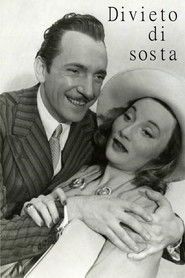
Divieto di sosta
A wealthy widow becomes infatuated with an adventurer posing as a poet and, forgetting her responsibilities as a mother and her no longer young age, falls prey to a love frenzy in her family that puts her at odds with her daughter, who has just left boarding school, and her own brother, who is all about scientific research. The girl, who has learned of the alleged poet's less-than-honest intentions, tries every means to drive him away and restore her mother's sentimental balance. For this she pretends to be in love with him who, attracted by her youth and rich dowry, proposes that she elope.Year:
1941

Il ponte di vetro
Year:
1940
Il socio invisibile
Year:
1939
Marcella
Year:
1937

La Ferita
Raymonde (Bertini) has had a passionate affair with Giacomo (Giorgio Bonaiti) and has a son with him. Life has taken a different turn, however, and Giacomo has married Elena (Mary Fleuron).Year:
1923
La donna nuda
Year:
1922

Mariute
The actress Francesca Bertini, as every diva worthy of her name, always arrives on the set extremely late. One day, in the studio, she happened to hear a colleague actor who, back from the front, tells about the brutalities suffered by the civilians in the occupied territories. At night, still troubled by that story, Bertini falls asleep and dreams: in her dream she plays the role of Mariute, a young Friulian countrywoman, mother of three kids waiting for her husband homecoming from the frontline. One day, while she is going to the well for water, she is assaulted and molested by three enemy soldiers. Her father-in-law will avenge her. In the meantime Bertini, waking up with a start, will arrive to work on time and she will end the film inviting the public to put their savings into the war bonds.Year:
1918
Malìa
Year:
1917

The Lady of the Camellias
La Signora delle Camelie chronicles the tragic love story of courtesan Marguerite Gautier and provincial bourgeois Armand Duval. Armand’s father disapproves of the relationship and convinces Marguerite to leave Armand, making him believe that she has left him for another man.Year:
1915

Assunta Spina
Assunta and Michele are in love, but others come between them and jealousy arises. Assunta Spina stands out as an early landmark of naturalistic acting and a blueprint for the Italian Neorealist films to come.Year:
1915