André Sauvage
DirectorWriterProducerActor
André Sauvage (born in Bordeaux on July 12, 1891, died on November 16, 1975 in Boutigny-Prouais), was a French filmmaker, director, writer and painter of the interwar period. Close to Max Jacob, Robert Desnos, André Gide, Jean Cocteau, Man Ray, the Prévert brothers and Jean Renoir, he was then known for works such as La Traversée du Grépon, Portrait of Greece and Studies on Paris, but also for his literary writings and his paintings.
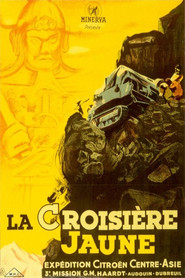
Passionate traveler, he designs his films according to each landscape or population encountered by adding an ethnographic dimension. Sauvage, Marc Allégret's film teacher, cast Michel Simon in one of his first roles. In its wake, other personalities start such as the young critics Jean George Auriol and Jacques Brunius. André Sauvage remains unknown to the general public today, and forgotten by most moviegoers, because of a tragic affair: that of the film of the Center Asia expedition commissioned by André Citroën in 1931, La Croisière Jaune. A real turning point in the history of this artist, La Croisière Jaune — with which André Citroën had been displeased to the point of asking for a new editing by Léon Poirier — marked the end of the film career of Sauvage, who ended his life as a farmer.
All his films are deposited and restored in the French Film Archives of the National Center for Cinema and the Moving Image. The Mediatheque of Orléans was enriched by the donation of the nephews and nieces of André Sauvage in 2012. This donation includes a rich correspondence, unpublished manuscripts, photographic shots and books often illustrated by Max Jacob with shipments. The Association of Friends of Max Jacob supported this donation. Patricia Sustrac drew up the scientific inventory. The Jacob-Sauvage correspondence is to be published, the manuscript of Max Jacob's conference in Brest and Morlaix (1938) kept by André Sauvage will be published in Les Cahiers Max Jacob 21/22 in October 2021.
12-07-1891
Birthday
Cancer
Zodiac Sign
-
Genres
2
Total Films
Also known as (male)
Bordeaux, Gironde, Aquitaine, France
Place of Birth
12-07-1891
Birthday
Cancer
Zodiac Sign
-
Genres
2
Total Films
-
Also Known As (male)
Bordeaux, Gironde, Aquitaine, France
Place of Birth