Аватар персоны Aurel Miheleș

Aurel Miheleș

DirectorWriter
Ján Roháč was a Slovak film and television director, recognized for his significant contributions to Czechoslovak entertainment. After graduating from the Academy of Performing Arts in Prague, he began his career in the early 1950s, initially working in theater. Roháč was instrumental in shaping modern Czechoslovak television and theater, directing numerous variety shows, musical programs, and theatrical performances. His notable works include the television series Hovory H with Miroslav Horníček and the film Kdyby tisíc klarinetů (1965), which he co-directed with Vladimír Svitáček. Roháč's innovative approach and creative vision left a lasting impact on the entertainment industry in Czechoslovakia.

06-07-1925

Birthday

Cancer

Zodiac Sign

-

Genres

0

Total Films

Also known as (male)

Nitrianske Pravno, Czechoslovakia [now Slovakia)]

Place of Birth

Popular works


Creative career

actor

0 Works

producer

0 Works

director

8 Works

writer

1 Works

other

1 Works

The Story of the Voyages

The Story of the Voyages

In this fantasy with dragons and flying machines, 10-year-old Marta is determined to find her brother who was kidnapped at Christmastime by a fake Saint Nick because the little boy is blessed with the ability to locate gold. A kindly, wise philosopher-type by the name of Orlando joins Marta in her search, and together they survive a gigantic sleeping dragon and imprisonment in a tower with no clear means of escape. They overcome that hurdle, but later on, Orlando succumbs to the evils of The Plague (an all-consuming woman!) and Marta continues on her search alone. Eventually, she does find her brother -- but that only introduces problems she had never considered.
6.2

Year:

1983

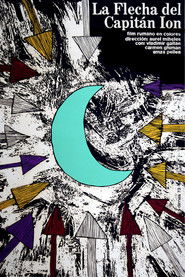
Captain's Ion Arrow

Captain's Ion Arrow

In 1462 the Ottoman Turks displeased with Wallachian Prince Vlad the Impaler plot to overthrow and replace him with puppet ruler Prince Radu the Handsome.
7.5

Year:

1973

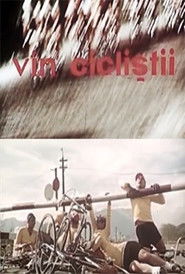
The Cyclists Are Coming

The Cyclists Are Coming

The humorous adventures of an all-male team of cyclists training for an upcoming important bike race.
6.4

Year:

1968

Telegrams

Telegrams

Geared more for the home crowd with a good knowledge of their own history, this Romanian political comedy takes place at the turn of the 20th century, when two opposing factions are going at each other tooth and nail to win an election. One candidate is a staunch if not deluded conservative and the other is a radical liberal. Anticipating modern election campaigns by a good half a century, the two candidates decide that the best way to win is to sling as much mud as possible. Lacking the Internet and fifteen-second TV spots, they do the best they can -- they send each other virulent telegrams denouncing each other's personal failings.
7.4

Year:

1960

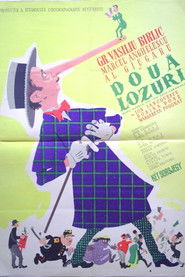
Two Lottery Tickets

Two Lottery Tickets

1957 film adaptation of Romanian playwright Ion Luca Caragiale's novella “Două loturi” (Two Lottery Tickets, 1901). The scenario was written by director Jean Georgescu, one of the most skilled Romanian filmmakers of the 1940s and 1950s, while the directing belongs to Aurel Miheleş and Gheorghe Naghi, at that time both recently graduated from the All-Union State Institute of Cinematography in Moscow. This is the second feature film in colour from Romania. Despite the great public success, the film was often criticized by reviewers, mostly for its unhandy directing from the two debutants. Miheleş and Naghi would however continue their collaboration and release another two Caragiale adaptations, of which “Telegrame” (Telegrams, 1959) was nominated for the Palme d'Or (Golden Palm) at the 1960 edition of the Cannes festival.
7.9

Year:

1959

Two Lottery Tickets

Two Lottery Tickets

1957 film adaptation of Romanian playwright Ion Luca Caragiale's novella “Două loturi” (Two Lottery Tickets, 1901). The scenario was written by director Jean Georgescu, one of the most skilled Romanian filmmakers of the 1940s and 1950s, while the directing belongs to Aurel Miheleş and Gheorghe Naghi, at that time both recently graduated from the All-Union State Institute of Cinematography in Moscow. This is the second feature film in colour from Romania. Despite the great public success, the film was often criticized by reviewers, mostly for its unhandy directing from the two debutants. Miheleş and Naghi would however continue their collaboration and release another two Caragiale adaptations, of which “Telegrame” (Telegrams, 1959) was nominated for the Palme d'Or (Golden Palm) at the 1960 edition of the Cannes festival.
7.9

Year:

1959

Carnival Stories

Carnival Stories

TV adaptation after I.L. Caragiale play.
7.0

Year:

1958