

Avijit Mukul Kishore
Director
-
Birthday
-
Zodiac Sign
-
Genres
0
Total Films
Also known as (female)
Place of Birth
-
Birthday
-
Zodiac Sign
-
Genres
0
Total Films
-
Also Known As (female)
-
Place of Birth
-
Birthday
-
Zodiac Sign
-
Genres
0
Total Films
Also known as (female)
Place of Birth
-
Birthday
-
Zodiac Sign
-
Genres
0
Total Films
-
Also Known As (female)
-
Place of Birth
actor
0 Works
producer
0 Works
director
13 Works
writer
0 Works
other
8 Works

LOVELY VILLA
Lovely Villa explores the relationship between architecture, everyday life, family, desire and the idea of ‘home’. Director Rohan Shivkumar grew up in the titular apartment block, located in Borivali —an affluent coastal suburb of Mumbai. The building was designed by Charles Correa to house different communities within one edifice, as an articulation of the ideal environment for the Indian middle classes. Rohan, whose parents lived in the colony for over 40 years, explores its architecture with the aid of found materials, including old photographs and drawings, as well as personal narratives both factual and semi-fictional.Year:
-

An Election Diary
An Election Diary is a revealing glimpse into the 2019 electoral campaign of the Bharatiya Janata Party (BJP) in the suburban constituency of Phulpur in Northern India. Blending street interviews, YouTube video clips and recordings of cadre meetings, the film explores BJP's multi-pronged efforts not just in social media outreach, but also in getting people to voting booths on election day. The persona of Narendra Modi, of the BJP, becomes the hook throughout the campaign, side-lining even the party's local candidate. Infrastructural issues plaguing the constituency are deflected with appeals to India's glowing international image and dissolved in a cult of personality. Avijit Mukul Kishore's film, in contrast, is resolutely local. With dispassionate curiosity, it documents the mechanics of a cog in what is called 'India's Greatest Election Machine'.Year:
2023

Nostalgia for the Future
‘Nostalgia for the Future’ is a film on Indian modernity, the making of the citizen and the architecture of the home. It looks at imaginations of homes across four examples of buildings made over the period of a century. These are Lukhshmi Vilas Palace in Baroda – the gigantic home built by a progressive monarch in the late 19th Century; Villa Shodhan in Ahmedabad – a private residence which represents the idea of domesticity within Nehruvian modernity, designed by Le Corbusier; Sabarmati Ashram in Ahmedabad, which epitomises the Gandhian aspirations of the nation-state; and public housing in post-independence Delhi, designed by the Government of India to house refugees from Pakistan and the bureaucrats of the newly independent nation.Year:
2016

Electric Shadows: Journeys in Image-making
Centred around a film festival of Indian films in China, the Film reflects on the dominant as well as alternative impressions of cultures – people, histories and landscapes – brought to us by cinema, playfully examining the idea of the cinematic image as an integral part of cultural propagation.Year:
2015
Electric Shadows: Journeys in Image-making
Centred around a film festival of Indian films in China, the Film reflects on the dominant as well as alternative impressions of cultures – people, histories and landscapes – brought to us by cinema, playfully examining the idea of the cinematic image as an integral part of cultural propagation.Year:
2015
Certified Universal
An impressionistic sketch of ‘the public’ as created by our cinema and its relationship with cinema itself.Year:
2009
Certified Universal
An impressionistic sketch of ‘the public’ as created by our cinema and its relationship with cinema itself.Year:
2009

Seven Islands and a Metro
This film is a tale of the cities of Bom Bahia / Bombay / Mumbai, through a tapestry of fiction, cinema verite, art objects, found footage, sound installation and literary texts.Year:
2006

John & Jane
A new form of observational documentary that borders on science-fiction, John & Jane follows the stories of six Call Agents that answer American 1-800 numbers at a Mumbai call center.Year:
2005
The Seedkeepers
The Film looks at the transformation of Dalit women’s lives through their involvement in an ecological movement for sustainable farming in Andhra Pradesh.Year:
2005

Snapshots from a Family Album
An intimate look at parents, family and relationships from the point of view of a filmmaker son. After graduating from film school, the director captured his parents on film over a period of five years. Quiet moments at home, random conversations, festival prayers; all the myriad events that comprise family life were lovingly and unflinchingly recorded. The film chronicles the challenges of having parents living and working in different cities – Delhi and Bombay – just as the filmmaker faces his own challenges, settling into his career as a cinematographer of documentaries and ‘arty’ films, as perceived by his family.Year:
2004
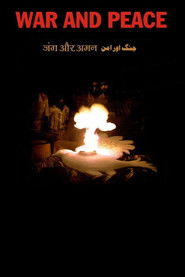
War and Peace
Documentary about the nuclear sabre-rattling that has been going on between India and Pakistan. Comprised mostly of interviews with average folks on the street, the movie superbly demonstrates the gulf between the people's will and the greed of those in power.Year:
2002

Kali Salwar
Sultana, a small town prostitute and her pimp Khudabaksh migrate to the metropolis, bringing with them their dreams and meagre belongings. Sultana goes about her bright and artful seductions but somehow misses her targets. Her business collapses. Desperately, Khudabaksh too tries his hand at many jobs but is unsuccessful. Sultana's loneliness and despair get objectified in her desire for a 'salwaar' that she needs to complete her black ensemble for the observance of mourning for Moharram.Year:
2002