

belit sağ
WriterDirector
-
Birthday
-
Zodiac Sign
-
Genres
0
Total Films
Also known as (female)
Place of Birth
-
Birthday
-
Zodiac Sign
-
Genres
0
Total Films
-
Also Known As (female)
-
Place of Birth
-
Birthday
-
Zodiac Sign
-
Genres
0
Total Films
Also known as (female)
Place of Birth
-
Birthday
-
Zodiac Sign
-
Genres
0
Total Films
-
Also Known As (female)
-
Place of Birth
actor
0 Works
producer
0 Works
director
16 Works
writer
1 Works
other
0 Works
grain
grain contemplates the politics, poetics, and ethics of the image: how does one use images of others, and what does one do with them in the case they can not consent to this usage, because they are no longer alive? What are the consequences of the choices taken with these images? How such imagery use creates a culture of what is acceptable.Year:
-
grain
grain contemplates the politics, poetics, and ethics of the image: how does one use images of others, and what does one do with them in the case they can not consent to this usage, because they are no longer alive? What are the consequences of the choices taken with these images? How such imagery use creates a culture of what is acceptable.Year:
-
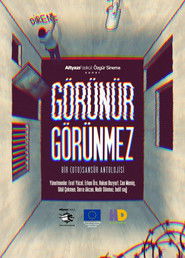
Seen Unseen: An Anthology of (Auto)Censorship
Desktop images, letters, text messages, interviews and CCTV footage, this aesthetically eclectic, politically daring collection of films by Altyazı Fasikül: Free Cinema stresses the need for criticality in times of censorship and repression.Year:
2024

what remains
what remains is constructed from images shot and gathered during 2015 and 2016 in Cizre, a primarily Kurdish town in Turkey on the Syrian border, as well as found footage from all over Turkey from the same period. A focus of the work is the artist’s footage of collective Kurdish mourning practices, and looking at how images of the dead are used in these practices. Sağ approaches her subject both philosophically and emotionally, and is driven to find a way of making work that is theoretically rigorous and morally and ethically compassionate.Year:
2018
cut-out
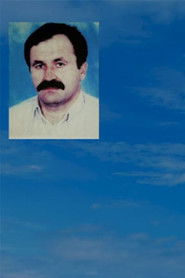
The video takes a closer look into the police file photo of the victims of National Socialist Underground (NSU) in Germany. NSU was a Neo-nazi group, that killed 10 people over the course of 8 years. Nine of them have a migrant background, mostly Turkish, Kurdish. These racially motivated murders not only show the strong Neo-nazi networks existing in Germany but also the structural racism in police force, secret service and the media. What does a police file photo of the victims have to share with the viewer?Year:
2018
disruption
In the span of a short walk, images and information flow ceaselessly into view as our increasingly digitized lives absorb disparate movie and media moments, from the warmly humorous to the coldly clinical.Year:
2017
(Against) Randomness
This short essay was made for a People’s Tribunal about the attacks of the National Socialist Underground—a neo-nazi group. Its narrative creates solidarity among the victims, their families, and grassroots groups around the tribunal. The video talks to the people who have been victimized and attacked, about that experience.Year:
2017
If You Say It Forty Times...
Commissioned for the group exhibition Post-Peace curated by Katia Krupennikova, features the artist reading testimony from Turkish officials and public figures in which they claim they have “forgotten” key details regarding incidents of government-enacted violence. The exhibition was censored in Istanbul by Akbank Sanat in 2016, and opened in Württembergischer Kunstverein in Stuttgart on 25th February 2017.Year:
2017

Ayhan ve ben
Explicitly discussing its own production and censorship at the hands of Turkish officials, belit sag’s Ayhan and me is an incisive, Farocki-like examination of the power of images, the roles and responsibilities of representation and sanctioned history-making, and the charged relationship between art and state control.Year:
2016
grain
grain contemplates the politics, poetics, and ethics of the image: how does one use images of others, and what does one do with them in the case they can not consent to this usage, because they are no longer alive? What are the consequences of the choices taken with these images? How such imagery use creates a culture of what is acceptable. My research and works have been insisting on finding a language to talk about these violences. How can we talk about these images without perpetuating further violence, and at the same time, by insistently talking about them?Year:
2016

my camera seems to recognize people
A video poem in three parts, on recording and being exposed to the images of death and destruction.Year:
2015
Sept. - Oct. 2015, Cizre
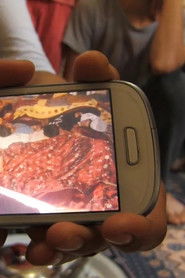
War in Cizre, on the Turkish-Syrian border. Life goes on. The inhabitants film and photograph the consequences of the attacks with their phones. Artist belit sag gives women and children a voice with this documentary shown in their familiar environment, the home.Year:
2015

and the image gazes back
The video piece questions the role of images in current and historical events. Even as these events, and their representations, resonate in our own memories from various media, the video is navigating the blurred lines between fiction and reality, the visible and the unseen, audible and mute, imaginable and unimaginable.Year:
2014
lost
An investigation about a murder through the pages of a newspaper.Year:
2014
aaaaa!
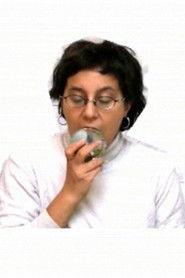
An enigmatic-comic interaction between the artist's body and images from Psycho.Year:
2013
27-28-29 June 2004 NATO Istanbul
Demonstrations during the NATO summit in 2004, Istanbul, TurkeyYear:
2004