

Burt Barr
Director
-
Birthday
-
Zodiac Sign
-
Genres
0
Total Films
Also known as (female)
Place of Birth
-
Birthday
-
Zodiac Sign
-
Genres
0
Total Films
-
Also Known As (female)
-
Place of Birth
-
Birthday
-
Zodiac Sign
-
Genres
0
Total Films
Also known as (female)
Place of Birth
-
Birthday
-
Zodiac Sign
-
Genres
0
Total Films
-
Also Known As (female)
-
Place of Birth
actor
0 Works
producer
0 Works
director
7 Works
writer
1 Works
other
1 Works
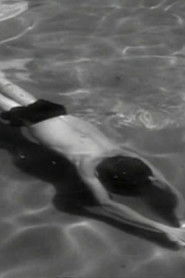
The Pool
BURT BARR The Pool, 1993Year:
1993

O Panama
O Panama features a man confined to his apartment on a winter day as he suffers through an illness. Built on the polarity between hot and cold, the tedious reality of the man's sickness and the vivid hallucinatory visions of his delirium, O Panama conveys the workings of the subconscious.Year:
1985
O Panama
O Panama features a man confined to his apartment on a winter day as he suffers through an illness. Built on the polarity between hot and cold, the tedious reality of the man's sickness and the vivid hallucinatory visions of his delirium, O Panama conveys the workings of the subconscious.Year:
1985
Trisha and Carmen
Shot at the Teatro di San Carlo in Naples, Italy, Trisha and Carmen is a compelling narrative/document on the 1987 production of Carmen, which was directed by Lina Wertmuller and choreographed by Trisha Brown. Barr cuts between the rigorous discipline of rehearsal, Brown's meticulous preparations in her dressing room, and the actual performance. Through the course of the tape, Barr traces Brown's metamorphosis, paralleling her physical and mental transformation with the transformation from rehearsal to performance. Anchoring the work on one central and riveting image — Carmen's measured and sensual walk toward her lover — Barr returns to it throughout, zooming closer with each successive sequence until it culminates in the performance itself. By focusing on this one memorable and essential sequence, Barr articulates and magnifies the taut expressiveness of Brown's choreography.Year:
-
The Elevator
The Elevator is a tale of urban anxiety in which Barr alternates the stories of two women (Trisha Brown and Wendy Perron), each confined and isolated in an elevator, literal and metaphoric prisoners of their everyday lives. Barr writes of the work's "obsessive [nature], both in its unbroken verbal narrative — and also in its singular camera action — that of the zoom." His use of a succinct formal device — the continual opening and closing of an elevator door — propels the narrative structure. The elevator door opens to reveal one woman speaking directly to the camera; her narrative is then interrupted by the closing of the door as the camera zooms out. The women's deceptively ordinary vignettes are transformed into eerie, self-contained fictions via Barr's use of fragmentation. By cutting from one woman to the other, Barr merges their individual monologues into a seamless narrative flow.Year:
-
The Woman Next Door
A narrative "steeped in alienation," The Woman Next Door is the story of a reclusive male tenant in a New York City apartment, whose life is disrupted by the arrival of a new next-door neighbor. Spurred initially by simple curiosity, the tenant begins to anticipate and follow the woman's movements, eventually assuming the role of voyeur. Seen entirely from the tenant's point-of-view, this is a bleak narrative of anonymity, isolation, and expectation. Barr writes: "The man's life is so restrictive, that every sound she makes, every glimpse of her becomes a monumental event." With its echoes of Alfred Hitchcock and Michael Powell, its limited language and strict economy of means, this work relies on the visual structure and subtle ambient soundtrack to convey the narrative in a spare and minimal style.Year:
-
The Woman Next Door
A narrative "steeped in alienation," The Woman Next Door is the story of a reclusive male tenant in a New York City apartment, whose life is disrupted by the arrival of a new next-door neighbor. Spurred initially by simple curiosity, the tenant begins to anticipate and follow the woman's movements, eventually assuming the role of voyeur. Seen entirely from the tenant's point-of-view, this is a bleak narrative of anonymity, isolation, and expectation. Barr writes: "The man's life is so restrictive, that every sound she makes, every glimpse of her becomes a monumental event." With its echoes of Alfred Hitchcock and Michael Powell, its limited language and strict economy of means, this work relies on the visual structure and subtle ambient soundtrack to convey the narrative in a spare and minimal style.Year:
-