

Cora Szielasko
Producer
-
Birthday
-
Zodiac Sign
-
Genres
0
Total Films
Also known as (female)
Place of Birth
-
Birthday
-
Zodiac Sign
-
Genres
0
Total Films
Cora Szielasko-Schulz
Also Known As (female)
-
Place of Birth
-
Birthday
-
Zodiac Sign
-
Genres
0
Total Films
Also known as (female)
Place of Birth
-
Birthday
-
Zodiac Sign
-
Genres
0
Total Films
Cora Szielasko-Schulz
Also Known As (female)
-
Place of Birth
actor
0 Works
producer
13 Works
director
13 Works
writer
0 Works
other
0 Works
Thunfisch - Der bedrohte Jäger
Tuna are among the top predators in the oceans. But the hunter is also the hunted: many species are overfished. Can we use the riches of the oceans without destroying them?Year:
2024

The Mystery of the Trojan Horse
The story of the Trojan Horse is probably one of the most famous stories ever told: after ten years of bloody war, the Greek coalition decides to lift the siege and depart, but not before leaving at the gates a huge wooden horse, which the Trojans confidently lead into the city. A few hours later, the once invincible Troy goes up in flames. What exactly happened? Is this myth true or false?Year:
2021

Brot und Spiele – Wagenrennen im alten Rom
Year:
2019

Surveyors of the Earth
If, at first, human being used stars to find its bearings, mankind can nowadays count on science to measure the Earth at a millimetric scale. Because land surveying of our planet is still in full swing. Satellites, cameras or drones : technology progress allows the scientists to explore it all. They can measure oceans, volcanoes, or even the atmosphere. But scientists are walking a tightrope, torned between their desire to gather more and more informations, and a population concerned about personal data's protection. This documentary shows a glimpse of actual scientifical research, and interrogate numerous scientists about the interest of land surveying in their specific field of research.Year:
2018

Hannibal: A March on Rome
Even today it is considered one of the greatest military feats ever. In 218 BC, a Carthaginian army of ninety thousand men and three dozen elephants set out to cross the Alps to challenge the might of Rome. The exact route chosen by Hannibal, its charismatic commander, has been a matter of dispute ever since. Now, researchers believe they might be able to track his route. It is one of the mysteries of history, which way the Carthaginian commander Hannibal took in 218 BC to cross the Alps.Year:
2018
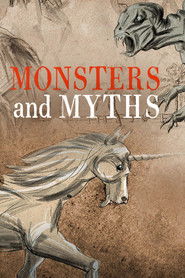
Monsters and Myths
Monsters have always been part of our nightmares and fairy tales. But where do they actually come from? How much of it is truth, how much is myth? Going to great lengths in this documentary, the filmmakers join scientists to explore a number of the best-known sagas and legends in the world. The search for the origins of what is likely to be the oldest legendary creature, the dragon, leads to snake pits, archaeological dig sites, gold mines and the inside of an Icelandic volcano. They also travel to Texas, hunting for traces of the “chupacabra,” literally the “goat-sucker,” a modern mythical creature with vampire-like teeth that was first spotted in Central America, and accompany palaeontologists to Kazakhstan in search of the remains of what might be the origin of the alluring unicorn, whose horn the Vikings used for trading.Year:
2018

Who Flew First: Challenging the Wright Brothers
Officially, the Wright Brothers flew first in 1903. But the Australian aviation expert John Brown argues that German born Gustave Whitehead flew in Connecticut in 1901. To display the Wright flyer, the Smithsonian Museum agreed that it will never claim that anyone flew before the Wrights. History may not be as certain as we thought.Year:
2016
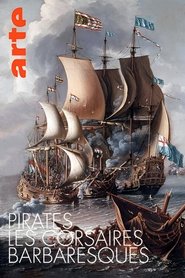
The Barbary Corsairs
In the 18th century, the Barbary threat became serious. In July 1785, two American boats were returned to Algiers; In the winter of 1793, eleven American ships, their crews in chains, were in the hands of the dey of Algiers. To ensure the freedom of movement of its commercial fleet, the United States was obliged to conclude treaties with the main Barbary states, paying considerable sums of money as a guarantee of non-aggression. With Morocco, treaty of 1786, 30,000 dollars; Tripoli, November 4, 1796, $56,000; Tunis, August 1797, 107,000 dollars. But the most expensive and the most humiliating was with the dey of Algiers, on September 5, 1795, “treaty of peace and friendship” which cost nearly a million dollars (including 525,000 in ransom for freed American slaves). , with an obligation to pay 20,000 dollars upon the arrival of each new consul and 17,000 dollars in annual gifts to senior Algerian officials...Year:
2015
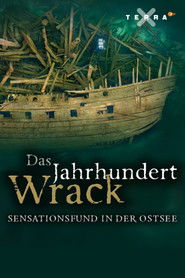
Vrak i Östersjön: förlorade för världen
Year:
2015
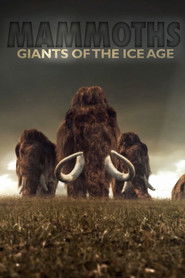
Mammoths: Giants of the Ice Age
Follow one mammoth expert as he traces the legendary giants from Africa to the Yukon.Year:
2014

Siegeszug der Düsenjets
Year:
2012

Ägypten: Sehnsucht nach Unsterblichkeit
Year:
2011
Ägypten: Geburt einer Großmacht
Year:
2011