


David Gladwell
DirectorWriter
-
Birthday
-
Zodiac Sign
-
Genres
0
Total Films
Also known as (female)
Place of Birth
-
Birthday
-
Zodiac Sign
-
Genres
0
Total Films
-
Also Known As (female)
-
Place of Birth
-
Birthday
-
Zodiac Sign
-
Genres
0
Total Films
Also known as (female)
Place of Birth
-
Birthday
-
Zodiac Sign
-
Genres
0
Total Films
-
Also Known As (female)
-
Place of Birth
actor
0 Works
producer
0 Works
director
34 Works
writer
3 Works
other
21 Works
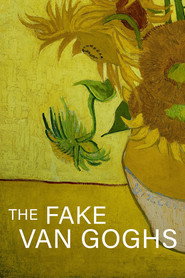
The Fake Van Goghs
Was the most expensive painting ever sold at auction, a fake? This documentary explores the authenticity of the "Sunflowers" painting by Vincent Van Gogh, bought in the late 1980s for a then record sum by a Japanese insurance company.Year:
1997
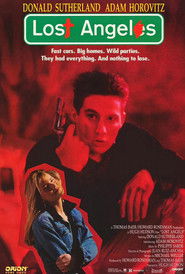
Lost Angels
Rich L.A. party brat Tim spins into a cycle of despair after his parents divorce, and trying to fill the void with drugs and trouble only buys him a ticket to an asylum. But with the help of a psychiatrist who has taken an interest in him, will Tim try to pull himself out of the muck of teenage rebellion and ennui?Year:
1989
Earthstars
A young girl's dreams at Christmas time come tales of faraway lands and strange creatures, of three weary travelers and the bright light which they follow. The stories carry her away into the sparkling night on a magical journey that not only reveals the hidden star shapes of nature but also leads her to the mysterious Star of Bethlehem. Directed by David Gladwell Requiem for a Village (1975) and Memoirs of a Survivor (1981) and originally broadcast on Sunday 29th December, 1985 at 17:15Year:
1985
Earthstars
A young girl's dreams at Christmas time come tales of faraway lands and strange creatures, of three weary travelers and the bright light which they follow. The stories carry her away into the sparkling night on a magical journey that not only reveals the hidden star shapes of nature but also leads her to the mysterious Star of Bethlehem. Directed by David Gladwell Requiem for a Village (1975) and Memoirs of a Survivor (1981) and originally broadcast on Sunday 29th December, 1985 at 17:15Year:
1985

Nineteen Nineteen
Two former patients of Sigmund Freud meet again and discuss their psychiatric treatment 65 years earlier.Year:
1985
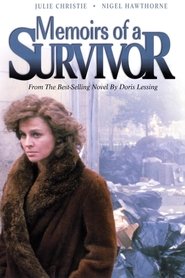
Memoirs of a Survivor
Based on the acclaimed novel by Doris Lessing, this dystopian science fiction tale concerns a woman struggling to make her way in a post-apocalyptic society. D (Julie Christie) is living in a city that's at the point of collapse following a catastrophic nuclear war; lawlessness and violence rule the day, and gangs of brutal youth roam the streets. With the help of her teenage companion Emily (Leonie Mellinger), D tries to make her way, and in order to cope, she often escapes into a fantasy world in which she lives in genteel Victorian surroundings in the 19th century.Year:
1981
Memoirs of a Survivor
Based on the acclaimed novel by Doris Lessing, this dystopian science fiction tale concerns a woman struggling to make her way in a post-apocalyptic society. D (Julie Christie) is living in a city that's at the point of collapse following a catastrophic nuclear war; lawlessness and violence rule the day, and gangs of brutal youth roam the streets. With the help of her teenage companion Emily (Leonie Mellinger), D tries to make her way, and in order to cope, she often escapes into a fantasy world in which she lives in genteel Victorian surroundings in the 19th century.Year:
1981
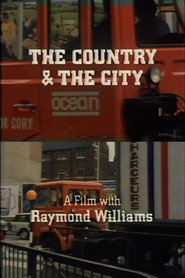
The Country and the City
A translation to film of Raymond Williams’ 1973 book of the same title which traces images of ‘nature’ and ‘town’ through 200 years of English literature.Year:
1979

New York, New York - Saturday in SoHo/Watching My Name Go By
Humphrey Burton introduces two Omnibus USA reports on the arts in New York... that is the arts in the streets, away from the museums and the concert halls. One film is 'Saturday in Soho', an impression of artists, dancers and musicians' work and of the Soho area in general. The second is 'Watching My Name Go By', a showcase a kind of graffiti cult game played by 11 to 17-year-olds. It's illegal and dangerous - and while some New Yorkers think it's a kind of art, others think it's kind of disgusting.Year:
1976
The People’s Land, Eskimos of Pond Inlet
For the Eskimos of Pond Inlet - a new village in North Baffin Island in which they have been settled by the Canadian Government – the life of the semi-nomadic hunter has given way to that of wage-labourer, in what appears as a pre-fabricated 'township'. Although hunting provides an important supplement to the Eskimos' income, it is now a part-time activity, and since 1975 (ten years after the start of the government's housing programme) nobody has lived all year round in hunting camps. For the older inhabitants of Pond Inlet, the old way of life is still vivid (in 1935 only 37 Eskimos lived in the village) and their reminiscences and recollections form part of a powerful statement about the present situation. These statements take the form of monologues, or comments addressed to friends and family about the effects of fifty years of contact with whites.Year:
1976

Requiem for a Village
The idyllic, rural past of a Suffolk village comes to life through the memories of an old man who tends a country graveyard.Year:
1975
Requiem for a Village
The idyllic, rural past of a Suffolk village comes to life through the memories of an old man who tends a country graveyard.Year:
1975
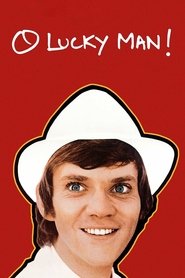
O Lucky Man!
An ambitious coffee salesman has a series of improbable and ironic adventures seemingly designed to challenge his naive idealism.Year:
1973
Bette Davis
Bette Davis talks with Joan Bakewell and members of the audience at the National Film Theatre, London.Year:
1972

Can Horses Sing?
Elizabeth Sussex's exquisite documentary about a rural Scottish school, edited by Gladwell.Year:
1971

Bombay Talkie
An English novelist travels to Bombay to watch one of her novels translated to film. She chases after the movie's leading man while the screenwriter chases after her.Year:
1970
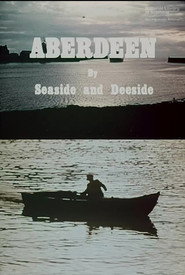
Aberdeen by Seaside and Deeside
The attractions of the Scottish city of Aberdeen and the surrounding area.Year:
1970
New Way at Northgate
David Gladwell's ground-breaking documentary about changes in a regional council's approach to caring for children with disabilities.Year:
1969
New Way at Northgate
David Gladwell's ground-breaking documentary about changes in a regional council's approach to caring for children with disabilities.Year:
1969
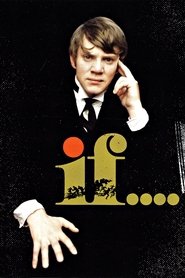
if....
In an English boys' boarding school, social hierarchy reigns supreme and power remains in the hands of distanced and ineffectual teachers and callously vicious prefects in the Upper Sixth. Three Lower Sixth students, Wallace, Johnny and leader Mick Travis decide on a shocking course of action to redress the balance of privilege once and for all.Year:
1968

Jemima + Johnny
A white boy and a black Jamaican girl have a day out in a city where racial hostility prevails.Year:
1966
28b Camden Street
A community of sculptors (and a potter) face crisis as their London NW1 studios are threatened with demolition.Year:
1965
28b Camden Street
A community of sculptors (and a potter) face crisis as their London NW1 studios are threatened with demolition.Year:
1965
28b Camden Street
A community of sculptors (and a potter) face crisis as their London NW1 studios are threatened with demolition.Year:
1965
An Untitled Film
A BFI production from 1964, directed by David Gladwell, who is best known as an editor of films like Lindsay Anderson's If.... (1968) and O Lucky Man! (1973). This short was shot at 200 fps, depicting a series of pastoral scenes from a British farm, edited to produce a suggestion of violence in contrast to its visual beauty.Year:
1964
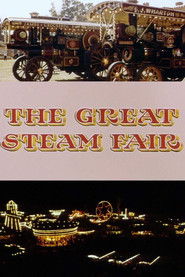
The Great Steam Fair
Co-directed by innovative British filmmakers David Gladwell and Derrick Knight, The Great Steam Fair is a beautifully crafted documentary filmed at Shottesbrooke Park, Berkshire in 1964 at a nostalgic event which brought together many traditional fairground rides and steam engines. The film skilfully combines the techniques of traditional sponsored documentary with the new approaches of the direct cinema movement.Year:
1964
The Great Steam Fair
Co-directed by innovative British filmmakers David Gladwell and Derrick Knight, The Great Steam Fair is a beautifully crafted documentary filmed at Shottesbrooke Park, Berkshire in 1964 at a nostalgic event which brought together many traditional fairground rides and steam engines. The film skilfully combines the techniques of traditional sponsored documentary with the new approaches of the direct cinema movement.Year:
1964
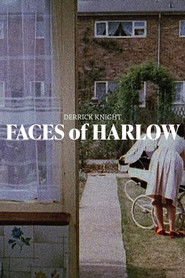
Faces of Harlow
The planning, development and life of a new town exemplified by Harlow in South-East England, illustrating its problems and progress.Year:
1964
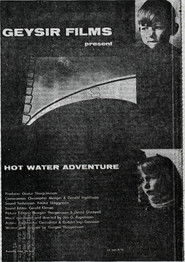
Hot Water Adventure
A promotional film for the Reykjavík district heating. The film blends documentary footage with a narrative adventure following two kids who get lost in the overwhelming industrial environment of the district heating factory.Year:
1963
A Time to Heal
A look at some of the 3000 men who go through miners' rehabilitation centres each year, of whom 19 out of every 20 go back to mining.Year:
1963
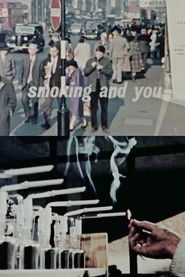
Smoking and You
A Centre Office of Information (COI) production about smoking.Year:
1963

Terminus
This fly on the wall-style documentary from 1961 won an Oscar for best documentary, and shows the changing patterns of human emotions during 24 hours in the life of Waterloo Station.Year:
1961
Miss Thompson Goes Shopping
Adaptation of Martin Armstrong's poem about an elderly lady who becomes perturbed by something we can't see. It becomes apparent that she is looking for her past, lost in a memory or the clutches of nostalgia. Miss Thompson's shopping trip to town is in chaotic contrast to the tranquil nature of her lonely home, which on return seems like paradise.Year:
1958
A Summer Discord
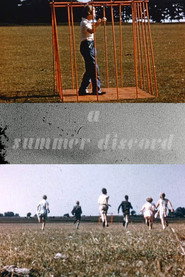
David Gladwell (Requiem for a Village) was just 20 years old when he made A summer Discord, an imaginative amateur, silent short film set in the countryside which tells the story of a little girl who is reprimanded by her mother. Of particular note is the film’s dark nightmare sequence which is shot in colour (unlike the rest of the film) and which anticipates Gladwell’s later, highly poetical films.Year:
1955
