


Emily Richardson
Director
-
Birthday
-
Zodiac Sign
-
Genres
0
Total Films
Also known as (female)
Place of Birth
-
Birthday
-
Zodiac Sign
-
Genres
0
Total Films
-
Also Known As (female)
-
Place of Birth
-
Birthday
-
Zodiac Sign
-
Genres
0
Total Films
Also known as (female)
Place of Birth
-
Birthday
-
Zodiac Sign
-
Genres
0
Total Films
-
Also Known As (female)
-
Place of Birth
actor
0 Works
producer
0 Works
director
22 Works
writer
0 Works
other
7 Works

Ferrari
Set during the summer of 1957. Ex-racecar driver, Enzo Ferrari, is in crisis. Bankruptcy stalks the company he and his wife, Laura, built from nothing ten years earlier. Their tempestuous marriage struggles with the mourning for one son and the acknowledgement of another.Year:
2023
Immaterial Terrain
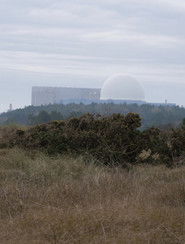
Immaterial Terrain is a film made by Emily Richardson along a seven-mile stretch of the Suffolk coast between Sizewell nuclear power station and the mythic drowned city of Dunwich. Camera in hand, over the duration of a year Richardson repeatedly walked this coastline. These walks – pilgrimages and acts of protest – structure a film that documents a singular and fragile landscape at an uncertain moment. Plans to expand the nuclear power station at Sizewell will have a lasting impact on the environment.Year:
2023
Spender House
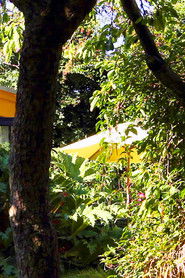
The Spender House in Essex was designed in 1968 by Richard and Su Rogers (Team 4) for photographer and artist Humphrey Spender. It was a prototype and precursor to the iconic house, Parkside, designed for Rogers’ parents the following year, making it the first example of hi-tech domestic architecture in the UK.Year:
2018
Beach House
Beach House is a film about a unique example of rural modernism, built on the UK coast of Suffolk by architect John Penn. Penn was an architect, painter, musician and poet whose nine houses in East Suffolk are all built with uncompromising symmetry adhering to the points of the compass in their positioning in the landscape they use a limited language of materials and form that were influenced by his time spent working in California with Richard Neutra. They are Californian modernist pavilions in the Suffolk landscape.Beach House is John Penn’s most uncompromising design in terms of idea as form. The film combines an archive film made by Penn himself on completion of the house with experimental sound recordings made during the same period and material recently filmed in the house to explore a convergence of filmic and architectural language and allow the viewer to piece together Beach House in its past and present forms.Year:
2015
3 Church Walk
Richardson stalks the abandoned Suffolk house of deceased modernist architect H.T. Cadbury Brown. Aural textures gleaned from personal possessions and materials soundtrack the mysterious structure.Year:
2014
Over the Horizon
Over the Horizon takes its name from the failed radar system developed on Orford Ness in Suffolk during the Cold War. The building that housed it and its ariel field are now used to broadcast the BBC World Service to Europe. The film revisits the site of a previous film Cobra Mist (2008) and explores through photographs and sound the memory of a place, the remnants of history and evidence of stories true or rumored.Year:
2012
The Futurist
The Futurist is a condensed experience of film viewing, a single 360 degree animated shot in an empty 1920’s cinema where the sound becomes a cacophony of past projections and the aural experience is closer to that of the projectionist than the audience.Year:
2010
The Plaza
The Plaza is a condensed experience of film viewing, a single 360 degree animated shot in a restored 1930’s Art Deco cinema where the sound becomes a cacophony of past projections and the aural experience is closer to that of the projectionist than the audience.Year:
2010
The Picture House
The Picture House is a condensed experience of film viewing, a single 360 degree animated shot in Liverpool’s oldest working cinema, where the sound becomes a cacophony of past projections and the aural experience is closer to that of the projectionist than the audience.Year:
2010
Memo Mori
Memo mori is a journey through Hackney tracing loss and disappearance. A canoe trip along the canal, the huts of the Manor Garden allotments in Hackney Wick, demolition, relocation, a magical bus tour through the Olympic park and a Hell’s Angel funeral mark a seismic shift in the topography of East London. With commentary and readings from Hackney, That Red Rose Empire by Iain SinclairYear:
2009
Cobra Mist
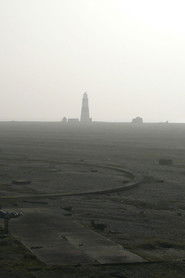
Construed in the time of running clouds, a panoramic and another examination of vacant buildings on the British shore (Orford Ness), a deserted place on Earth, place of non-specificity as a base for an open course of events that shape the sense, consisting in interaction between the image and the viewer.Year:
2008
Petrolia
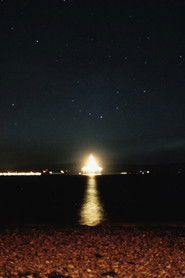
Petrolia takes its name from a redundant oil drilling platform sat in the Cromarty Firth, Scotland. The film looks at the architecture of the oil industry along the Scottish coastline where oil and gas supplies are predicted to run dry in the next forty years. Shooting on 16mm film, using time lapse and long exposure techniques, the film presents a record of industrial phenomena, – the toxic beauty of the refinery at Grangemouth, huge drilling platforms gliding across the water as they come in for maintenance and repair at Nigg and the last dance of the shipbuilding cranes in Glasgow harbour.—http://emilyrichardson.org.uk/Year:
2005
Petrolia
Petrolia takes its name from a redundant oil drilling platform sat in the Cromarty Firth, Scotland. The film looks at the architecture of the oil industry along the Scottish coastline where oil and gas supplies are predicted to run dry in the next forty years. Shooting on 16mm film, using time lapse and long exposure techniques, the film presents a record of industrial phenomena, – the toxic beauty of the refinery at Grangemouth, huge drilling platforms gliding across the water as they come in for maintenance and repair at Nigg and the last dance of the shipbuilding cranes in Glasgow harbour.—http://emilyrichardson.org.uk/Year:
2005
Block
Day through night Block is a portrait of a 1960s London tower block, its interior and exterior spaces explored and revealed, patterns of activity building a rhythm and viewing experience not dissimilar from the daily observations of the security guard sat watching the flickering screens with their fixed viewpoints and missing pieces of action.—http://emilyrichardson.org.ukYear:
2005
Block
Day through night Block is a portrait of a 1960s London tower block, its interior and exterior spaces explored and revealed, patterns of activity building a rhythm and viewing experience not dissimilar from the daily observations of the security guard sat watching the flickering screens with their fixed viewpoints and missing pieces of action.—http://emilyrichardson.org.ukYear:
2005
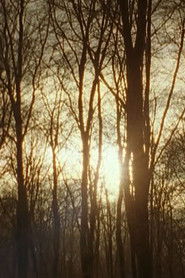
Aspect
Across the surface of the forest, light, colour, shadow shift; rhythmic, kaleidoscopic. Matter and the immaterial in constant counteraction. The screen becomes a painting in animation. Ordinarily, light describes the motif. Here, the forest is almost – almost – occluded as the light that delineates the world becomes autonomous, visible; describes itself as subject. There are some very strange effects: light and shadow grow, die back; bark shimmers; branches tremble, or clouds pass above; trees shiver in the cold, or shake in threatening gesture; sunlight flickers, on and off, like an electric bulb. The portrait lives. These films are not the index of space and objects, but a cinema of time, movement, light; flickering lashes of mesmerised eyes in the click of an aperture.Year:
2004
Aspect
Across the surface of the forest, light, colour, shadow shift; rhythmic, kaleidoscopic. Matter and the immaterial in constant counteraction. The screen becomes a painting in animation. Ordinarily, light describes the motif. Here, the forest is almost – almost – occluded as the light that delineates the world becomes autonomous, visible; describes itself as subject. There are some very strange effects: light and shadow grow, die back; bark shimmers; branches tremble, or clouds pass above; trees shiver in the cold, or shake in threatening gesture; sunlight flickers, on and off, like an electric bulb. The portrait lives. These films are not the index of space and objects, but a cinema of time, movement, light; flickering lashes of mesmerised eyes in the click of an aperture.Year:
2004
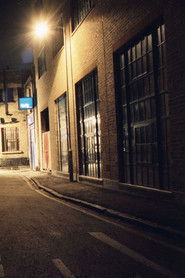
Nocturne
Composed of a series of twilight images of empty streets, Nocturne is a mesmerising and tonally expressive work that similarly recalls the seminal tone poem Koyaanisquatsi, with the rigourous symmetry and urban desolation of Chantal Akerman’s News From Home. — New York Video Festival 2003 Notes.Year:
2003
Nocturne
Composed of a series of twilight images of empty streets, Nocturne is a mesmerising and tonally expressive work that similarly recalls the seminal tone poem Koyaanisquatsi, with the rigourous symmetry and urban desolation of Chantal Akerman’s News From Home. — New York Video Festival 2003 Notes.Year:
2003

Lesbians Go Mad In Lesbos
During Summer 2000, the mayor of the Greek island of Lesbos tried to ban 26 lesbians from arriving on a package holiday from the UK; but he ended up biting off more than he could chew. This programme follows the love, lust and laughs over the course of their holiday as the women drink, dance and snog their way around the island. Despite being shadowed by the papparazi and some negative islanders, nothing can stop our women from fighting for their right to party.Year:
2001
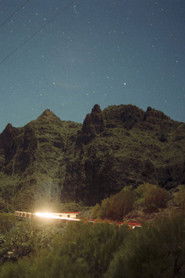
Redshift
Belying their apparent stillness, Emily Richardson’s time lapse studies make for compelling and surprisingly eventful viewing: in the case of Redshift (named appropriately, after Hubbles law regarding the different wavelengths of light from stars), the activity is on a galactic scale: the wheeling of the heavens over a ragged line of coast. — Shane Danielsen; 57th Edinburgh International Film Festival 2003, Black Box Activity.Year:
2001
Redshift
Belying their apparent stillness, Emily Richardson’s time lapse studies make for compelling and surprisingly eventful viewing: in the case of Redshift (named appropriately, after Hubbles law regarding the different wavelengths of light from stars), the activity is on a galactic scale: the wheeling of the heavens over a ragged line of coast. — Shane Danielsen; 57th Edinburgh International Film Festival 2003, Black Box Activity.Year:
2001
