Fikrat Amirov
Fikret Mashadi Jamil oghlu Amirov (Azerbaijani: Fikrət Məşədi Cəmil oğlu Əmirov; November 22, 1922, Ganja – February 20, 1984, Baku) was a prominent Soviet and Azerbaijani composer.
Originally from Shusha, Fikret Amirov was born on November 22, 1922, in the family of Mashadi Jamil Amirov and Mrs. Durdane, in the city of Ganja. Fikrat was the second child of the family. Since childhood, Fikret listened to his singer father's works, especially his music. His formation as a composer was influenced by the artists that live at that time. Fikret Amirov notes in his memoirs that "Azerbaijani tar made me a composer." He adds "The eye of the Azerbaijani musical instruments is tar. Tar is not only an instrument for its harmony, timbre, diapason, strength, as though it replaces the orchestra".
After his father died in 1928, 6 year old Fikrat had to take responsibility for the household. Despite the difficulties, he tried to continue his father's musical path. He was training with his elder sister Yaxshi. The songs performed by his sister were accompanied by Fikret on tar. Thus, they became successful in their school. During his childhood and early adolescence, Fikret began composing pieces for the piano. Upon his graduation from the Ganja Music College, Amirov entered the Azerbaijan State Conservatoire, now known as the Baku Music Academy, where he was a student of Boris Zeidman and Uzeyir Hajibeyov.
In 1941, when Nazi Germany attacked the USSR, Amirov, 19 at the time, was drafted into the Soviet army. He was wounded near Voronezh, hospitalized and demobilized from the military service, returning to Baku to continue his studies at the Azerbaijan State Conservatoire.
Amirov's music was strongly influenced by Azeri folk melodies. He created a new genre called symphonic mugam. Amirov's symphonic mugams were based on classical folk pieces and were performed by many renowned symphony orchestras throughout the world, such as the Houston Symphony Orchestra conducted by Leopold Stokowski. As the composer used to do a lot of research before starting his pieces, strong folkloric elements can be observed in his compositions. For example, prior to composing his ballet "Arabian Nights," he visited several Arabic countries-Iraq, Yemen and Egypt-and brought back tapes and records.
Amirov was a prolific composer. His most famous pieces include symphonic works such as "Shur" (1946), Kurd Ovshari (1949), "Azerbaijan Capriccio" (1961), "Gulustan Bayati-Shiraz" (1968), "The Legend of Nasimi" (1977), "To the Memory of the Heroes of the Great National War" (1944), "Double Concerto for Violin, Piano and Orchestra" (1948) etc.
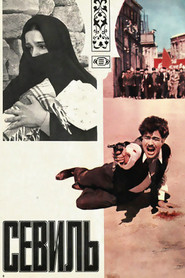
His ballets include "Nizami" (1947) and Arabian Nights, which premiered in 1979. Amirov wrote the opera "Sevil" in 1953. He also wrote a number of pieces for the piano including "Ballad," "Ashug's Song," "Nocturne," "Humoreska," "Lyrical Dance," "Waltz," "Lullaby" and "Toccata." He also wrote numerous film scores.
Michelle Kwan, World Champion Ice Skater from the U.S. used Fikret Amirov's symphonic piece "Gulustan Bayati-Shiraz" in her skating program "Taj Mahal" in 1996.
22-11-1922
Birthday
Sagittarius
Zodiac Sign
-
Genres
0
Total Films
Fikret Amirov
Also known as (male)
Ganja, Azerbaijan SSR, USSR
Place of Birth
22-11-1922
Birthday
Sagittarius
Zodiac Sign
-
Genres
0
Total Films
Fikret Amirov
Also Known As (male)
Ganja, Azerbaijan SSR, USSR
Place of Birth