

Florica Holban
DirectorWriter
-
Birthday
-
Zodiac Sign
-
Genres
0
Total Films
Also known as (female)
Place of Birth
-
Birthday
-
Zodiac Sign
-
Genres
0
Total Films
-
Also Known As (female)
-
Place of Birth
-
Birthday
-
Zodiac Sign
-
Genres
0
Total Films
Also known as (female)
Place of Birth
-
Birthday
-
Zodiac Sign
-
Genres
0
Total Films
-
Also Known As (female)
-
Place of Birth
actor
0 Works
producer
0 Works
director
7 Works
writer
2 Works
other
1 Works
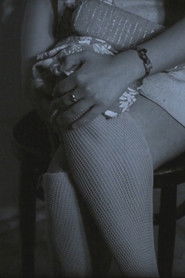
Let The Summer Pass
A public service announcement condemning the ominous obstacle of social parasitism and delinquency amongst wayward youth unwilling to contribute to Romania’s socialist advancement.Year:
1972
Let The Summer Pass
A public service announcement condemning the ominous obstacle of social parasitism and delinquency amongst wayward youth unwilling to contribute to Romania’s socialist advancement.Year:
1972
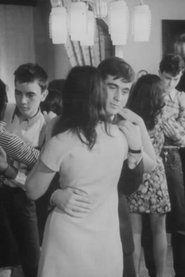
Adolescence
"This wonderful age in life where every thought strives toward an ideal, toward work, toward the future." Sahia Studios propaganda flick about how adults and their "those darn kids" attitudes affect adolescents.Year:
1969
Adolescence
"This wonderful age in life where every thought strives toward an ideal, toward work, toward the future." Sahia Studios propaganda flick about how adults and their "those darn kids" attitudes affect adolescents.Year:
1969
Who Is to Blame?
Like Márta Mészáros, Florica Holban experienced losing her parents and institutionalization first-hand as a young child, which later triggered her long-term interest in the lives of the children growing up in state care. Holban’s Who Is to Blame? has something else in common with Mészáros’s Let All the Children Smile: they both include sequences filmed at the same orphanage in Bucharest (Orphanage No. 6)—Mészáros in the mid-50s, Holban a decade later. The two films also share a certain discretion regarding the role of the State, which assumed parental responsibility for children abandoned or separated from their parents. Here, both directors allow, albeit only briefly, the lonely and deprived children to appear as individuals with their own histories and traumas. Unlike Mészáros, however, Holban approaches her topic through a judicial lens: numerous sequences from her film were shot at the Tribunal, and the film credits a prosecutor as a consultant.Year:
1965
Who Is to Blame?
Like Márta Mészáros, Florica Holban experienced losing her parents and institutionalization first-hand as a young child, which later triggered her long-term interest in the lives of the children growing up in state care. Holban’s Who Is to Blame? has something else in common with Mészáros’s Let All the Children Smile: they both include sequences filmed at the same orphanage in Bucharest (Orphanage No. 6)—Mészáros in the mid-50s, Holban a decade later. The two films also share a certain discretion regarding the role of the State, which assumed parental responsibility for children abandoned or separated from their parents. Here, both directors allow, albeit only briefly, the lonely and deprived children to appear as individuals with their own histories and traumas. Unlike Mészáros, however, Holban approaches her topic through a judicial lens: numerous sequences from her film were shot at the Tribunal, and the film credits a prosecutor as a consultant.Year:
1965
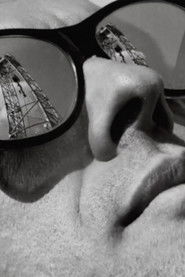
The Plant
"Filmed at "May the First" plant in Ploiești withe the occasion of the International Labor Day, The Plant is presented as a universe in itself, one which materialises the consubtantiality between social and technologic progress. Popovici felt his film must be a poem that can match the size of its subject. Thus, it became a juxtaposition of "cinematographic ideas related to one of the largest plants in the country". Inspired by soviet avant-garde, the director searches for a revolutionary aesthetic, one able to capture the rupture caused by the New Socialist Order. "Year:
1963