


Fred Worden
Director
-
Birthday
-
Zodiac Sign
-
Genres
0
Total Films
Also known as (male)
Place of Birth
-
Birthday
-
Zodiac Sign
-
Genres
0
Total Films
-
Also Known As (male)
-
Place of Birth
-
Birthday
-
Zodiac Sign
-
Genres
0
Total Films
Also known as (male)
Place of Birth
-
Birthday
-
Zodiac Sign
-
Genres
0
Total Films
-
Also Known As (male)
-
Place of Birth
actor
0 Works
producer
0 Works
director
36 Works
writer
0 Works
other
1 Works
All or Nothing
When it comes to motion pictures, I’ve always been a lot more interested in the motion than the pictures. Images, in fact, have always been for me primarily a medium through which motion (or energy) can manifest. In ALL OR NOTHING abstract images are made dynamic by an infusion of energy imposed by me from outside. I’m tempted to describe this as a conversion of biological energy (mine) into cinematic energy. The individual frames collide and new things appear. It’s almost like a jerry-rigged, homemade version of the Large Hadron Collider. On the web page for the Large Hadron Collider it describes the Hadron Collider’s mission as “tunneling to the beginning of time.” A no-nonsense mission, I’d say. The mission of All or Nothing might also be described as a kind of tunneling, but for the life of me, I can’t say exactly where its tunneling to.Year:
2013
Possessed
I had a strong, slightly illicit, urge to commandeer the original train sequence from the 1931 film Possessed and make it move in such a way as to give the girl (Joan Crawford) what she thought she wanted: a position on the inside. To do that, I had to create my own (all encompassing) vehicle. By my count, the original sequence provides three orders of motion: the motion (and stillness) of the passengers on the train, the motion of the train itself, and finally the motion of the girl (Joan) outside of the train.Year:
2011

All My Life
“A dramatic weather front led to images that in turn invoked memories of Bruce Baillie’s 1966 film of the same name. The passage of time would seem to be the common theme that both films share.”Year:
2009
1859
LSD is illegal. 1859 is not.Year:
2008

When Worlds Collude
“An experimental film structured as a kind of specialized playground in which highly representational images are freed from their duties to refer to things outside of themselves. The images run free in their new lightness making unforeseeable, promiscuous connections with each other and developing an inexplicable, non-parsable plot line that runs along with all the urgency of any good thriller. When worlds collude, something outside of description is always just about to happen.” (FW)Year:
2008

Time's Arrow
“Out on my freeway, directionality is elusive. The faces in the windows appear and then disappear, some moving out ahead, some falling behind, some moving so fast as to be beyond registering, others sliding by so languidly you’d think they want something from you. What’s irreversible is the plain fact that once they disappear from view, they’re gone forever. No amount of freeway jostling is ever likely to bring them by again. Each time I think to myself: one more person I’ll never know.” (FW)Year:
2007

The After Life
“I made The After Life using images out of a tiny mini-camcorder called a Flip that I bought on amazon.com for $98.00. All I did with the material was work with arrangements of frames along a timeline to setup what Eisenstein called “collisions” (for him a colliding of shots, for me, a colliding of frames). On rare occasions, Eisenstein substituted the word “copulation” for the word “collision” in describing the dynamics of his montage theory. In The After Life, it’s all copulation all the time. Bodies attract, bodies intersect and new creatures stream forth. In The After Life uninhibited promiscuity is what makes the world go round. It can’t be all bad.” (FW)Year:
2007

North Shore
“Where the big ones break and the undercurrents push-pull an ancient, silent tune.” (FW)Year:
2007

Everyday Bad Dream
Like picking shards of broken glass out of pile carpet on a hangover morning.Year:
2006

Blue Pole(s)
"Blue Poles (2005), a wholly abstract piece which fills the screen with what appear to be white sparks, variously suggesting scraps of burning paper floating away from a fire, frost crystals on a window, or the visual phenomena which appear when holding one’s eyes shut tightly – a beautiful, haunting effect..."Year:
2005

Here
A Technicolor charge on horseback is mashed up with a series of early silent films from the Melies brothers.Year:
2005

Amongst the Persuaded
The human susceptibility to delusional thinking has, at least, this defining characteristic: easy to spot in others, hard to see in oneself. The filmmaker, racked by the inescapable observation that it is delusional thinking that is the common denominator driver of so many contemporary man-made disasters gins up a vehicle meant to ruthlessly uncover and expose his own particular brand of pathological believing. This film is about us. I believe its true. See the iron jaws of the mechanism at work as the filmmaker falls into the biggest and most obvious delusion of all: the belief that he can master his own delusions by making a film about them.Year:
2004

If Only
"And so the intoxicated camera operator shoots the moon slipping through the barren trees. The rabbit hole's light shadow appears and he obliges, head first, no looking back. His cranium (like yours) is packed with illusions, but down the rabbit hole they treasure the same just so long as they're custom fabricated, hand tooled and conscious. Down this hole, stalking the unforeseen non-translatable is all. Join in here." (FW)Year:
2003

The Or Cloud
A guided adventure for the eyeballs. And as such, also, of necessity, an adventure of the mind (how could it be otherwise ?). (...) I believe there is a current which runs at the core of all beings, call it life force, a dynamic which in individuals reflects both the personal and the universal. Up on the screen, frames in motion, a rushing stream of articulated energy to resonate with that inner biological current. Adventurous eyeballing then, in the ideal, an epiphanous moment of mutual recognition and commiseration between energy forms. "There is a vibration which exists to enrapture and console us." (Rilke). I like to think this vibration can be detected streaming out of The Cloud.Year:
2001

Automatic Writing 2
“Continued explorations of automatism as a practical guide to negotiating the mysterious zone where light and no-light flutter in a fecund equipoise. A homemade rocket to realms unknown to any movie camera or photo lens. In the end, perhaps nothing more than a search for an experience of continuity, a kind of sanity. Failing sanity, a wild ride at least.”Year:
2000

Automatic Writing
Trying the surrealist notion of automatism as a practice of exploring the mysterious zone where light and non-light mingle in an unstable and fertile equilibrium.Year:
1999

One
A single image in play, colliding infinitely with itself, in order to reach us beyond our defenses.Year:
1998

Introduction to the Secret Society
A half-baked, but tenderized world view offered up for the new arrivals. An abstracted experimental narrative based on three images: face, figure, and crowd. A collage film of representational images of the human figure without being portraiture or performance.Year:
1991

Breakout
The camera is spinning. The points accumulate to form a line, a line of horizon, which like any line draws a hidden curve. The traffic disengages from its components - water, bridges, cars, smoke, facade - to become an endless trajectory. The current of energy, which wanders over the various objects: the photographed thing of an immediate familiar reality, a chain of points of inertia.Year:
1990

Boulevard
“Conceived as a homage and an answer to Len Lye’s hand-processed FREE RADICALS. Lye’s film consists of direct, non-photographic markings on the emulsion, accompanied by a soundtrack of African percussion (surely exotic for the time). Lye’s choice, after a long career in both commercial and experimental cinema, to turn to such bare and primitive material (“aboriginal” was his chosen term) fits with my own obsession with sticking as closely as possible to the primary elements of the film in order to invoke the underlying and real power of cinema.” —Fred WordenYear:
1989

Lure
An accident on a frozen lake. A story told in a visual matrix paralleled by the spread of melting ice.Year:
1986

How The Hell I Ripped Jack Goldstein's Painting In The Elevator
"A more or less true story from my days as an art handler in 1980s New York City." (FW)Year:
1986

Plotting the Grey Scale: 2 or 3 Quick Traverses
“A monochromatic field study of sorts, along perpendicular axes. Varying shades of grey flicker in increasing intensity, giving way to a kinetic study of activated organic forms deriving from rapidly changing optically printed freeze frames of trees. A variation on the grey flicker recurs, climaxing in a modestly manipulated study of leaves moving in the wind. Overall, this unusual and visually affecting film brings together some of Worden’s most elemental interests, including stasis, motion, rhythm, visual consonance and dissonance, and the tension between the pictorial and the abstract, all with a characteristic phenomenological undercurrent.” —Mark ToscanoYear:
1985
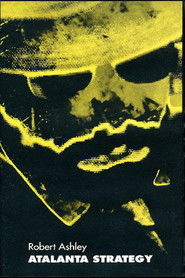
Atalanta Strategy
The story of Willard from Ashley's opera Atalanta, recounted in 3 parts.Year:
1984

In & Out
A lyrical study of the World Trade Center occupying space and reflecting space.Year:
1983

Here, There Now, Later
Two simple and progressive accumulations mingle with the confines of the Moffit Tunnel in the Rockies.Year:
1983

Insomnia
“INSOMNIA is the most minimal and self-referential of Worden’s films. It consists entirely of punched holes in black leader. The fractal reference is secured spatially by using punches of two different sizes, and temporally by the distribution of the punches along the strip of leader. In some ways this is Worden’s purest pattern film. We are presented only with a pattern of black and white. There is no imagery to compete for our attention. But somehow we see the film as representational. The white struggles against the black in an attempt to pour into the foreground. It is as if the ancient cosmology were true: The stars are holes in the canopy that shrouds the earth. We yearn to leave the world of darkness and appearance for the world of reality and light on the other side.” —Dale JamiesonYear:
1981
Terrific Measures
"An introductory sequence of flickering color frames serves as a conceptual architecture for the single-frame exploration of a multi-cornered New York intersection that follows. Urban geometries and temporalities converge and deconstruct with a rhythm of eyeblinks and double-takes." (Mark Toscano)Year:
1980
Panovision
A short by Fred WordenYear:
1979

Bon Ami
“This little-seen abstract work of Worden’s began with short expressionistic/biomorphic color sequences he generated from scratched and abraded film strips made via a liberal application of the titular cleaning agent. These passages were then spun into an elusive, experiential coherence via Fred’s analytic and poetic optical printing, resulting in an evolving cascade of loops and rhythms.” —Mark ToscanoYear:
1977

Four Frames
"Color/form, light/shadow, flatness/depth, figuration/abstraction, landscape/paint, all collaging and colliding in an exploratory, arrhythmic, kinetic dance constructed a frame at a time by Fred Worden on his optical printer. This early film now reveals itself as a revelatory early warning sign of Worden's filmmaking to come, comprising ten minutes extrapolated from only four frames of source imagery." (Mark Toscano) Preserved by the Academy Film Archive in 2009.Year:
1976
Vudoo
I made this film in 1976 as an attempt to consider the flow of the scrolling frames in the spotlight as a field of experience of continuity, if the representation and naturalism were rejected. I have not shown this film since the early 80s. But while I finished One, I realized that some of the questions I was trying to solve at that time came from this film, and that is how I rediscovered.Year:
1976

Tetrahedron
"That hike went to a 1400 ft. peak in the Rockies. I'm not sure of the specific mountain but it may have been Long's Peak. Yes, we had fun making that. When we got to the top Charlie lay down to rest and I sneaked a bunch of rocks into his pack so that we could film his funny struggle lifting the pack up and on! At the summit I was overcome with hypothermia and blacked out. Fred and Charlie hustled me down the mountain and I slowly recovered. We stopped to make a fire and there are shots in the film of Charlie coaxing up a flame. The lower altitude and the warmth led to recovery. I think I did the edit in Charlies' dome studio at Thorn Lake..." - Gene BernofskyYear:
1974
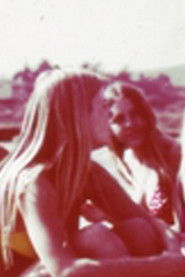
Now, You Can Do Anything
A day at the beach in Malibu, at the northwestern edge of what Reyner Banham calls 'Surfurbia.'Year:
1973

Venusville
No montage, no human subjects, minimal visual content, and the artists basically pissing on the fourth wall by calling attention in every way possible to the artifice of what they’re doing. Preserved by the Academy Film Archive in 2009.Year:
1973

Throbs
Coming in the wake of a whole movement of wild, ecstatic, psychedelic films loaded with unchecked energy and abandon, Throbs demonstrates a remarkable subtlety and restraint, as Fred explores variations in loops and cycles, weaving unlikely combinations of found and original footage to envelop us in a free associative dream world. —Mark Toscano. Preserved by the Academy Film Archive in 2008.Year:
1972
