


Frédéric Pardo
ActorDirector
-
Birthday
-
Zodiac Sign
-
Genres
9
Total Films
Also known as (male)
Place of Birth
-
Birthday
-
Zodiac Sign
-
Genres
9
Total Films
-
Also Known As (male)
-
Place of Birth
-
Birthday
-
Zodiac Sign
-
Genres
9
Total Films
Also known as (male)
Place of Birth
-
Birthday
-
Zodiac Sign
-
Genres
9
Total Films
-
Also Known As (male)
-
Place of Birth
actor
9 Works
producer
0 Works
director
5 Works
writer
0 Works
other
2 Works
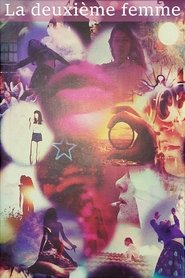
La deuxième femme
Over the course of more than fifteen years, Clémenti films a series of intimate diaries, starting from daily encounters. In La deuxième femme, we see Bulle Ogier and Viva, Nico and Tina Aumont, Philippe Garrel and Udo Kier, a performance by Béjart, a piece by Marc’O, concerts by Bob Marley and Patti Smith (not always recognisable)... It’s like a maelstrom of psychedelic images that are passed through a particle accelerator.Year:
2008
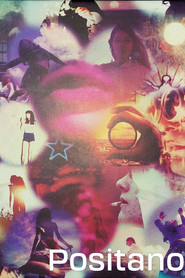
Positano
Positano is an island of the Amalfi Coast that Neptune would have, according to legend, created for the love of a nymph. Perched on the rocks of the island, the house of Frédéric Pardo and Tina Aumont became in 1968 a meeting place for the underground community. Pierre Clémenti stays there for a while and makes images of dazzling sensuality. Beyond Pierre Clémenti's intimate love of these faces and bodies often naked in this Mediterranean landscape, the film reveals the moving beauty of a utopia where living together could still be achieved in a territory of sharing and permanent creation. Flow of perceptions of consciousness, visual impressions, physical impregnations, the work of Pierre Clémenti is an ode to sensuality and "life-cinema".Year:
2008
Cinématon XXXII
Reel 32 of Gérard Courant’s on-going Cinematon series.Year:
1984
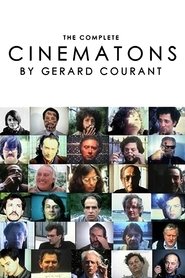
Cinématon
Cinématon is a 156-hour long experimental film by French director Gérard Courant. It was the longest film ever released until 2011. Composed over 36 years from 1978 until 2006, it consists of a series of over 2,821 silent vignettes (cinématons), each 3 minutes and 25 seconds long, of various celebrities, artists, journalists and friends of the director, each doing whatever they want for the allotted time. Subjects of the film include directors Barbet Schroeder, Nagisa Oshima, Volker Schlöndorff, Ken Loach, Benjamin Cuq, Youssef Chahine, Wim Wenders, Joseph Losey, Jean-Luc Godard, Samuel Fuller and Terry Gilliam, chess grandmaster Joël Lautier, and actors Roberto Benigni, Stéphane Audran, Julie Delpy and Lesley Chatterley. Gilliam is featured eating a 100-franc note, while Fuller smokes a cigar. Courant's favourite subject was a 7-month-old baby. The film was screened in its then-entirety in Avignon in November 2009 and was screened in Redondo Beach, CA on April 9, 2010.Year:
1978

Visa de censure n° X
Best known for his roles in Belle de jour, Sweet Movie, and many more, Pierre Clementi was also the architect behind a transgressive, high-minded, and disorienting cinema. Like an acid-soaked freefall, Visa de censure n° X is a rush of nudity and color from one of France’s most seductively watchable actors, set to an album's worth of psychedelic prog rock (performed by the Delired Cameleon Family, a group featuring members of French band Clearlight).Year:
1976
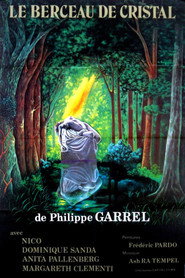
The Crystal Cradle
An androgynous poet/dreamer sits and writes and meditates on the aching void that is her life.Year:
1976
The Revolution Is Only a Beginning. Let's Continue Fighting.
Half family photo album, half ciné-tract, the film was shot in Paris during the events of May ‘68 and in Rome where the actor was featuring in the film Partner by Bertolucci. Rediscovered in a basement in 1999, this silent film appears to be one of Clémenti’s most purely beautiful and concentrated works, at times recalling Brakhage and Eisenstein. - MUBIYear:
1968
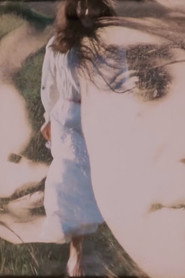
Home Movie: Tina Aumont
A montage of found footage from movies in Italian along with shots of Tina Aumont and Frédéric Pardo in the Luxembourg Garden, and in a country cemetery. The film then shows scenes of a lunch in the garden of a country house, where we see Tina and Pardo's father.Year:
1968
Homeo
Homeo is a mental construction made from visual reality, just as music is made from auditive reality. I put in this film no personal intentions. All my intentions are personal. I’ve made this film thinking of what the audience would have liked to see, not something specific that I wanted to say: what the film depicts is above all reality, not fiction. Homeo is, for me, the search for an autonomous cinematographic language, which doesn't owe anything to traditional narrative, or maybe everything. Cinema is, above all, part of a way of life which will become more and more self-assured in the years and century to come. We are part of this change, and that’s why I tried in Homeo to establish a series of perpetual changes, in constant evolution or regress, which tries, above all, to focus on things.Year:
1967

