

Gilles Gascon
DirectorWriter
-
Birthday
-
Zodiac Sign
-
Genres
0
Total Films
Also known as (male)
Place of Birth
-
Birthday
-
Zodiac Sign
-
Genres
0
Total Films
-
Also Known As (male)
-
Place of Birth
-
Birthday
-
Zodiac Sign
-
Genres
0
Total Films
Also known as (male)
Place of Birth
-
Birthday
-
Zodiac Sign
-
Genres
0
Total Films
-
Also Known As (male)
-
Place of Birth
actor
0 Works
producer
0 Works
director
22 Works
writer
1 Works
other
18 Works

Lundi - Une chaumière, un coeur
Year:
1978

Ti-Dré
Luc-André Godbout, better known as Ti-Dré, is a forty-three-year-old orphan who cleanses furnaces and consciences. Here he is presented, life-size, in a film impregnated with this extraordinary character.Year:
1976
A Piece of Cake
Year:
1974
Peut-être Maurice Richard
Year:
1972
Peut-être Maurice Richard
Year:
1972

Wow
In this French Canadian film, the lives of teenagers are examined in fantasy sequences and through the use of documentary interviews. Prompted by the filmmaker, nine teenagers individually act out their secret dreams and, between times, talk about their world as they see it. The fantasy sequences make creative use of animation, unusual film-development techniques, and stills. Babette conceives of herself as an abbess defending her fortress, a convent; Michelle is transported in a dream of love where all time ceases; Philippe is the revolutionary, defeating all the institutions that plague him, and so on, through all their fantasies. All the actual preoccupations of youth are raised: authority, drugs, social conflict, sex. Jutra's style in "Wow" exhibits his innovative approach to storytelling and filmmaking, showcasing his talents as a director during that period. With English subtitles.Year:
1970

Tout le temps, tout le temps, tout le temps...?
Year:
1969

Québec en silence
Year:
1969

Multiple Man
A many-faced view of humanity, of global man in all his forms and interests. Produced originally in 70 mm (with stereophonic sound) for showing at Man and His World, the Montréal fair that succeeded Expo 67, this film employs the multi-image technique. People of all places, origins, cultures, secular and religious, are here united and seen side by side, creating an impressive, inspiring and challenging portrait. The film's title appears in seven languages. Film without words.Year:
1969

C'est pas la faute à Jacques Cartier
Three American tourists explore Quebec guided by an imaginative leader, in an atmosphere of health and good humor. Baroque incidents, romance, and satire on society unfold, aiming to evoke monumental laughter from Quebecers.Year:
1968
Les acadiens de la dispersion
Documentary on the Acadian identity, featuring the music of Edith Butler, filmed in Canada, France, and Louisiana. This film travels throughout the Acadian diaspora, bearing witness to various perspectives on the social, economic, cultural, religious, and political realities of the Acadian people.Year:
1968

In the Labyrinth
"Labyrinth" is a groundbreaking multi-screen 45-minute presentation produced for Chamber III of the Labyrinth at Expo 67 in Montreal, using 35 mm and 70 mm film projected simultaneously on multiple screens. A film without commentary in which multiple images, sometimes complementary, sometimes contrasting, draw the viewer through the different stages of a labyrinth. The tone of the film moves from great joy to wrenching sorrow; from stark simplicity to ceremonial pomp. It is life as it is lived by the people of the world, each one, as the film suggests, in a personal labyrinth. Re-released in 1979 as "In the Labyrinth" by the National Film Board of Canada in a 21-minute single projection format.Year:
1967
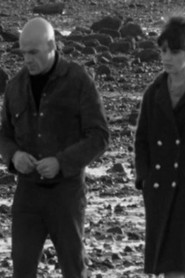
The Circle
Produced in 1967, this black and white film is an inmate's view of Daytop, a drug treatment centre on Staten Island, New York, where addicts learn to get along without drugs. Uncompromising, often brutal group therapy sessions are designed to shake loose the excuses a victim makes for himself. The people and situations shown are authentic; only one actor was employed. The results obtained at Daytop are regarded by some psychiatrists as a breakthrough.Year:
1967
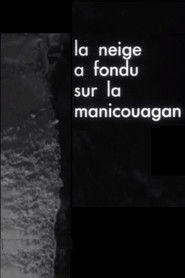
The Snow Has Melted on the Manicouagan
An atmospheric mood piece photographed in the winter at the giant dam built by Hydro Quebec in the northern wilds of the province. The story concerns a worker's wife, who is bored with her dreary existence in the wilderness. She walks around in the snow recalling how she met her husband, then goes to the landing field to catch a departing plane. But she remains when her husband tells her how much his work means to him. This moving and very humanistic tale represents the NFB at its best.Year:
1965

You Don't Back Down
In Nigeria, a young Canadian doctor serves in a local mission hospital and learns much from the experience. Stationed abroad under the Canadian University Service Overseas Plan, Dr. Alex McMahon and his schoolteacher wife find every day a fresh challenge. An interesting study of intercultural help.Year:
1965

Samuel de Champlain: Québec 1603
Footage of Québec City locations and the artwork of well-known Quebec animator Frédéric Back are used to tell the tale of Champlain’s life in New France – from his first explorations and settlement to his death in 1635.Year:
1964

The Water Dwellers
This short documentary introduces us to a town where no one pays rent: Simoom Sound in central British Columbia, where loggers live on sturdy river craft. Every week there are visitors: the general storekeeper, the flying postman and most importantly, the forest ranger, who is ever alert to the threat of fire.Year:
1963

Strangers for the Day
This short documentary shows the reactions of European immigrants as they land in Halifax at the beginning of the 1960s. From the port, we follow them on a snowy journey by train to Montreal.Year:
1962

Manger
Year:
1961

The Back-breaking Leaf
Here is a graphic picture of the tobacco harvest in southwestern Ontario. At the end of July, transient field workers move in for a brief bonanza when the plant is ripe. The tobacco harvesters call it "the back-breaking leaf."Year:
1959

Glenn Gould: Off the Record
Canadian concert pianist Glenn Gould enjoys a respite at his lakeside cottage. It is an aspect of Gould previously known only to the collie pacing beside him through the woods, the fishermen resting their oars to hear his piano, and fellow musicians like Franz Kraemer, with whom Gould talks of composition. (First of two parts.)Year:
1959

Glenn Gould: On the Record
This short documentary (the second of two parts) follows Glenn Gould to New York City. There, we see the renowned Canadian concert pianist kidding the cab driver, bantering with sound engineers at Columbia Records, and then, alone with the piano, fastidiously recording Bach's Italian Concerto.Year:
1959