

Graydon McCrea
Executive ProducerProducer
-
Birthday
-
Zodiac Sign
-
Genres
0
Total Films
Also known as (female)
Place of Birth
-
Birthday
-
Zodiac Sign
-
Genres
0
Total Films
-
Also Known As (female)
-
Place of Birth
-
Birthday
-
Zodiac Sign
-
Genres
0
Total Films
Also known as (female)
Place of Birth
-
Birthday
-
Zodiac Sign
-
Genres
0
Total Films
-
Also Known As (female)
-
Place of Birth
actor
0 Works
producer
31 Works
director
31 Works
writer
0 Works
other
0 Works
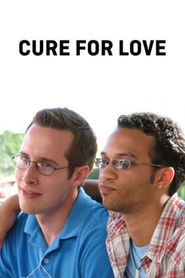
Cure for Love
A full-length documentary about a controversial evangelical movement that purports to convert gay people into heterosexuals. The film brings us inside this unusual Christian subculture and follows the lives of several young people whose homosexuality is at odds with their religious beliefs.Year:
2008
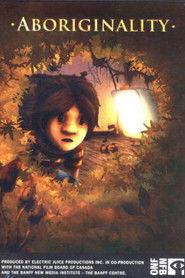
Aboriginality
Follow Dallas Arcand, an urban youth, as he heads down the mystical Red Road to re-connect with new and traditional elements of First Nations culture. Dallas is a world champion hoop dancer and hip-hop artist aiming to connect urban Indigenous young people to their rural ancestral histories. He's a 7th generation Cree from Alexander (Kipohtakaw) First Nation.Year:
2007

Radiant City
Since the end of World War II, one of kind of urban residential development has dominate how cities in North America have grown, the suburbs. In these artificial neighborhoods, there is a sense of careless sprawl in an car dominated culture that ineffectually tries to create the more organically grown older communities. Interspersed with the comments of various experts about the nature of suburbiaYear:
2007
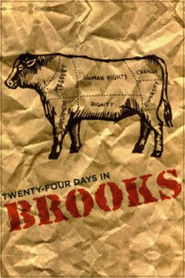
24 Days in Brooks
Over the course of a decade Brooks, Alberta, transformed from a socially conservative, primarily white town to one of the most diverse places in Canada as immigrants and refugees flocked to find jobs at the Lakeside Packers slaughterhouse. This film is a portrait of those people working together and adapting to change through the first-ever strike at Lakeside.Year:
2007
Where I Belong
This documentary tells the story of a young man’s struggle to balance his African traditions and new Canadian home. Arinze Eze was born in Canada and raised in Nigeria. An engineer by trade, he returned to his birthplace after 20 years. There, he starts a new career in the arts and falls in love with Canadian woman. All is well until his parents come for a visit. How will they react to this new life?Year:
2007

Between: Living in the Hyphen
Anne Marie Nakagawa's documentary examines what it means to have a background of mixed ancestries that cannot be easily categorized. By focusing on 7 Canadians who have one parent from a European background and one of a visible minority, she attempts to get at the root of what it means to be multi-ethnic in a world that wants each person to fit into a single category.Year:
2005
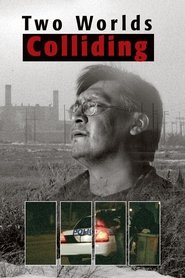
Two Worlds Colliding
This documentary chronicles the story of Darrell Night, an Indigenous man who was dumped by two police officers in a barren field on the outskirts of Saskatoon in January 2000, during -20° C temperatures. He survived, but he was stunned to hear that the frozen body of another Indigenous man was discovered in the same area.Year:
2004
Letters from Karelia
Story of Aate Pitkänen, a idealistic Canadian-Finn who went to Soviet Karelia.Year:
2004
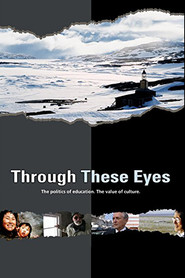
Through These Eyes
A 1970s American elementary school program encouraging students to figure out for themselves the universal building blocks of human community — family, work, faith, etc. — inflamed political sensitivities so intensely it was shelved and forgotten. Archive footage of the documentary film series at the program's core, classroom exchanges, and the ensuing controversy frames larger issues of education, politics and ideology.Year:
2004
Women on Patrol
Two Canadian police officers take on a tour of duty in East Timor.Year:
2004

Totem: The Return of the G'psgolox Pole
This feature-length documentary traces the journey of the Haisla people to reclaim the G'psgolox totem pole that went missing from their British Columbia village in 1929. The fate of the 19th century traditional mortuary pole remained unknown for over 60 years until it was discovered in a Stockholm museum where it is considered state property by the Swedish government. Director Gil Cardinal combines interviews, striking imagery and rare footage of master carvers to raise questions about ownership and the meaning of Aboriginal objects held in museums.Year:
2003
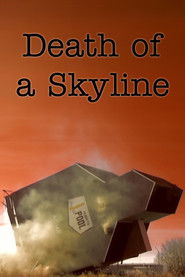
Death of a Skyline
A group of citizens lobbied to save the landmark Alberta Wheat Pool grain elevator, one of the defining features of Mayerthorpe’s landscape, from being torn down in 2003 - as thousands of others had been. This film documents those efforts while exploring the broader history and significance of the grain elevator.Year:
2003

From Harling Point
This documentary tells the story of a Chinese cemetery in BC that became a National Heritage site. For Chinese pioneers who died in Canada, Victoria's Chinese Cemetery at Harling Point was a temporary resting place until their bones could be returned home. (Traditional Chinese belief says that the soul of a person who dies in a foreign place wanders lost until their bones are returned home.) This film traces the rich history of the Vancouver Island cemetery from controversy and neglect to its revival as a historic site. Told by those closest to it, the story of Harling Point is a metaphor for Canada, a country still working on making a home for all who live within its borders.Year:
2003
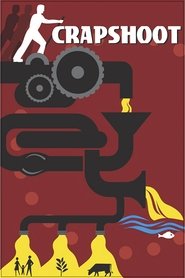
Crapshoot: The Gamble with Our Wastes
A hazardous mix of waste is flushed into the sewer every day. The billions of litres of water - combined with unknown quantities of chemicals, solvents, heavy metals, human waste and food - where does it all go? And what does it do to us? Filmed in Italy, India, Sweden, the United States and Canada, this bold documentary questions our fundamental attitudes to waste. Does our need to dispose of waste take precedence over public safety? What are the alternatives?Year:
2003
How the Fiddle Flows
How the Fiddle Flows follows Canada's great rivers west along the fur-trading route of the early Europeans. The newcomers introduced the fiddle to the Aboriginal people they intermarried with along the way. A generation later, their mixed-blood offspring would blend European folk tunes with First Nations rhythms to create a rich and distinct musical tradition. From the Gaspé Peninsula, north to Hudson Bay and to the Prairies, How the Fiddle Flows reveals how a distinctive Metis identity and culture were shaped over time. Featuring soaring performances by some of Canada's best known fiddlers and step dancers and narrated by award-winning actress Tantoo Cardinal.Year:
2002
The Pacifist Who Went to War
This documentary is the story of two Mennonite brothers from Manitoba who were forced to make a decision in 1939, as Canada joined World War II. In the face of 400 years of pacifist tradition, should they now go to war? Ted became a conscientious objector while his brother went into military service. Fifty years later, the town of Winkler dedicates its first war memorial and John begins to share his war experiences with Ted.Year:
2002

Truckers: A Road Well Traveled
Documents the lives of three long-haul truck drivers whose routes take them throughout North America - even to the Arctic. The complexity of their work is on display as bad weather, unsafe driving conditions, and rising fuel prices add to the stress of being away from home for weeks at a time. Even so, the film celebrates the joy of the open road and a spirit of independence.Year:
2001
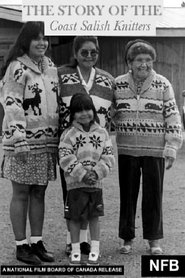
The Story of the Coast Salish Knitters
For almost a century, the Coast Salish knitters of southern Vancouver Island have produced Cowichan sweaters from handspun wool. These distinctive sweaters are known and loved around the world, but the Indigenous women who make them remain largely invisible.Year:
2000
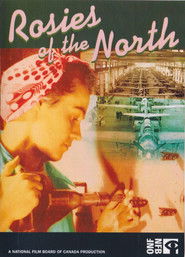
Rosies of the North
They raised children, baked cakes... and built world-class fighter planes. Sixty years ago, thousands of women from Thunder Bay and the Prairies donned trousers, packed lunch pails and took up rivet guns to participate in the greatest industrial war effort in Canadian history. Like many other factories across the country from 1939 to 1945, the shop floor at Fort William's Canadian Car and Foundry was transformed from an all-male workforce to one with forty percent female workers.Year:
1999
The Pill
Chronicles little known chapters in the history of the birth control pill. Examines how far the pharmaceutical industry was willing to risk women's health. Interviews women from Puerto Rico who became unsuspecting test subjects. Provides insights from women health activists who questioned the high-dose version's safety, and testimony from scientists who developed the pill.Year:
1999
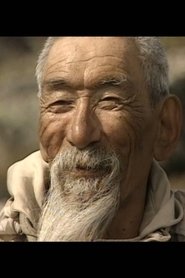
Amarok's Song - The Journey to Nunavut
In this feature-length documentary, three generations of the Caribou Inuit family come together to tell the story of their journey as Canada's last nomads. From the independent life of hunting on the Keewatin tundra to taking the reins of the new territory of Nunavut on April 1, 1999, we see it all. The film is the result of a close collaboration between Ole Gjerstad, a southern Canadian, and Martin Kreelak, an Inuk. It's Martin's family that we follow, as the story is told through his own voice, through those of the Elders, and through those of the teens and young adults who were born in the settlements and form the first generation of those growing up with satellite TV and a permanent home.Year:
1998
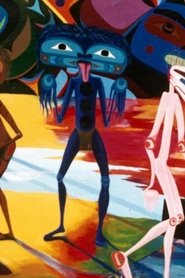
Yuxweluptun: Man of Masks
This short documentary serves as a portrait of Lawrence Paul Yuxweluptun, one of Canada's most important painters. We meet him at the Bisley Rifle Range in Surrey, England, where he's literally shooting the Indian Act in a performance piece called "An Indian Shooting the Indian Act." It's in protest of the ongoing effects of the Act's legislation on Indigenous people. We then follow him back to Canada, for interviews with the artist and a closer look at his work.Year:
1998
Forgotten Warriors
This documentary introduces us to thousands of Indigenous Canadians who enlisted and fought alongside their countrymen and women during World War II, even though they could not be conscripted. Ironically, while they fought for the freedom of others, they were being denied equality in their own country and returned home to find their land seized.Year:
1997
The Road Taken
This 1996 documentary takes a nostalgic ride through history to present the experiences of Black sleeping-car porters who worked on Canada's railways from the early 1900s through the 1960s. There was a strong sense of pride among these men and they were well-respected by their community. Yet, harsh working conditions prevented them from being promoted to other railway jobs until finally, in 1955, porter Lee Williams took his fight to the union.Year:
1996
The Sterilization of Leilani Muir
The life and times of Leilani Muir, the first person to file a lawsuit against the Alberta provincial government for wrongful sterilization under the Sexual Sterilization Act of Alberta.Year:
1996
No Turning Back
This film follows the aftermath of the Oka crisis, which brought Indigenous rights into sharp focus. After the barricades came down, the Royal Commission on Aboriginal Peoples was created, and travelled to more than 100 communities and heard from more than 1,000 representatives. For two-and-a-half years, teams of Indigenous filmmakers followed the Commission on its journey.Year:
1996
Cactus Swing
The West. A prospector is awakened by the sound of music outside his cave to see an animal band and a chorus line of dancing cacti.Year:
1995
Tikinagan
Tikinagan is a no-holds-barred account of the difficulties along the path to Native self-determination. Tikinagan is the Ojiubway word for cradleboard... the indigenous device in which babies are carried on a parent's back. Tikinagan is also the name of a revolutionary Native child-care agency operating out of Sioux Lookout, Ontario. Tikinagan workers know that the welfare of the children in their remote northwestern Ontario communities is in peril and needs special help. They still encounter the residue of bitterness and distrust left after years of conflict with provincial child welfare agencies. They have let their story be told in a film that is honest and uncompromising. Source: 1999 imagineNATIVE CatalogueYear:
1991

Movie Showman
This short film portrays the NFB's itinerant projectionists during the ’40s and early ’50s who travelled throughout Canada, bringing films and discussions to rural communities. The film uses a mix of dramatic re-enactments with archival footage and interviews with veterans of the movie circuit to shed light on an important period in Canadian film history.Year:
1989

Foster Child
Gil Cardinal searches for his natural family and an understanding of the circumstances that led to his becoming a foster child. An important figure in the history of Canadian Indigenous filmmaking, Gil Cardinal was born to a Métis mother but raised by a non-Indigenous foster family, and with this auto-biographical documentary he charts his efforts to find his biological mother and to understand why he was removed from her. Considered a milestone in documentary cinema, it addressed the country’s internal colonialism in a profoundly personal manner, winning a Special Jury Prize at Banff and multiple international awards.Year:
1987
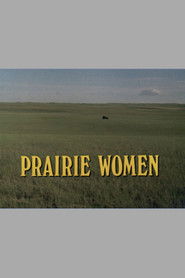
Prairie Women
This film illustrates the struggles of Canadian prairies women to achieve a more just and humane society within the farm movement and at large. During the early 1900s, women on the prairies looked for ways to overcome their isolation. Out of the resulting farm women's organizations grew a group of women possessing remarkable intellectual abilities, social and cultural awareness, and advanced worldviews.Year:
1987