Аватар персоны Gregory J. Markopoulos

Gregory J. Markopoulos

DirectorActorProducerWriter
Gregory J. Markopoulos (March 12, 1928 - November 12, 1992) was an American experimental filmmaker. Born in Toledo, Ohio to Greek immigrant parents, Markopoulos began making 8 mm films at an early age. He attended USC Film School in the late 1940s, and went on to become a co-founder — with Jonas Mekas, Shirley Clarke, Stan Brakhage and others — of the New American Cinema movement. He was as well a contributor to Film Culture magazine, and an instructor at the Art Institute of Chicago. In 1967, he and his partner Robert Beavers left the United States for permanent residence in Europe. Once ensconced in self-imposed exile, Markopoulos withdrew his films from circulation, refused any interviews, and insisted that a chapter about him be removed from the second edition of Visionary Film, P. Adams Sitney's seminal study of American avant-garde cinema. While he continued to make films, his work went largely unseen for almost 30 years.

12-03-1928

Birthday

Pisces

Zodiac Sign

-

Genres

19

Total Films

Also known as (male)

Toledo, Ohio

Place of Birth
Popular works

Creative career

actor

19 Works

producer

16 Works

director

116 Works

writer

11 Works

other

43 Works

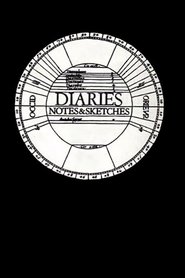
Diaries, Notes, and Sketches

Diaries, Notes, and Sketches

An epic portrait of the New York avant-garde art scene of the 60s.
7.4

Year:

2013

Early Monthly Segments

Early Monthly Segments

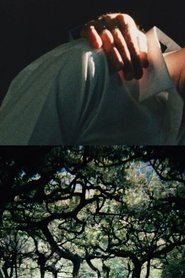
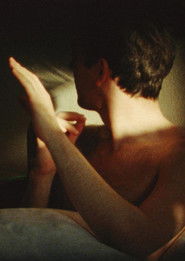
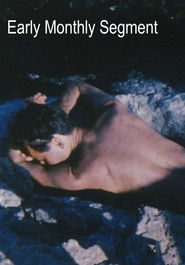
Early Monthly Segments, filmed when Beavers was 18 and 19 years old, now forms the opening to his film cycle, "My Hand Outstretched to the Winged Distance and Sightless Measure." It is a highly stylized work of self-portraiture, depicting filmmaker and companion Gregory J. Markopoulos in their Swiss apartment. The film functions as a diary, capturing aspects of home life with precise attention to detail, documenting the familiar with great love and transforming objects and ordinary personal effects into a highly charged work of homoeroticism. (Susan Oxtoby, Toronto International Film Festival).
0.0

Year:

2003

The Hedge Theater

The Hedge Theater

Beavers shot The Hedge Theatre in Rome in the 1980s. It is an intimate film inspired by the Baroque architecture and stone carvings of Francesco Borromini and St. Martin and the Beggar, a painting by the Sienese painter Il Sassetta. Beavers’ montage contrasts the sensuous softness of winter light with the lush green growth brought by spring rains. Each shot and each source of sound is steeped in meaning and placed within the film’s structure with exacting skill to build a poetic relationship between image and sound.
6.4

Year:

2002

Sotiros

Sotiros

Beavers distilled the 26-minute Sotiros in 1996 from an original 50-minute trilogy. Filmed in Athens and Peloponnesus in Greece as well as in Austria, much of Sotiros is structured around another binarism: two repeating intertitles marked "He said" and "he said." Each title introduces a set of visual phrases with loosely parallel camerawork. The images are careful and delicate studies of light patterns in a hotel suite and at a cafe, rolling hills populated by a lone shepherd, Eurostyle modernized storefronts, a blind man begging in the street. The film’s title refers to one of the appellations of the Apollo, in his role as savior or healer. - New York Press
8.0

Year:

2000

Birth of a Nation

Birth of a Nation

Filmmaker Jonas Mekas films 160 underground film people over four decades.
6.3

Year:

1997

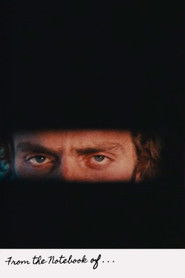
From the Notebook of...

From the Notebook of...

"From the Notebook of..." was shot in Florence and takes as its point of departure Leonardo da Vinci's notebooks and Paul Valéry's essay on da Vinci's process. These two elements suggest an implicit comparison between the treatment of space in Renaissance art and the moving image. The film marks a critical development in the artist's work in that he repeatedly employs a series of rapid pans and upward tilts along the city's buildings or facades, often integrating glimpses of his own face. As Beavers notes in his writing on the film, the camera movements are tied to the filmmakers' presence and suggests his investigative gaze.
6.1

Year:

1972

The Painting

The Painting

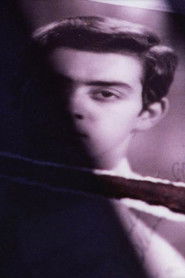
The Painting intercuts shots of traffic navigating the old-world remnants of downtown Bern, Switzerland, with details from a 15th-century altarpiece, “The Martyrdom of St. Hippolytus”. The Painting intercuts shots of traffic navigating the old-world remnants of downtown Bern, Switzerland, with details from a 15th-century altarpiece, “The Martyrdom of St. Hippolytus”. The painting shows the calm, near-naked saint in a peaceful landscape, a frozen moment before four horses tear his body to pieces while an audience of soigné nobles look on; in the movie’s revised version, Beavers gives it a comparably rarefied psychodramatic jolt, juxtaposing shots of Gregory Markopoulos, bisected by shafts of light, with a torn photo of himself and the recurring image of a shattered windowpane. (J. Hoberman, The Village Voice)
0.0

Year:

1972

Heads

Heads

Includes 'portraits' of Marianne Faithfull, Thelonious Monk and 28 others, some known, some less so.
0.0

Year:

1969

Political Portraits

Political Portraits

Dedicated to Dieter Meier. voice-over by Gregory Markopoulos, reading an excerpt in English translation of Paul Valéry’s L’Homme et la nuit (Man and the Night).
0.0

Year:

1969

The Illiac Passion

The Illiac Passion

Prometheus, on an Odyssean journey, crosses the Brooklyn Bridge in search of the characters of his imagination. After meeting the Muse, he proceeds to the "forest." There, under an apple tree, he communes with his selves, represented by celebrated personages from the New York "underground scene" who appear as modern correlatives to the figures of Greek mythology. The filmmaker, who narrates the situations with a translation of Aeschylus' Prometheus Bound , finds the personalities of his characters to have a timeless universality.
4.2

Year:

1967

Winged Dialogue

Winged Dialogue

"Winged Dialogue details with growing clarity the desperate beauty and sexuality of the body animated by its soul, essence blindly reaching out, touching, in brilliant patterns through and beyond those of the vanishing images, expressed vividly in the after-image on the mind, on the soul’s eye." (Tom Chomont)
0.0

Year:

1967

Spiracle

Spiracle

Portrait studies of Mrs. Hodges, Gail Beavers (the filmmaker’s sister) and Gregory J. Markopoulos.
0.0

Year:

1967

The Dead Ones

The Dead Ones

Markopoulos’ first attempt at making a 35mm feature film, clearly inspired by the cinema of Jean Cocteau, was left unfinished and the materials were lost for many years.
0.0

Year:

1967

The Death of Hemingway (An Obituary Fantasy)

The Death of Hemingway (An Obituary Fantasy)

Shot in thirty-two hours at the abandoned Baybridge Theater in Brooklyn, in cinemascope and Eastman color. The film was based on the one-act play of the same name by George Christopoulos, who also commissioned it.
0.0

Year:

1965

Award Presentation to Andy Warhol

Award Presentation to Andy Warhol

In 1964 Film Culture magazine chose Andy Warhol for its annual Independent Film award. The plan was to show some of Andy's films and have Andy come on stage and hand him the award. Andy said, no, he didn't want a public presentation.
7.0

Year:

1965

Dionysus

Dionysus

In 1963 Boultenhouse wrote, produced, and directed Dionysius,which he described as a “free treatment of Euripides' The Bacchae.”It starred the dancers Louis Falco, Anna Duncan, and Nicolas Magallanes as Dionysius, Agave, and Pentheus respectively, and the experimental filmmakers Charles Levine, Willard Maas, Gregory Markopoulos, Marie Menken, Lloyd Williams and William Wood as the Chorus of Cameras. The film's score was by Teiji Ito.
6.0

Year:

1964

Swain

Swain

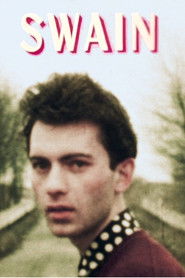
Swain is inspired by Nathaniel Hawthorne’s Fanshawe, features a dreamlike narrative of a young man’s ritualized rejection of heterosexuality, as a mysterious woman in white gossamer pursues him through a ruined landscape.
3.0

Year:

1950

A Christmas Carol

A Christmas Carol

Based on the story by Charles Dickens. Filmed in Toledo, Ohio, U.S.A. Preserved by the Oesterreichisches Filmmsuem, Vienna and Temenos Archive, Zurich.
10.0

Year:

1940