Аватар персоны Griffin Yueh Feng

Griffin Yueh Feng

DirectorWriter
Griffin Yueh Feng (1909 or July 29, 1910 – March 3, 1999) was a Chinese film director and screenwriter who worked in the Cinema of Hong Kong. He worked at the Shaw Brothers Studio's for many years and directed nearly 90 films. Born as Da Zichun (Chinese: 笪子春) in Shanghai, China, Yueh Feng studied at the Asia Photography School. Yueh started his career in a film industry as an extra in 1929. By 1933, Yueh advanced to the role of a director after gaining experience as an assistant. In 1949, Yueh became a director for Great Wall Company in Hong Kong, where he directed his first Hong Kong film "An Unfaithful Woman" (also known as A Forgotten Woman), a 1949 Mandarin Drama. Yueh was a director for Cathay Studio, International Films, and Motion Picture & General Investment Co. Ltd. In 1959, he also became a director for Shaw Brothers Studio.Yueh's first Hong Kong film for Shaw Brothers Studio was The Other Woman (also known as Husband's Lover) a Mandarin Romantic comedy. That same year, he became a screenwriter for Hong Kong films. Yueh's final film was The Two Cavaliers (also known as Furious Slaughter), a Mandarin Martial Arts film released in 1973.

29-07-1909

Birthday

Leo

Zodiac Sign

-

Genres

0

Total Films

Ngok Fung, Yueh Fung, Yue Feng, 岳枫

Also known as (male)

Jiangsu province, China

Place of Birth

Popular works

Creative career

actor

0 Works

producer

0 Works

director

55 Works

writer

8 Works

other

0 Works

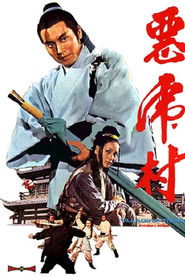
Village of Tigers

Village of Tigers

The Village of Tigers is known as the home of all evil doers throughout the land, ruled by their leader, Lord Hu Jiao. When the famed swordsman known as the Sword of the Southern Sky, Luo Hong-Xun ends up in said village, he will teach the bandits a lesson.
6.9

Year:

1974

Martial Hero of Southern Frontier

Martial Hero of Southern Frontier

The story is about a humble man known as the Canton Kid, who just happens to have extraordinary kung fu talent. He’s often found sticking up for the downtrodden and prostitutes and finally paying a price for it.
0.0

Year:

1973

The Two Cavaliers

The Two Cavaliers

Gangster boss Red Rose and his evil gang exploit all regions with their raids and kill everyone that tries to stop them. During one these raids, a group of guards die during a brutal fight. Lung Hao, boss of the company, swears revenge for the murdered men!
0.0

Year:

1973

Dragon from Wu Tang

Dragon from Wu Tang

A man is wrongfully accused of a cop's murder.
0.0

Year:

1973

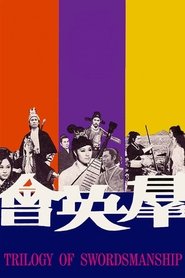
Trilogy of Swordsmanship

Trilogy of Swordsmanship

Three martial arts directors united for this unique anthology film. Yueh Feng writes and directs a clever love-and-kung-fu triangle, Cheng Kang both writes and directs kung-fu courtesans battling brigands, and the "godfather of the kung-fu film," Chang Cheh, creates a cliff-hanging, swashbuckling mini-movie with maxi-action.
5.8

Year:

1972

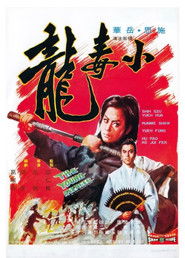
The Young Avenger

The Young Avenger

After a career spanning more than forty years and dozens of films as director or writer, Yueh Feng used everything he learned on a final few martial arts epics, of which this is one of the most memorable. It's not easy to forget a hunchbacked, one-armed protagonist, nor the "Poisonous Dragon Sword" style, nor the luminous and lethal Shih Szu as the title swordswoman, who is out to avenge her father's death at the mid-autumn festival.
5.6

Year:

1972

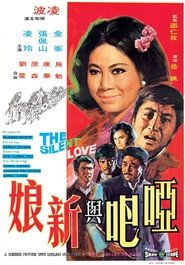
The Silent Love

The Silent Love

Ivy Ling Po gives a startling performance as an abused wife who suffers through all his adulterous and treacherous ways in The Silent Love, which became an allegorical, tragic love story that reflected the unspoken truths inherent in Chinese society. Lead actor Chin Feng received the 1971 Golden Horse Outstanding Performance award for his portrayal as The Mute, a man that secretly loves Ivy and does all he can to make her life better, except that it backfires on him.
6.0

Year:

1971

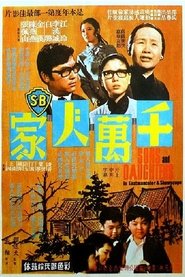
Sons and Daughters

Sons and Daughters

shaw production
0.0

Year:

1971

A Taste of Cold Steel

A Taste of Cold Steel

It's a no-holds-barred battle to the death for possession of the invaluable Purple Sword. Assistant director Wang Po-yi also wrote this entertaining and exciting adventure which could have also been called "The Five Tigers" since there's no doubt that this quintet is the highlight of the action. Huang Tsung-shun is "Fierce Tiger," Hung Liu is "Drunk Tiger," Hsu Erh-niu is "Lame Tiger," award-winning actor Ku Feng is "One-eyed Tiger" and respected director/actor Wu Ma is "Sick Tiger" in a tangle of tussles and thrills
4.8

Year:

1970

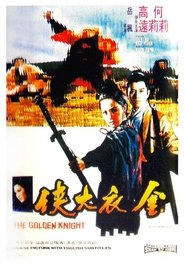
The Golden Knight

The Golden Knight

Respected veteran Yueh Feng made this “Martial Arts World” saga of a masked master of the “Black Sand Hand Technique,” while Lily Ho, the star of "Princess Iron Fan" and "Angel With The Iron Fists", excels in a delightful dual leading role. When she teams up with Shu Pei-pei as a fellow swordswoman to vanquish a murdering robber, the comparisons to "Crouching Tiger, Hidden Dragon" are obvious, even though it came three decades later.
4.9

Year:

1970

The Younger Generation

The Younger Generation

The Younger Generation is an ultra-tragic tale about a young girl, played by Ivy Ling Po who gets married, has five kids, then she and her husband die forcing one child sold to prostitution to feed the other four. Chinese culture dictates that great respect is given to the elders and in The Younger Generation, it is an elder that is the hero, telling audiences that although sadness abounds, they can return home happy with their Confucius mindset.
5.0

Year:

1970

The Three Smiles

The Three Smiles

The film tells the story of Tang Bohu, a famous scholar who spends most of his time wandering around the countryside.
7.0

Year:

1969

The Three Smiles

The Three Smiles

The film tells the story of Tang Bohu, a famous scholar who spends most of his time wandering around the countryside.
7.0

Year:

1969

The Bells of Death

The Bells of Death

A simple woodcutter named Wei Fu finds his world shattered when three murderous horsemen arrive to kill his family and kidnap his sister. Left with nothing but his mother’s bell-laden bracelet, he sets out to seek his revenge. Lucky for him, Wei Fu encounters a master swordsman, who takes him under his wing.
6.7

Year:

1968

The Magnificent Swordsman

The Magnificent Swordsman

Lone swordsman Jiang Dan-Feng (Wong Chung-Shun) is ambushed by a pair of bandits and quickly despatches them. One of them, as he is dying, asks Jiang to take his personal effects to his sister. This being a Wuxia film, our hero is bound by a strict code of honour, and he agrees. The bandit’s sister, Xiu Xiu (Shu Pei-Pei), is surprisingly forgiving and tells him that he got mixed up in a bad crowd of robbers before he died. As it happens, these self-same bandits are threatening to tear up the village at any moment, and Jiang prepares to defend it despite being despised by the town folk for killing Xiu Xiu’s brother.
5.5

Year:

1968

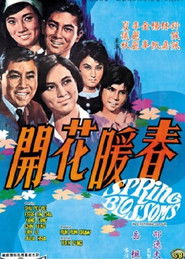
Spring Blossoms

Spring Blossoms

Spring Blossoms is a parable about the Chinese youth culture and what's important to the younger generation when it comes to romance. It starred a new wave of seventies, Shaw's beauties, Lily Li, Shu Pei-pei and Essie Lin-chia as single women looking for love. It's a triple-decker romantic bus ride on a road to nowhere speeding toward a low bridge.
0.0

Year:

1968

Rape of the Sword

Rape of the Sword

Experienced heroine Li Li-Hua plays a swordswoman out to reclaim her murdered husband's "Green Sword," the sharpest blade in the world. The lovely Li Ching plays the role of Li Li-hua's student, who must take up the fight when her teacher falters.
6.4

Year:

1967

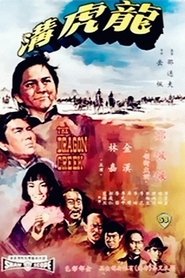
The Dragon Creek

The Dragon Creek

Shaw Brothers Action Drama.
0.0

Year:

1967

The Dragon Creek

The Dragon Creek

Shaw Brothers Action Drama.
0.0

Year:

1967

Auntie Lan

Auntie Lan

The contemporary issue of single mothers is sensitively handled in this melodrama as a young woman must decide whether she will tell the new man in her life the real truth or forever remain the child's auntie Lan? (Celestial Pictures sypnosis)
0.0

Year:

1967

Auntie Lan

Auntie Lan

The contemporary issue of single mothers is sensitively handled in this melodrama as a young woman must decide whether she will tell the new man in her life the real truth or forever remain the child's auntie Lan? (Celestial Pictures sypnosis)
0.0

Year:

1967

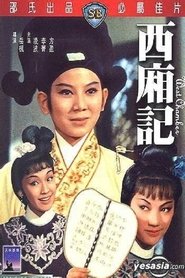
The West Chamber

The West Chamber

A scholar woos the daughter of an important family, while outwitting rebels who try to capture her.
0.0

Year:

1965

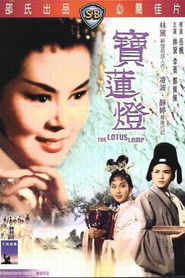
The Lotus Lamp

The Lotus Lamp

The Goddess of Hua Mountain is imprisoned for falling in love with a mortal, meanwhile her son is raised in secret until he can attempt to free her.
6.0

Year:

1965

The Lotus Lamp

The Lotus Lamp

The Goddess of Hua Mountain is imprisoned for falling in love with a mortal, meanwhile her son is raised in secret until he can attempt to free her.
6.0

Year:

1965

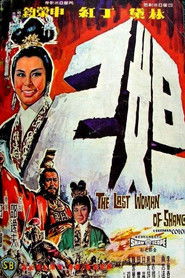
The Last Woman of Shang

The Last Woman of Shang

In order to exact revenge upon him, a young woman (Lin Dai) marries the Emperor Chou (Shin Young-kyun), who killed her father.
6.5

Year:

1964

Lady General Hua Mulan

Lady General Hua Mulan

About a woman who disguises herself as a man to take her father's place in the army.
5.6

Year:

1964

Between Tears and Smiles

Between Tears and Smiles

Fan Chia-soo is a kind-hearted student whose heart is captured by the sweet song of Shen Feng-hsien. However, he is not the only one who has eyes for Shen. The General's henchmen are also determined to present the songstress to their superior as a gift. Fan received help from an unexpected quarter to save the woman he loves.
6.3

Year:

1964

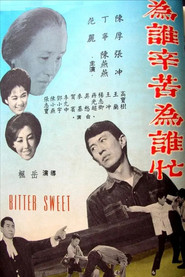
Bitter Sweet

Bitter Sweet

A widow of four gave up two of her children to be raised by an uncle in Singapore. Many years later, just when the widow, now a house maid, is feeling contented by good news of her long gone son and daughter, she accidentally runs into his own son, now a lawyer, and ends up being looked down upon by him. It was a story about how traditional Chinese family and its value was impacted by the change of time. The movie depicted Macau in 1945 to Hong Kong in the mid-60s, moving from poverty after WWII to opulence. The human relationships became complicated and fragile. Many elements uniquely "Hong Kong", such as upper class Chinese, western religions, English speaking and a mixed-culture society are used to contrast the traditional, kind, enduring and forgiving love of a mother.
0.0

Year:

1963

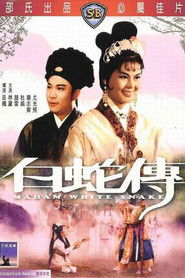
Madam White Snake

Madam White Snake

This Classic Seductive tale of two snakes who assume human forms will send chills of pleasure down viewers' backs. The Lovely Linda Lin Dai (Les Belles, The Kingdom And The Beauty) and margaret Tu Chuan (The Dream of The Red Chamber) play the two sister serpents, Pak Su-cheng and Ching Ching. Su-cheng meets Hsu Hsien (Chao Lei) one day and recognizes him as her savior in another life 1,000 years ago. She marries him to reward him but the snake-human union brings about problems beyond imagination.
10.0

Year:

1962

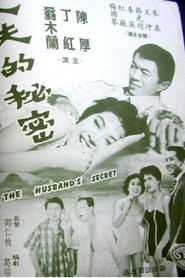
The Husband's Secret

The Husband's Secret

A romantic comedy by the Shaw Brothers studio. This is a sequel to Husband's Lover (1959).
0.0

Year:

1961

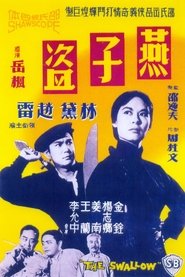
The Swallow

The Swallow

The hunt for The Swallow Thief.
0.0

Year:

1961

When the Peach Blossoms Bloom

When the Peach Blossoms Bloom

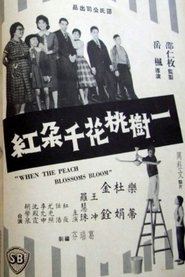
The Shen couple had six children. For years Mr Shen had been the only one to support the family. One day, Mr Shen was on a crashed plane in Singapore and everyone believed he had died. Mrs Shen then went to Singapore to prepare for his funeral and the eldest daughter took charge of the family. However, the brothers and sisters would never listen to their eldest sister. The second brother was extremely bad-tempered and always beat the others up when they did not listen to him. The fourth sister was extremely gluttonous who would never help with any housework. The eldest sister was annoyed and could do nothing.
0.0

Year:

1960

Street Boys

Street Boys

A drama film by the Shaw Brothers studio.
0.0

Year:

1960

The Deformed

The Deformed

Nurse Leng Shuxian is forced by family circumstances to marry Long Yusheng (King Hu), a grossly disfigured Quasimodo with a heart of gold. Shuxian tries but is unable to accept his deformity and they remain a couple in name only. With the appearance of Yusheng's cousin, she has to make a choice between personal happiness and family duty. From the start, Loh's character and drove the action, evoking a great intensity of emotions along the way: suffering, resignation and loneliness. Loh was lauded as the "Queen of Tragedy" after her heart-wrenching portrayal in this film. Winner of two Golden Harvest Awards – for best screenplay and best black-and-white cinematography – at the 8th Asian Film Festival in 1961.
0.0

Year:

1960

Husband's Lover

Husband's Lover

A romantic comedy by the Shaw Brothers studio starring Peter Chen Ho, in his first starring role in a SB film, and Pat Ting Hung, in her film debut.
0.0

Year:

1959

For Better, for Worse

For Better, for Worse

Hong Kong's submission for the Academy Award for Best Foreign Language Film in 1959
5.0

Year:

1959

The Battle of Love

The Battle of Love

Yeh Wei-fang, a rich young lady, flirts with her suitors and hopes it would make Shi Rongsheng, the cousin she loves, angry. But Rongsheng doesn’t pay attention to that, and lectures her for lacking self-respect. Tao Wen-ping, Rongsheng's friend, gets to know Wei-fang. He invites her to go to the resort house borrowed from Rongsheng, but is fooled by her. Wen-ping gets to know Fang's sister, Wei-ling, by chance. Sharing common interests, Wei-ling grows a secret love for him. Wei-fang's home has a JP’s son as a guest. Rongsheng invites Wen-ping to join. Wei-fang knows that Wei-ling likes Wen-ping, but she shows intimacy towards him. Another guest, the antiquary Prof Ho Chi-hua, arrives, he is infatuated with Wei-fang. Wei-fang shows zeal for both, who in the end quarrel and fight. Wei-fang finally declares her love for Rongsheng under the pressure from Wen-ping and Chi-hua, who had a fight over her. Rongsheng's evasiveness proves weak for Wei-fang's quest for his love.
0.0

Year:

1957

Golden Lotus

Golden Lotus

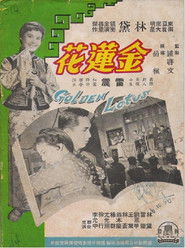
A Hong Kong historical drama
0.0

Year:

1957

Golden Lotus

Golden Lotus

A Hong Kong historical drama
0.0

Year:

1957

A Love Story

A Love Story

Peng Zigang and Zhao Xiaoping live together in the same room, and they get along well. When they learned that a tenant had moved out, they both begged the landlord to rent the room to their girlfriends, and they did not give in to each other. Fortunately, the landlord intervened and their girlfriends lived with them in the neighboring room. Kong is simple, but his girlfriend Dufen is fashionable; Ping is active, but his girlfriend Tang Ying is quiet. The two lovers eventually broke up due to personality disagreement, but instead, they were married to their best friend's partner.
0.0

Year:

1954

The Stormy Night

The Stormy Night

HK drama film.
0.0

Year:

1952

Modern ‘Red Chamber Dream’

Modern ‘Red Chamber Dream’

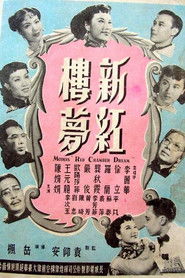
Dream of the Red Chamber, one of the big four of classic Chinese novels, has been adapted for film and television dozens of times over the past decades. Yet this sui generis Great Wall production daringly transposes the setting to modern-day 1950s. The contemporised story revolves nonetheless around the love triangle between Jia Baoyu and his two cousins. Both girls love him but his heart belongs to only one. The ending, however, is remarkably changed to separation of the lovers as a result of war—the war that was surely still haunting the minds of the filmmakers at the time when the film was made. Not only did Great Wall pour money into building extravagant sets just so to recreate down to the smallest detail the grandeur of the legendary Jia mansion, but the film also boasted of its lavish costume designs for the diverse female cast. (From Hong Kong Film Archive)
0.0

Year:

1952

Modern ‘Red Chamber Dream’

Modern ‘Red Chamber Dream’

Dream of the Red Chamber, one of the big four of classic Chinese novels, has been adapted for film and television dozens of times over the past decades. Yet this sui generis Great Wall production daringly transposes the setting to modern-day 1950s. The contemporised story revolves nonetheless around the love triangle between Jia Baoyu and his two cousins. Both girls love him but his heart belongs to only one. The ending, however, is remarkably changed to separation of the lovers as a result of war—the war that was surely still haunting the minds of the filmmakers at the time when the film was made. Not only did Great Wall pour money into building extravagant sets just so to recreate down to the smallest detail the grandeur of the legendary Jia mansion, but the film also boasted of its lavish costume designs for the diverse female cast. (From Hong Kong Film Archive)
0.0

Year:

1952

The Flower Street

The Flower Street

Flower Street is a place where people from the jungle live, and the street is a place where people from the marketplace gather. Zhaogou and his wife, Bai Lanhua, make a living as singers in the House of Delight and have a daughter, Daping. Daping enrolls in school, and her best friend Lian Bao is also helped by Zhaogou to learn the art, and later moves on to work as an apprentice in a factory. During the war, Zhaoxu's family fled, but his grandmother insisted on staying behind. Zhaogou is separated from his wife and daughter on the road; Daping wanders around with his mother and sells songs, and after a few twists and turns, he and his mother are able to return to Flower Street.
0.0

Year:

1950

Blood Will Tell

Blood Will Tell

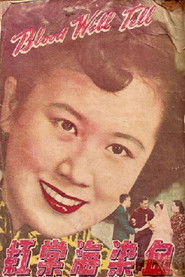
Ma the flying bandit calls it quits after his daughter is born. His wife, a onetime prostitute, can’t stand poverty and turns him in to the authorities before resuming her profession. Years later, when the daughter is set to get married, the unabashed mother blackmails her own flesh and blood, so Ma has to escape from prison to thwart her.
0.0

Year:

1949

Three Women

Three Women

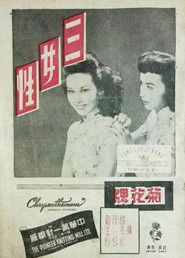
Three young women navigate modern life in post-World War 2 Shanghai. Directed by Feng Yueh. Starring Hao Wang, Li Hua Li, and Helena Law.
0.0

Year:

1947

Signal Fires of Shanghai

Signal Fires of Shanghai

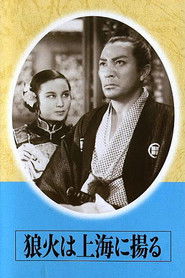
During the Taiping Rebellion of the mid-19th century, anti-Qing (Manchu) Chinese forces led by Taiping commander Li Xiucheng march on Shanghai. Although the Western powers are officially neutral, the British consul in Shanghai sides with the Qing imperial government, and counter to his own government's policy he retains American adventurer Frederick Townsend Ward to raise a mercenary force of foreigners in Shanghai and oppose the Taipings. Ward's force is routed, with heavy casualties, but since many of the casualties are British, the British army soon is drawn in on the side of the Qings. The only support for the Chinese comes from Japanese in Shanghai and anti-imperialist demonstrations in Japan. A family drama plays out against this historical background. After a Chinese home is destroyed by careless British shelling, killing the father and crippling a daughter, the surviving son vows revenge but begins to see that his true friends may be the Japanese.
8.8

Year:

1944

Home

Home

0.0

Year:

1941

Liang Shanbo and Zhu Yingtai

Liang Shanbo and Zhu Yingtai

In Tang Dynasty China, poetry exams for officials drove young men to study. Zhu Yingtai, a scholar's daughter, disguised herself as a man to attend school. She befriended Liang Shanbo, sharing a dorm without revealing her identity. Forced into marriage, Liang died heartbroken. Zhu mourned at his grave, dying beside it. Their tale became legend.
0.0

Year:

1940

The Angel

The Angel

This is one of the rare gems in early Chinese musical films that still exists today. Nancy Chan plays a naïve young woman who can sing and dance. Under the arrangement of her stepfather, she becomes a star and indulges in the glitz and glamour of the entertainment world before getting married to a wealthy heir in Nanyang. Yet her husband is cruel and unfaithful, leading her to divorce and return to her parents in Shanghai. She is set for a comeback to the stage. Her young daughter suffers from a serious illness. A remake of the Bu Wanchang’s silent film The Light of Maternal Instinct (1933), this film takes cues from Hollywood musicals, resulting in an elegant and lively fusion of camera movement and musical numbers. The film also reflects the harsh reality of China in the 1930s and the pathos of popular literature by combining morals, entertainment and social commentary to show that changes in the idea of femininity is a symbol of progress.
0.0

Year:

1939

The Angel

The Angel

This is one of the rare gems in early Chinese musical films that still exists today. Nancy Chan plays a naïve young woman who can sing and dance. Under the arrangement of her stepfather, she becomes a star and indulges in the glitz and glamour of the entertainment world before getting married to a wealthy heir in Nanyang. Yet her husband is cruel and unfaithful, leading her to divorce and return to her parents in Shanghai. She is set for a comeback to the stage. Her young daughter suffers from a serious illness. A remake of the Bu Wanchang’s silent film The Light of Maternal Instinct (1933), this film takes cues from Hollywood musicals, resulting in an elegant and lively fusion of camera movement and musical numbers. The film also reflects the harsh reality of China in the 1930s and the pathos of popular literature by combining morals, entertainment and social commentary to show that changes in the idea of femininity is a symbol of progress.
0.0

Year:

1939

逃亡

逃亡

0.0

Year:

1935

中国海的怒潮

中国海的怒潮

0.0

Year:

1933

中国海的怒潮

中国海的怒潮

0.0

Year:

1933