

Harry Kupfer
Director
12-08-1935
Birthday
Leo
Zodiac Sign
-
Genres
0
Total Films
Also known as (male)
Berlin, Germany
Place of Birth
12-08-1935
Birthday
Leo
Zodiac Sign
-
Genres
0
Total Films
-
Also Known As (male)
Berlin, Germany
Place of Birth
12-08-1935
Birthday
Leo
Zodiac Sign
-
Genres
0
Total Films
Also known as (male)
Berlin, Germany
Place of Birth
12-08-1935
Birthday
Leo
Zodiac Sign
-
Genres
0
Total Films
-
Also Known As (male)
Berlin, Germany
Place of Birth
actor
0 Works
producer
0 Works
director
18 Works
writer
0 Works
other
6 Works

Verdi: Macbeth
After winning in battle, Commander Macbeth receives a prophesy that he will one day become King of Scotland. Influenced by the whisperings of his wife, he literally stops at nothing to fulfil the prophesy. But racked by guilt, the Macbeths soon sink into delusions and become victims of their own thirst for power. Anna Netrebko reprises her electrifying portrayal of Lady Macbeth opposite Plácido Domingo at the Berlin State Opera. Maestro Daniel Barenboim leads the opera icons along with the Staatsopernchor and Staatskapelle Berlin.Year:
2019
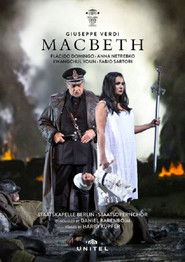
Macbeth
Giuseppe Verdi's powerful opera Macbeth sees a barnstorming staging by legendary stage director Harry Kupfer at the newly reopened Staatsoper Unter den Linden.Year:
2018
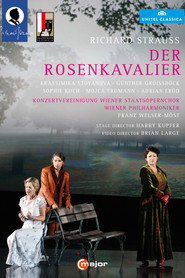
R. Strauss: Der Rosenkavalier (Salzburger Festspiele)
With their “comedy for music” in the spirit of Mozart, Richard Strauss and his inspired librettist Hugo von Hofmannsthal created the most popular of all their works and one of the most frequently performed operas of all time. In the guise of a gossamer-light and supremely entertaining high-class comedy, Der Rosenkavalier touches on universal themes such as love, sex, marital fidelity and the changes that human relations undergo over time – and all of it set to music of the most glorious kind imaginable. With its stellar cast under the inspired direction of Harry Kupfer, the 2014 Salzburg Festival’s production of Der Rosenkavalier was one of the most internationally acclaimed interpretations of the work since the start of the new millennium. “A musical feast from beginning to end“ (Wiener Zeitung).Year:
2014
R. Strauss: Der Rosenkavalier (Salzburger Festspiele)
With their “comedy for music” in the spirit of Mozart, Richard Strauss and his inspired librettist Hugo von Hofmannsthal created the most popular of all their works and one of the most frequently performed operas of all time. In the guise of a gossamer-light and supremely entertaining high-class comedy, Der Rosenkavalier touches on universal themes such as love, sex, marital fidelity and the changes that human relations undergo over time – and all of it set to music of the most glorious kind imaginable. With its stellar cast under the inspired direction of Harry Kupfer, the 2014 Salzburg Festival’s production of Der Rosenkavalier was one of the most internationally acclaimed interpretations of the work since the start of the new millennium. “A musical feast from beginning to end“ (Wiener Zeitung).Year:
2014

Parsifal
This dramatic production by the brilliant German stage director Harry Kupfer marked Daniel Barenboim's appointment as the artistic director of the Berlin State Opera in 1992. The cast is made up of the finest Wagnerian singers of the period, all of whom enjoyed substantial international careers. Barenboim's superb conducting reveals Wagner's multi-layered score in all it's glory.Year:
2012
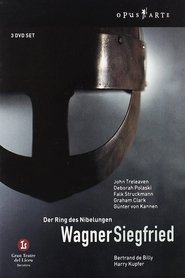
Wagner - Siegfried
In the third work of Wagner's epic cycle, Der Ring des Nibelungen, Siegmund's shattered sword is forged once again and kills the dragon that guards the ring. When Siegfried seizes the ring, he also receives its curse as he continues his fiery adventure of discovery and love. Filmed at Barcelona's Gran Teatre del Liceu in 2004, Harry Kupfer's stunning production, first staged in Berlin, numbers among the greatest productions of modern times and is recorded in sumptuous surround sound.Year:
2006

Wagner - Götterdämmerung
Musically, Götterdämmerung, like its predecessors in this Barcelona production, has strengths and flaws. Fortunately, Kupfer's interpretation places Brünnhilde and Hagen at its center and the singers are well up to the task. Deborah Polaski's final scene, so critical to any performance of the cycle, is excellent, the voice warm, the emotions palpable. Her moving performance here is ample compensation for the touch of vocal hardness she displays in the opening scenes. As Hagen, the veteran bass Matti Salminen offers a great portrayal: firm of voice, creating a complex character, not a stage villain. Also notable are soprano Elisabete Matos, who makes Gutrune a sympathetic character, and Julia Juon, whose Waltraute is more involving than usual.Year:
2005

Wagner - Die Walkure
Where Das Rheingold introduces us to the gods, underworld denizens, and giants who inhabit the world of Wagner's Ring cycle, the second of the four operas, Die Walküre, focuses on the interaction of men and gods. The turbulent orchestra brings Siegmund, Wotan's earthly son, into the home of his vicious enemy, Hunding, whose wife Sieglinde turns out to be Siegmund's newfound lover and twin sister. The gods meddle in their showdown battle, with Wotan bowing to his wife Fricka's demand that he uphold the sanctity of marriage by allowing Hunding to win. Wotan's favorite daughter, Brunnhilde, sides with Siegmund, earning Wotan's unbridled anger. She manages to shelter the now-pregnant Sieglinde, though, before being banished forever from Valhalla to a mountaintop ringed by fire. Like its predecessor, producer Harry Kupfer's Barcelona production of Die Walküre is spare and symbolic.Year:
2005

Wagner - Das Rheingold
The prologue to Wagner's giant masterpiece Der Ring des Nibelungen unfolds the beginning of an epic journey when Alberich seizes the ring of gold, its awesome power unleashing an unstoppable story of deceit, destruction, death and transfiguring love. Filmed at Barcelona's Gran Teatre del Liceu in 2004, Harry Kupfer's stunning production first staged in Berlin, and recorded in sumptuous surround sound, numbers among the greatest productions of modern times.Year:
2005

Elisabeth
The show opens in the "world of the dead", where Luigi Lucheni is being interrogated by a Judge as to why he has murdered the Empress Elisabeth. Lucheni claims that he did no more than what Elisabeth herself wanted, since all her life Elisabeth has been in love with Death himself – and vice versa. As his witnesses, Lucheni brings back the dead aristocracy of the bygone era and takes us to the past, where he serves as a sarcastic narrator of the events that lead to the transformation of the sweet and innocent Sisi to the revered and infamous Elisabeth, Empress of Austria and Queen of Hungary, and her decline through later years until her assassination.Year:
1992
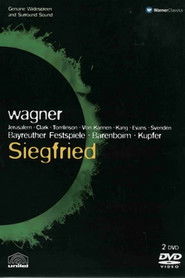
The Ring Cycle: Siegfried
SECOND DAY OF THE RING CYCLE. Alberich's brother Mime raises the orphan Siegfried, hoping that Siegfried will kill Fafner and enable Mime to gain the ring. Mime attempts unsuccessfully to reforge the Nothung. Fulfilling prophecy, Siegfried reforges the sword himself and kills Fafner, who has the form of a dragon. When he accidentally tastes the dragon's blood spilt on his hands, Siegfried understands the song of a woodbird, who instructs him to take the Ring from Fafner. Reading Mime's thoughts of betrayal, Siegfried kills the dwarf as well. The woodbird also informs Siegfried of a mysterious woman asleep in the midst of fire, and Siegfried sets off to find her. After defeating a disguised Wotan and breaking his spear, Siegfried successfully awakes Brünnhilde, and the two fall in love. Filmed at the Bayreuth Festspielhaus in June & July 1992.Year:
1992

The Ring Cycle: Die Walkure
FIRST DAY OF THE RING CYCLE. Fleeing for his life, Siegmund seeks shelter at Sieglinde's house. Her husband Hunding happens to be one of Siegmund's pursuers, and the two of them must cross swords the next day. As Siegmund laments his lack of a weapon, Sieglinde directs him to the sword Nothung stuck in an ash tree. Despite discovering they are twin siblings, the two fall in love. The King of Gods Wotan, their father, sends his Valkyrie daughter Brünnhilde to aid Siegmund. Fricka protests, and Wotan uses his spear to break Siegmund's sword during the battle. Siegmund is slain, but Brünnhilde rescues both the sword fragments and Sieglinde who is pregnant with Siegmund's child Siegfried. Wotan is angry that she intervened, but since Brünnhilde is his favorite child, he merely strips her of immortality and sends her into an enchanted sleep, surrounded by fire. Filmed at the Bayreuth Festspielhaus in June & July 1992.Year:
1992

The Ring Cycle: Das Rheingold
PRELIMINARY EVENINING OF THE RING CYCLE. Upon the banks of the ageless river Rhine, the Rhinemaidens play. Alberich, a Nibelung dwarf, tries vainly to seduce one of them. To taunt him, they reveal their secret: out of the gold they guard one can forge a Ring to rule the world, but at the cost of giving up Love forever. Alberich steals the gold, makes the ring and plans his world take-over. Meanwhile, Wotan, King of the Gods, must figure out how to finance the construction of Valhalla. He has promised his sister-in-law as payment to the giant construction workers led by Fafner, but his wife Fricka disapproves. Loge (God of Fire) tricks Alberich and brings him to Wotan, who takes the Ring. In revenge Alberich curses it: lack of the Ring will fuel desire for it and possession will only lead to misery. Wotan gives the Ring to Fafner as ransom for Fricka's sister. Filmed at the Bayreuth Festspielhaus in June & July 1991.Year:
1991
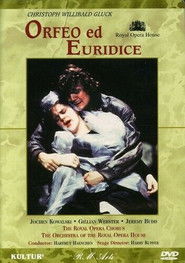
Orfeo Ed Euridice
Performed live at the Royal Opera House, Covent Garden, Gluck's opera in three acts is conducted by Hartmut Haenchen. Performers include Jochen Kowalski, Gillian Webster and Jeremy Budd, alongside the Royal Opera Chorus and Orchestra. When Orpheus mourns for his late wife Eurydice, the god Cupid offers him the chance to descend into the underworld and lead her back to the land of the living, on the condition that he does not look at her face. He sets out on his journey, but his path to the Elysian Fields is blocked by the fierce Furies.Year:
1991

The Ring Cycle: Gotterdammerung
THIRD DAY OF THE RING CYCLE. Günter, the lord of the Rhine people, gives Siegfried a love potion that causes Siegfried to forget Brünnhilde and fall in love with Günter's sister Gutrane. Siegfried has given Brünnhilde the Ring as a token of their love, but her Valkyrie sister urges her to destroy it, because their father Wotan has lost his spear and power and is hiding out in Valhalla. Instead, Brünnhilde keeps it, and under the influence of the potion, Siegfried steals it from her. Enraged, Brünnhilde helps Alberich's son murder Siegfried, but Siegfried's memory returns, and he dies thinking of Brünnhilde. Brünnhilde repents and orders a funeral pyre to be built. She rides into the fire herself, and the Rhinemaidens get the ring back. The story closes with flames flickering about Valhalla in the background. Filmed at the Bayreuth Festspielhaus in June & July 1991.Year:
1991
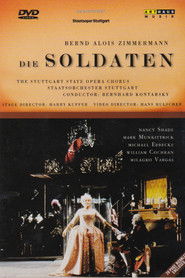
Die Soldaten
Nancy Shade is persuasive as the awkward adolescent Marie, whose naiveté leads relentlessly to her downfall. Michael Ebbecke is sympathetic as Stolzius, her jilted lover and avenger, while William Cochran is properly brutish as Desportes, the officer who initiates her spiral of decline. Bernhard Kontarsky gets a dedicated response from his Stuttgart Opera forces, who perform with belief in this often excessive but always engrossing work. Recorded at the Staatsoper Stuttgart, 1989.Year:
1989
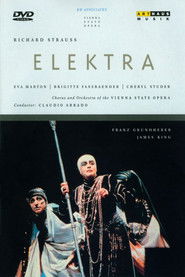
Elektra
Recorded at the Vienna State Opera house in 1989, this staging of Richard Strauss and Hugo von Hofmannsthal’s Elektra is one of the glories of live opera on film, deserving of eternal availability. The DVD picture has great clarity, despite the darkness of Hans Schavernoch’s set design. Other than the cliché of a huge statue head, toppled on its side, the set manages to be suitably representative of a decaying palace as well as an imposing, theatrical space, dominated by the mammoth body of the statue from which the head apparently dropped, draped with the ropes that seem to have enabled the decapitation. Sooner or later most of the characters cling to and twist around those ropes, an apt stage metaphor for the remorseless repercussions from the murder of Agammenon by his unfaithful wife Klytämnestra and her paramour, Aegisthus. Reinhard Heinrich’s costumes capture a distant era while sustaining a creepily modern look — part Goth, part homeless, part Spa-wear.Year:
1989
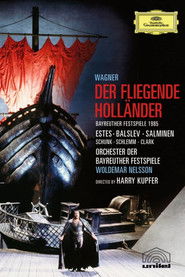
Der fliegende Holländer
Year:
1985