

Heide Breitel
Director
-
Birthday
-
Zodiac Sign
-
Genres
0
Total Films
Also known as (female)
Place of Birth
-
Birthday
-
Zodiac Sign
-
Genres
0
Total Films
-
Also Known As (female)
-
Place of Birth
-
Birthday
-
Zodiac Sign
-
Genres
0
Total Films
Also known as (female)
Place of Birth
-
Birthday
-
Zodiac Sign
-
Genres
0
Total Films
-
Also Known As (female)
-
Place of Birth
actor
0 Works
producer
0 Works
director
11 Works
writer
0 Works
other
8 Works
Die Markus Family
This film tells the story of Markus Anatol Weisse, who, astonishingly enough, became an artist, in spite of being only very partially sighted. Markus also builds strange machine-like beings and wishes that he himself were a biological robot, or cyborg.Year:
2001
Mon Paradis - Der Winterpalast
A portrait of five St. Petersburgians and their connection to The Hermitage.Year:
2001
Bodenproben
Year:
1987

Macumba
Max Taurus, a sort of amateur detective, pursues the traces of general omni-present crime back to a partially demolished house. There, the remaining tenants try to gain pleasure and power from progressive abandonment in order to tear down their own conventionalities.Year:
1982
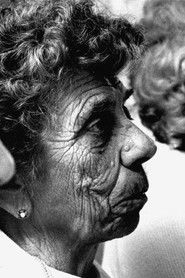
The Little Gluers
The almost exclusively female hands that used to glue scenes together in the film laboratory according to the director’s instructions were not recognised in a film’s credits. In a series of interviews, eight former film laboratory employees and their friends remember this challenging and little-acknowledged work from the early days of the analogue film age.Year:
1981
The Little Gluers
The almost exclusively female hands that used to glue scenes together in the film laboratory according to the director’s instructions were not recognised in a film’s credits. In a series of interviews, eight former film laboratory employees and their friends remember this challenging and little-acknowledged work from the early days of the analogue film age.Year:
1981
Sweet Sticky Stuff
The initial idea was to make a children’s film about chocolate-covered marshmallows. How they are made, what they are made of, where they are made, who manufactures them under what conditions. The women who work on the assembly line are happy to tell us all about themselves. We are a welcome diversion. We noticed that the men have the better jobs and also earn more money. The women don’t entirely let themselves be taken in by the meritocracy. Talking, goofing off, and singing, they help each other to get through their 8-hour day. We like that. We drop the idea of a children’s film. In this film we tried out a documentary film form that deliberately does without interviews, relying instead largely on the effect of the images. From today's perspective the film alsooffers a glimpse into the history of migration in West Germany.Year:
1977

John Heartfield, Fotomonteur
A documentary which looks at Heartfield primarily as a political activist working in a specific historical context. It demonstrates this relationship by the use of documentary material, such as archive footage of inter-war Germany, in juxtaposition with Heartfield's works.Year:
1977
Bombenwerfer
Year:
-
Mulle
At the documentary film seminar given by Gisela Tuchtenhagen at the dffb in 1979, three documentary portraits of women were made that were combined under the title “Küche, Theater, Krankenhaus” (Kitchen, Theatre, Krankenhaus). Students Lilly Grote, Irina Hoppe and Christine Domkowski took turns at doing the camerawork, sound and editing, supported by film editing lecturer Heide Breitel. In Mulle, Heide Breitel and Christine Domkowski craft a portrait of a passionate cook who after decades of being a housewife finds fulfillment by cooking for campsites, youth workshops and the film team. [...] (Frederik Lang)Year:
1979
Sweet Sticky Stuff
The initial idea was to make a children’s film about chocolate-covered marshmallows. How they are made, what they are made of, where they are made, who manufactures them under what conditions. The women who work on the assembly line are happy to tell us all about themselves. We are a welcome diversion. We noticed that the men have the better jobs and also earn more money. The women don’t entirely let themselves be taken in by the meritocracy. Talking, goofing off, and singing, they help each other to get through their 8-hour day. We like that. We drop the idea of a children’s film. In this film we tried out a documentary film form that deliberately does without interviews, relying instead largely on the effect of the images. From today's perspective the film alsooffers a glimpse into the history of migration in West Germany.Year:
1977