

Heinz Bütler
WriterDirector
-
Birthday
-
Zodiac Sign
-
Genres
0
Total Films
Also known as (female)
Place of Birth
-
Birthday
-
Zodiac Sign
-
Genres
0
Total Films
-
Also Known As (female)
-
Place of Birth
-
Birthday
-
Zodiac Sign
-
Genres
0
Total Films
Also known as (female)
Place of Birth
-
Birthday
-
Zodiac Sign
-
Genres
0
Total Films
-
Also Known As (female)
-
Place of Birth
actor
0 Works
producer
0 Works
director
13 Works
writer
3 Works
other
0 Works
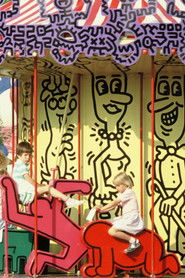
André Heller's Luna Luna
André Heller commissioned Heinz Bütler, a Swiss filmmaker known for working with artists, to create a short documentary about Luna Luna. The film offers rare access to Luna Luna's artists as they painted their rides and attractions, culminating in the excitement of being at the fairgrounds surrounded by performers, crowds, and music. The camera walks us through the artist-designed pavilions and takes us for a ride on Jean-Michel Basquiat's Ferris wheel. The soundtrack includes some of the music heard on the rides and attractions at the park: first Miles Davis's "Tutu", played on Basquiat's Ferris wheel, followed by a number of songs by Philip Glass (who contributed music to Roy Lichtenstein's pavilion), and finally, Blue Chip Orchestra's composition for Salvador Dalí's dome.Year:
2023
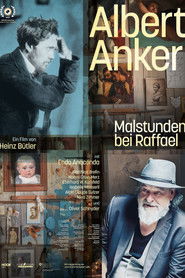
Albert Anker. Malstunden bei Raffael
With his vivid oil paintings, Albert Anker captured Swiss folk life like no other. Together with musician Endo Anaconda we discover the "Anker-House", Anker's old studio.Year:
2022
Albert Anker. Malstunden bei Raffael
With his vivid oil paintings, Albert Anker captured Swiss folk life like no other. Together with musician Endo Anaconda we discover the "Anker-House", Anker's old studio.Year:
2022
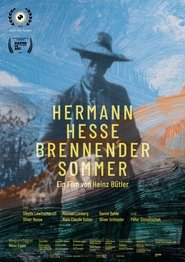
Hermann Hesse - Blazing Summer
Everything must change, thought Hermann Hesse. In the spring of 1919, he packed his bags and left for Ticino. The horror of the First World War had thrown him off course. The poet hoped that the climate and light of the south would give him a new lease on life and creative energy beyond the confines of bourgeois conventions. With the story Klingsors letzter Sommer (Klingsor’s Last Summer), Hesse wrote himself into a summer-long intoxication that was unprecedented for him. At the precipice, however, doom and death await.Year:
2020
Hermann Hesse - Blazing Summer
Everything must change, thought Hermann Hesse. In the spring of 1919, he packed his bags and left for Ticino. The horror of the First World War had thrown him off course. The poet hoped that the climate and light of the south would give him a new lease on life and creative energy beyond the confines of bourgeois conventions. With the story Klingsors letzter Sommer (Klingsor’s Last Summer), Hesse wrote himself into a summer-long intoxication that was unprecedented for him. At the precipice, however, doom and death await.Year:
2020

Chair Times
"Chair Times" charts a course through an ocean of chairs. In the focus are 125 objects from the Collection of the Vitra Design Museum. Arranged according to their year of production, they illustrate development from 1807 to the very latest designs straight off the 3D printer, forming a timeline to modern seating design. The film features many people whose vocations involve design and who are experts in the field, such as designers Hella Jongerius, Antonio Citterio and Ronan Bouroullec, architects and collectors Arthur Rüegg and Ruggero Tropeano, architect David Chipperfield, Director Emeritus of MAK Vienna/Los Angeles Peter Noever, Mateo Kries, Director of the Vitra Design Museum, Vitra Design Museum curators Amelie Klein, Jochen Eisenbrand and collection curator Serge Mauduit. And your guide through the history of chairs is Rolf Fehlbaum, Chairman Emeritus of Vitra.Year:
2019
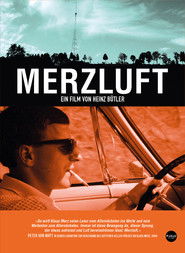
Merzluft
Documentary film.Year:
2015

Ettore Sottsass - Der Sinn der Dinge
Documentary about one of the most important architects of the 20th century.Year:
2007
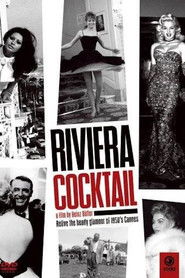
Riviera Cocktail
This documentary charts the life of Irish photographer Edward Quinn who shot some of the most iconic photos of 20th century glitterati. He was a fixture on the French Riviera in the 1950s and witnessed its glitz and glamour. The film recounts a dazzling era of stars, starlets, playboys, princes and artists.Year:
2006
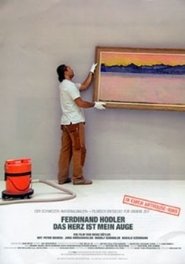
Ferdinand Hodler - The Heart Is My Eye
Bütler’s film is the first documentary to tell the story of the great artist Ferdinand Hodler, a huge national figure in Swiss art history. Born in 19th Century Bern, Hodler was an orphan whose painting of Wilhelm Tell has become an iconic piece of Swiss art. Prominent contributors such as writer Peter Bichsel and artist Rudolf Schindler comment on what makes Hodler’s pictures so iconic. Enlightening, moving and far removed from any clichés, the film explains the great themes of Hodler’s work – man, nature, love and death – and takes a fascinating journey into an artistic and very contemporary world.Year:
2004
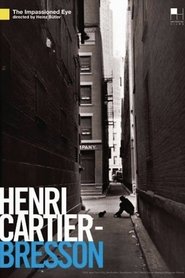
Henri Cartier-Bresson: The Impassioned Eye
Heinz Bütler interviews Henri Cartier-Bresson (1908-2004) late in life. Cartier-Bresson pulls out photographs, comments briefly, and holds them up to Bütler's camera. A few others share observations, including Isabelle Huppert, Arthur Miller, and Josef Koudelka. Cartier-Bresson talks about his travels, including Mexico in the 1930s, imprisonment during World War II, being with Gandhi moments before his assassination, and returning to sketching late in life. He shows us examples. He talks about becoming and being a photographer, about composition, and about some of his secrets to capture the moment.Year:
2003
Holocene
Adapted from the Max Frisch novel "Der Mensch erscheint im Holozän". It tells the story of an old man, isolated from the outside world in a little mountain village in Ticino, Switzerland, who fights against oblivion. From books that he has there he cuts out texts and images about geology and geological history to fix and arrange them on the walls of his cottage. Frisch adds these articles to his novel to assemble human history with individual decay.Year:
1992
Holocene
Adapted from the Max Frisch novel "Der Mensch erscheint im Holozän". It tells the story of an old man, isolated from the outside world in a little mountain village in Ticino, Switzerland, who fights against oblivion. From books that he has there he cuts out texts and images about geology and geological history to fix and arrange them on the walls of his cottage. Frisch adds these articles to his novel to assemble human history with individual decay.Year:
1992