

Helmut Färber
DirectorActorWriter
-
Birthday
-
Zodiac Sign
-
Genres
9
Total Films
Also known as (female)
Place of Birth
-
Birthday
-
Zodiac Sign
-
Genres
9
Total Films
-
Also Known As (female)
-
Place of Birth
-
Birthday
-
Zodiac Sign
-
Genres
9
Total Films
Also known as (female)
Place of Birth
-
Birthday
-
Zodiac Sign
-
Genres
9
Total Films
-
Also Known As (female)
-
Place of Birth
actor
9 Works
producer
0 Works
director
8 Works
writer
1 Works
other
0 Works
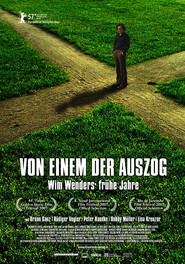
One Who Set Forth: Wim Wenders' Early Years
The early films of Wim Wenders are now regarded as landmarks of European film. Alice in the Cities, Wrong Move and Kings of the Road became foundations of the German New Wave and cemented the reputation of their director. In One Who Set Forth: Wim Wenders' Early Years Marcel Wehn explores the background to these films. Through personal recollection and rare home movie footage, it documents the director's early life, from experiments with his first camera, via his deviation from a career in medicine in favour of art and film, through to international recognition for the Road Trilogy. Central to these were themes that became cornerstones of all his work: national identity, the importance of personal relationships and the allure of the road. With contributions from the director and the many collaborators who helped define his vision, One Who Set Forth is a compelling account of Wim Wenders' life and work.Year:
2008
Anmerkungen zu OKTOBER
Film critic and scholar Helmut Färber analyzes the final scene of Eisensteins "October: Ten Days That Shook the World"Year:
1995
The Persistence of Vision
Blank's TV documentary on Straub-Huillet.Year:
1993
Drei Minuten in einem Film von Ozu
TV documentary about the bicycle sequence in Ozu`s Banshun (Late Spring)Year:
1988
King Kongs Faust
Berlin Film Fest 1984. The best place for every cinema fan. Everyone wants to be in on the festival, but that may be really difficult, if one has no accreditation. Also Journalist Matthies gets to know the rules of being in or out when he wants to see a screening and is not welcome. Thus he watches an old German silent flick which he is barely interested in. The next day the newspapers are full of reports about a newly discovered German masterpiece from the silent era. It seems that Matthies had luck. He just saw *the* film everybody is talking about now. Also everybody is speculating about its director, who remains unknown. When Matthies talks to Ackrewa, an old befriended projectionist, about the film, the latter seems to recall the name of the director. Matthies decides to research the case. An odyssey into film-history begins and if it is successful Matthies will come up with a top story.Year:
1985
Kino 81
Year:
1981

Every Revolution Is a Throw of the Dice
A tribute to Mallarmé that not only asserts the continuing relevance of his work but also confronts its literary ambiguities with political and cinematic ambiguities of its own. In outline, the film could not be more straightforward: it offers a recitation of one of Mallarmé’s most celebrated and complex poems (it was his last published work in his own lifetime, appearing in 1897, a year before his death) and proposes a cinematic equivalent for the author’s original experiment with typography and layout by assigning the words to nine different speakers, separating each speaker from the other as she or he speaks, and using slight pauses to correspond with white spaces on the original page.Year:
1977
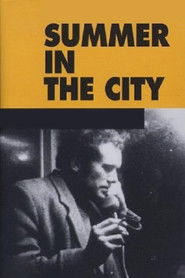
Summer in the City
After an extensive prison term, a free man wanders into a new reality.Year:
1972
