

Hiro Matsuda
Writer
03-09-1933
Birthday
Virgo
Zodiac Sign
-
Genres
0
Total Films
Also known as (male)
Kyoto, Japan
Place of Birth
03-09-1933
Birthday
Virgo
Zodiac Sign
-
Genres
0
Total Films
-
Also Known As (male)
Kyoto, Japan
Place of Birth
03-09-1933
Birthday
Virgo
Zodiac Sign
-
Genres
0
Total Films
Also known as (male)
Kyoto, Japan
Place of Birth
03-09-1933
Birthday
Virgo
Zodiac Sign
-
Genres
0
Total Films
-
Also Known As (male)
Kyoto, Japan
Place of Birth
actor
0 Works
producer
0 Works
director
41 Works
writer
40 Works
other
1 Works
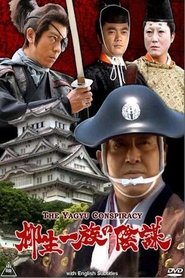
The Yagyu Conspiracy
The classic tale retold. This is one of Japan’s most popular stories in a brand new version starring the great Matsukata Hiroki following in the footsteps of Yorozuya Kinnosuke as Yagyu Tajima, the grandmaster swordsman whose plot to maintain the succession of Iemitsu as shogun encounters obstacles on all sides. Loaded with action and featuring many of Japan’s new up and coming sword stars this exciting movie brings back the feelings of the golden age of motion pictures. Stunning cinematography brings 17th Century Japan to life in this exciting tale of loyalty and betrayal, leading up to an ending that won’t be found in any history book.Year:
2008
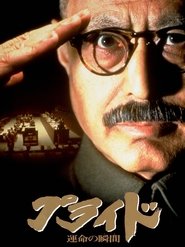
Pride
Based on the International Military Tribunal for the Far East of 1946–48, depicts Japanese prime minister Hideki Tojo as a family man who fought to defend Japan and Asia from western colonialism but was ultimately hanged by a vengeful United States.Year:
1998
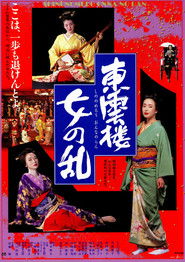
In Blazing Love
An illustration of the tragic lives of geishas at a popular geisha house, Shinonomero. Shortly after being sold to a geisha house at age 5, Shizu is befriended by a fellow older geisha, Tsuru. After years of living and working together, Tsuru and Shizu manage to run the operations of Shinonomero as the proprietress and assistant. Despite vows to never to let their lovers come between them or Shinonomero, moments of weakness leave Tsuru and Shizu caught up in a web of betrayal and plunged into debt. With the guilt of losing Shinonomero to Udo, a yakuza who loaned them money, it is now up to young Shizu to redeem Tsuru’s honor and restore Shinonomero as their own.Year:
1994
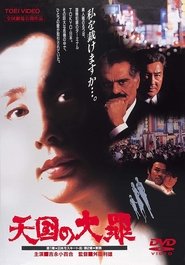
Heavenly Sin
Elite lawyer Ryoko enlists the help of a foreign mafia in rescuing her son from a criminal who holds grudge against her.Year:
1992

Succession
A former stockbroker-turned-yakuza must make sure his alcoholic boss is up to the task of swearing in the next leader of their syndicate.Year:
1992

Ryakudatsu ai
The fear of the fiercely obsessive woman who deprives her best friend of her husband. An emotionally charged movie starring Hitomi Kuroki, Masato Furuoya, and Hisako Manda.Year:
1991

Estate Inheritance
The unexpected death of Fujishima Motoharu, president of a medium-sized firm, triggers a fierce battle over his estate inheritance among family members.Year:
1990
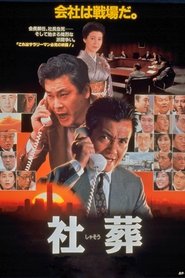
Company Executives
A fierce succession battle ignites at a newspaper company when the president passes away.Year:
1989
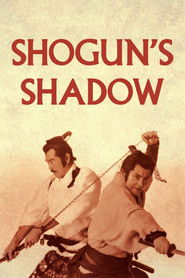
Shogun's Shadow
A shogun's eldest son must do whatever it takes to survive a series of attempts on his life. He receives much-needed aid from seven warriors who are led by a strong leader.Year:
1989
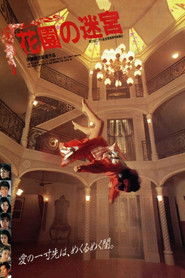
Labyrinth Romanesque
A serial killing occurs at a port town brothel.Year:
1988
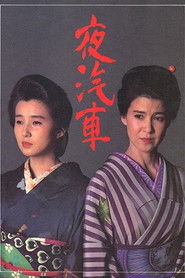
Night Train
A woman faces betrayal, which tests her love.Year:
1987
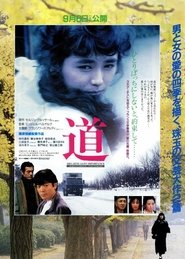
Michi
Year:
1986
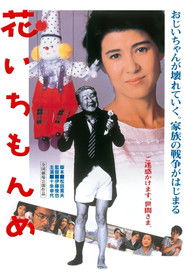
Gray Sunset
Grandfather Fuyukichi Takano, a former university professor, gets fired from his museum job when he is affected by Alzheimer's disease, but his affliction serves to deepen family ties. Japan's submission to the 58th Academy Awards for the Academy Award for Best Foreign Language FilmYear:
1985
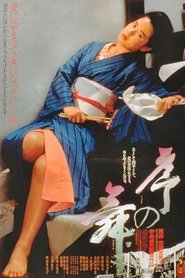
Appassionata
This story is based on the novel "Jo no mai" by Tomiko Miyao which is based on the life of painter Shōen Uemura (1875–1949), the first woman to be awarded the Order of Culture. The title refers to the masterpiece bijinga ("picture of a beautiful woman") that Uemura painted at the age of 61. The main character, Tsuya Shimamura, is born in Kyoto as the second daughter of a tea trader who dies before her birth. Tsuya, who loves painting more than anything and is hopeless at housework, attends art school and at age 15 receives the name Shōsui (from the characters for "pine" and "green") from her teacher. The crown prince of England purchases one of her works, propelling her to fame overnight. The novel portrays the remainder of her stormy life, during which she is impregnated by her teacher and raises a fatherless child; through it all she devotes herself to her painting, undaunted.Year:
1984

To Trap a Kidnapper
Hideyuki Mitamura, a student at a private school near Osaka, is kidnapped on his way home from school.Year:
1982
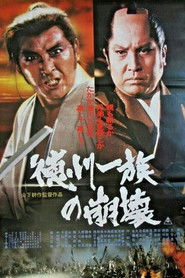
Tokugawa Ichizoku no Houkai
Year:
1980
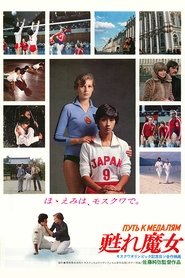
The Way to The Gold Medals
About Soviet and Japanese volley-ball players who are both rivals and friends. The events cover the period from the 1976 Montreal Olympics to the eve of XXII Olympics in Moscow.Year:
1980

Aftermath of Battles Without Honor and Humanity
Two Kyushu based yakuza groups are desperate for domaination of the area. When more powerful yakuza groups get involved in their power struggle, a group of childhood friends, belonging to different yakuza families, are caught in the middle. Lies, deceit, and backstabbing are in play resulting in a bloodbath and a quest for revenge...Year:
1979

Message from Space
The peaceful planet of Jillucia has been nearly wiped out by the Gavanas, whose leader takes orders from his mother rather than the Emperor. King Kaiba sends out eight Liabe holy seeds, each to be received by a chosen one to defend the Gavanas. Each recipient, ranging from hardened General Garuda to Gavana Prince Hans to young Terrans Meia, Kido, and Aaron all have different reactions to being chosen.Year:
1978
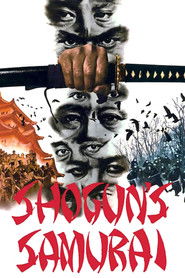
Shogun's Samurai
Following the death of the second Tokugawa shogun, it is revealed that he was poisoned by retainers of his son Iemitsu in hopes of gaining him the shogunate despite the stammer and birthmark which undermine his respect. Iemitsu and his brother Tadanaga become bitter rivals for the shogunate, and the land is split into factions, eventually erupting into warfare. Iemitsu's mentor, his fencing instructor Yagyu, is fixated upon securing Iemitsu the shogunate and ends up betraying everyone, even his own family, in pursuit of the goal.Year:
1978
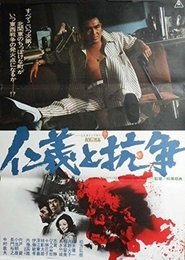
Gambling Code and Feuds
It is the first Toei yakuza film directed by Akinori Matsuo, who was active in Nikkatsu action movies. It is a local yakuza movie made following Okinawa Yakuza War (1976) and Hokuriku Proxy War (1977). The film depicts the war between a storied yakuza killer (Hiroki Matsukata) and the largest organized crime group in the Kansai region, which plans to advance into the Kanto region.Year:
1977
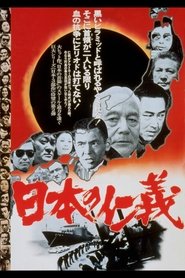
Japanese Humanity and Justice
When a mob boss retires under political pressure, his successor and yakuza family are tested to their limits as new alliances and enemies are formed.Year:
1977

Shinjuku's Number One Drunk-Killer Tetsu
After serving 10 years in prison for murdering a rival boss, Tetsu is appalled to see his yakuza family overgrown and dysfunctional upon his release.Year:
1977

The Machine Gun Dragon
Ryu, a low life thug, along with his mother, steals a shipment of drugs. Now with his machine gun and a gang of hoodlums, he must face the yakuza and the mafia.Year:
1976
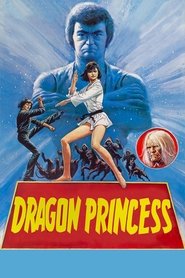
Dragon Princess
A karate master played by Sonny Chiba is attacked and left crippled and blinded in one eye. He trains his daughter (Etsuko Shihomi) with the intention of her avenging not only himself but a murdered friend.Year:
1976

Graveyard of Honor
A self-destructive man becomes a powerful member of the Japanese mafia but quickly loses his self control. Based on the true story of Rikio Ishikawa.Year:
1975
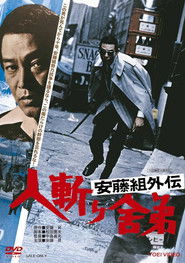
Violent Fraternity
Set in Shibuya in 1949, this is another film based on real life former yakuza boss Noboru Ando's memoirs.Year:
1974

Zero Woman: Red Handcuffs
Agent Zero is a cop that uses her own methods for dealing with criminals. After she unlawfully kills a rapist in a violent fashion, she is sent to prison and stripped of her badge. But very soon after, a rich politician's daughter is kidnapped by a ruthless gang. Agent Zero is let out of prison with the mission of going undercover to find the politician's daughter and return her safely. Using her deadly red handcuffs, she disposes of the criminals one by one.Year:
1974
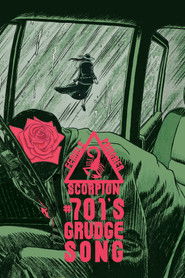
Female Prisoner Scorpion: #701's Grudge Song
Nami is once again on the run from the law but is saved by an old classmate who works at a strip club. Through a subsequent conversation they discover they both have a score to settle with a particular crooked cop. However, Nami has doubts about ever trusting a man.Year:
1973
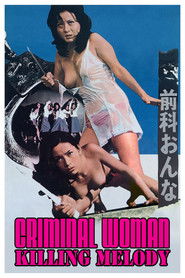
Criminal Woman: Killing Melody
Reiko Ike stars as the daughter of a man who has been pushed into drug dealing by the local Yakuza mob. Having outlived his usefulness to the gang he is murdered and Reiko is gang raped, leading her to attempt a knife attack on the Yakuza boss (Ryoji Hayama) at a swank nightclub. Failing to kill him she ends up in prison, where she befriends a crew of other malcontents (including Yumiko Katayama and Chiyoko Kazama) and meets the Yakuza boss's girlfriend (Miki Sugimoto). Upon release Reiko reassembles her mob and launches a Machiavellian scheme to engineer a gang war between Hayama's Oba Industries and the formerly dominant Hamayasu Clan. The rival gangs begin killing each other off and Reiko works her way closer to her ultimate vengeance.Year:
1973
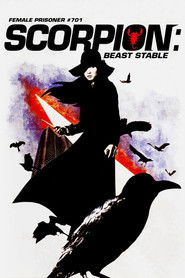
Female Prisoner Scorpion: Beast Stable
Following her successful prison break, Scorpion begins this third episode in the series hiding out in a brothel. Her prostitute friend tries to keep her identity secret, but the brothel's madam discovers that Scorpion is the ex-girlfriend of the vice officer who killed her lover.Year:
1973
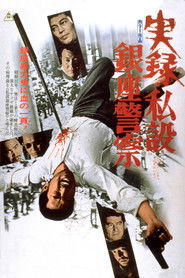
A True Story of the Private Ginza Police
After a desperate gang of ex-soldiers and gamblers meet in a fistfight in occupied Ginza they decide to make the neighborhood their own.Year:
1973

Female Prisoner Scorpion: Jailhouse 41
After being used and betrayed by the detective she had fallen in love with, young Matsu is sent to a female prison full of sadistic guards and disobedient prisoners.Year:
1972
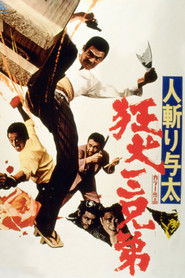
Outlaw Killers: Three Mad Dog Brothers
The great Bunta stars as a gangster who is sent to jail for the sake of his gang, but when he’s released he finds everything completely changed and his gang has swept him aside for being too violent. He tries to start a new life with his two ”brothers” but can’t seem to escape old affiliationsYear:
1972
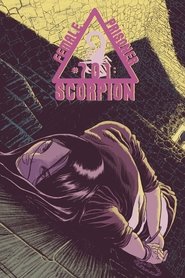
Female Prisoner Scorpion: #701
After being cruelly set up and deceived by Sugimi, a detective in cohorts with the mob with whom she was whole-heartedly in love, Matsushima’s desire for revenge knows no bounds.Year:
1972

Sympathy for the Underdog
A yakuza gang gets driven out of Yokohama by a big gang from Tokyo. They relocate to Okinawa to violently start over.Year:
1971
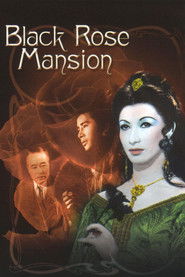
Black Rose Mansion
When wealthy Kyohei hires singer "Black Rose" to perform in his exclusive club, he gets more than he bargains for when she attracts scores of homicidal past lovers. The film takes a bizarre twist when Kyohei's son falls victim to the femme fatale's unique charm.Year:
1969

Trapped, the Crimson Bat
Oichi may have met her match as she vies against the evil beauty that has set her sights on destroying her. She must face numerous other challenges before confronting her greatest rival. While longing to live and love like other women, she realizes that she can never have a normal life, her sword which she holds on to like a security blanket will always come between her and such a life...Year:
1969

Blackmail Is My Life
Though he has come from a rough background on the streets, Muraki quickly rises through the ranks by means of his well-honed blackmailing instincts. Desperate to keep rolling with his freewheeling lifestyle, Muraki sees his luck begin to crumble when he sets his sights on the business partners of a powerful gang boss.Year:
1968

Abashiri Prison: Duel in the Snow Country
Based on Ito Hajime's original story, this is the seventh installment in the "Bangaichi" series, adapted jointly by Kamba Fumio and Matsuda Hiroo, and directed by Ishii Teruo of "Kamba 101: Killing Bouncer" fame. The film was shot by Kiichi Inada, who also directed "Abashiri Bangaichi: Confrontation in the South" in the same series.Year:
1966
Abashiri Prison: Duel in the Snow Country
Based on Ito Hajime's original story, this is the seventh installment in the "Bangaichi" series, adapted jointly by Kamba Fumio and Matsuda Hiroo, and directed by Ishii Teruo of "Kamba 101: Killing Bouncer" fame. The film was shot by Kiichi Inada, who also directed "Abashiri Bangaichi: Confrontation in the South" in the same series.Year:
1966
