

Ion Luca Caragiale
Writer
30-01-1952
Birthday
Aquarius
Zodiac Sign
-
Genres
0
Total Films
Also known as (male)
Place of Birth
30-01-1952
Birthday
Aquarius
Zodiac Sign
-
Genres
0
Total Films
-
Also Known As (male)
-
Place of Birth
30-01-1952
Birthday
Aquarius
Zodiac Sign
-
Genres
0
Total Films
Also known as (male)
Place of Birth
30-01-1952
Birthday
Aquarius
Zodiac Sign
-
Genres
0
Total Films
-
Also Known As (male)
-
Place of Birth
actor
0 Works
producer
0 Works
director
16 Works
writer
16 Works
other
0 Works
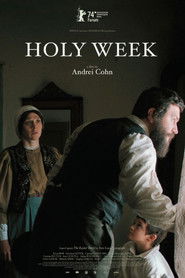
Holy Week
The Holy Week, around 1900, somewhere in Romania. The tense relationship between the Jewish innkeeper Leiba and Gheorghe, his Christian employee, reaches the point where the innkeeper decides to expel the latter. Revengeful, Gheorghe promises Leiba that he will return on Easter Night to “settle” his accounts. This threat comes as a last straw against Leiba’s attempts to cohabit with his hostile, anti-Semitic environment. From then on, Leiba will struggle distinguishing between the real danger and the one fabricated by his anxieties, engaging onto a path of transformation leading to extreme consequences.Year:
2024
Stratený list
Year:
1992

The Inn Among the Hills
In order to obtain a title, Iordache, recently becoming wealthy, marries his daughter with a noble on hard times, Ștefan. On his way to Iordache's estate, he stops an Mânjoalâ's inn, where he discovers a mysterious world and falls for the innkeeper. Based on Caragiale's novel, "La Hanul lui Mânjoală”. Last film role for Gina Patrichi.Year:
1988

Năpasta
This is a film about love, crime of passion, revenge, happening in the Romanian countryside, late XIX century.Year:
1982

Fürchte dich nicht, Jakob!
Year:
1982
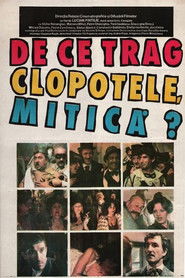
Why Are the Bells Ringing, Mitica?
Based on a theatrical text by Romanian writer Ion Luca Caragiale (1852-1912), who was a bitter and funny witness of the turn-of-the-20th-century Romanian bourgeois mores, Carnival Scenes manages to preserve and further enhance the slightly hysteric atmosphere of his plays. Pintilie creates a strange combination of carnival scenes which is brought to the screen as a burlesque, fast-paced, screwball comedy with a meditative undertone. This film was banned in Romania for a decade until the death of Ceausescu in 1989 and was only released after the 1989 revolution.Year:
1981

Before the Silence
Obsessed by greed and the fact that his wife is in love with his brother, innkeeper Stavarache heads towards madness. Based on the I.L.Caragiale novel, "In Times of War"Year:
1978

Mofturi 1900
Mofturi 1900 is a 1964 Romanian comedic film directed by Jean Georgescu and based on Ion Luca Caragiale's many Moments and Sketches. The sketches used are "Diplomatie" ("Diplomacy"), "Amicii" ("Pals"), "O lacuna" ("A gap"), "Bubico", "C.F.R." (abbreviation of "Romanian Railways") and "Din statiune" ("From resort"). The film stars Grigore Vasiliu Birlic, Iurie Darie and Ion Dichiseanu; and features Ioana Bulcă, Alexandru Giugaru, Mircea Crisan, Geo Barton and others. Set at the beginning of the 20th century, the story revolves around two Mitică characters sitting at a cafe telling stories to each other.Year:
1966
Stratený list
Year:
1965

Politica cu… delicatese
Adapted from the sketch by Ion Luca Caragiale. A fine irony on pre-war politicism, which manages, through gastronomic means, to ridicule an entire political class.Year:
1964

Telegrams
Geared more for the home crowd with a good knowledge of their own history, this Romanian political comedy takes place at the turn of the 20th century, when two opposing factions are going at each other tooth and nail to win an election. One candidate is a staunch if not deluded conservative and the other is a radical liberal. Anticipating modern election campaigns by a good half a century, the two candidates decide that the best way to win is to sling as much mud as possible. Lacking the Internet and fifteen-second TV spots, they do the best they can -- they send each other virulent telegrams denouncing each other's personal failings.Year:
1960
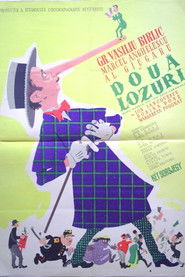
Two Lottery Tickets
1957 film adaptation of Romanian playwright Ion Luca Caragiale's novella “Două loturi” (Two Lottery Tickets, 1901). The scenario was written by director Jean Georgescu, one of the most skilled Romanian filmmakers of the 1940s and 1950s, while the directing belongs to Aurel Miheleş and Gheorghe Naghi, at that time both recently graduated from the All-Union State Institute of Cinematography in Moscow. This is the second feature film in colour from Romania. Despite the great public success, the film was often criticized by reviewers, mostly for its unhandy directing from the two debutants. Miheleş and Naghi would however continue their collaboration and release another two Caragiale adaptations, of which “Telegrame” (Telegrams, 1959) was nominated for the Palme d'Or (Golden Palm) at the 1960 edition of the Cannes festival.Year:
1959
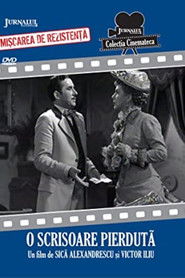
A Lost Letter
The plot take place in 1883 in a small provincial town in Romania, where the corrupt establishment decide everything, including - of course - who will be the "elected" representative to the national Senate. A love letter from the bachelor mayor to the wife of the local party chief, gets lost and found by a drunk party supporter. The letter finds its way to the opposition party, which decide to use the letter by blackmailing the powerful local "camarilla", and to get his own man to represent the county. What follows is not easy to guess....Year:
1954
Chain of Weakness
Year:
1952

Romanian Farmer
Year:
1952

Stormy Night
Bucharest, 1876. Don Dumitrache instructs his trusted man, Chiriac, to watch his young wife, Veta. Dumitrache is sure that Veta having an affair, she does not know is that her lover is Chiriac own...Year:
1943