

Isao Kota
Director
-
Birthday
-
Zodiac Sign
-
Genres
0
Total Films
Also known as (female)
Place of Birth
-
Birthday
-
Zodiac Sign
-
Genres
0
Total Films
-
Also Known As (female)
-
Place of Birth
-
Birthday
-
Zodiac Sign
-
Genres
0
Total Films
Also known as (female)
Place of Birth
-
Birthday
-
Zodiac Sign
-
Genres
0
Total Films
-
Also Known As (female)
-
Place of Birth
actor
0 Works
producer
0 Works
director
29 Works
writer
0 Works
other
6 Works

Big Stone and Small Night
“I created this film using my favourite motifs and techniques - the surface tension of water, the image of night and time permeating the stone, vertical movement in space, and action cutting to transcend distance. I took my time with it, like bonsai or gardening as a hobby. I repeatedly made and remade it, and there were parts I was still unsure of, but I presented it anyway a year later. That's when the filmmaker Kanai Katsu spotted it. I had an idea based on what he pointed out to me, so I remade that part and the work took its final form. Maybe because I enjoyed making it, I'm fond of this work.” (Isao Kota)Year:
1991
Big Stone and Small Night
“I created this film using my favourite motifs and techniques - the surface tension of water, the image of night and time permeating the stone, vertical movement in space, and action cutting to transcend distance. I took my time with it, like bonsai or gardening as a hobby. I repeatedly made and remade it, and there were parts I was still unsure of, but I presented it anyway a year later. That's when the filmmaker Kanai Katsu spotted it. I had an idea based on what he pointed out to me, so I remade that part and the work took its final form. Maybe because I enjoyed making it, I'm fond of this work.” (Isao Kota)Year:
1991
Big Stone and Small Night
“I created this film using my favourite motifs and techniques - the surface tension of water, the image of night and time permeating the stone, vertical movement in space, and action cutting to transcend distance. I took my time with it, like bonsai or gardening as a hobby. I repeatedly made and remade it, and there were parts I was still unsure of, but I presented it anyway a year later. That's when the filmmaker Kanai Katsu spotted it. I had an idea based on what he pointed out to me, so I remade that part and the work took its final form. Maybe because I enjoyed making it, I'm fond of this work.” (Isao Kota)Year:
1991

Kagefumi
Year:
1983
Circuit Meter
“Movies shot on high-sensitivity 8mm film have rough grain, and you can see this grain moving in like a haze on the screen. Oil paintings show the texture of oil paint, and watercolors show the texture of watercolor paint and paper. Movies show the texture of film, and the smaller the area of the film, the larger the grain seems, so its texture becomes more pronounced. The plane that takes off in the film gets smaller and smaller as it moves away, until it becomes smaller than the film grains themselves and is buried in the grains of the blue sky.” (Isao Kota)Year:
1983
Circuit Meter
“Movies shot on high-sensitivity 8mm film have rough grain, and you can see this grain moving in like a haze on the screen. Oil paintings show the texture of oil paint, and watercolors show the texture of watercolor paint and paper. Movies show the texture of film, and the smaller the area of the film, the larger the grain seems, so its texture becomes more pronounced. The plane that takes off in the film gets smaller and smaller as it moves away, until it becomes smaller than the film grains themselves and is buried in the grains of the blue sky.” (Isao Kota)Year:
1983
Circuit Meter
“Movies shot on high-sensitivity 8mm film have rough grain, and you can see this grain moving in like a haze on the screen. Oil paintings show the texture of oil paint, and watercolors show the texture of watercolor paint and paper. Movies show the texture of film, and the smaller the area of the film, the larger the grain seems, so its texture becomes more pronounced. The plane that takes off in the film gets smaller and smaller as it moves away, until it becomes smaller than the film grains themselves and is buried in the grains of the blue sky.” (Isao Kota)Year:
1983
Echo
“I held my finger between the projector and the screen and filmed while touching the projected object with the shadow of my finger. It's like playing with shadow puppets. The shadow that was originally imprinted on the film and the shadow of the finger or hand held out in front of the projector are both filmed shadows, so they are hard to distinguish. But you can't help but trying to distinguish them somehow. The inclusion of shadows that were not originally there adds a subtle flavor of fiction. I wanted to create a work that allows you to experience the textures - the texture of the water and the frog in the image, and the texture of nature made up of light, shadow and particles.” (Isao Kota)Year:
1982
Echo
“I held my finger between the projector and the screen and filmed while touching the projected object with the shadow of my finger. It's like playing with shadow puppets. The shadow that was originally imprinted on the film and the shadow of the finger or hand held out in front of the projector are both filmed shadows, so they are hard to distinguish. But you can't help but trying to distinguish them somehow. The inclusion of shadows that were not originally there adds a subtle flavor of fiction. I wanted to create a work that allows you to experience the textures - the texture of the water and the frog in the image, and the texture of nature made up of light, shadow and particles.” (Isao Kota)Year:
1982
Echo
“I held my finger between the projector and the screen and filmed while touching the projected object with the shadow of my finger. It's like playing with shadow puppets. The shadow that was originally imprinted on the film and the shadow of the finger or hand held out in front of the projector are both filmed shadows, so they are hard to distinguish. But you can't help but trying to distinguish them somehow. The inclusion of shadows that were not originally there adds a subtle flavor of fiction. I wanted to create a work that allows you to experience the textures - the texture of the water and the frog in the image, and the texture of nature made up of light, shadow and particles.” (Isao Kota)Year:
1982
Full Tide
“Film images are projected when light is emitted from the projector lens and reaches the screen. The projector and the screen are connected by a beam of light. If you block this beam with a white board, images are projected onto it, and these images are a cross-section of the beam of light. The beam is like a Kintaro candy: you can intersect it at any point and the same images will appear. I wanted to make a film that was like staring at this cross-section of the beam of light - like staring at an image that, after being emitted from the projector, is in the process of floating toward the screen.” (Isao Kota)Year:
1981
Red Light
“This film is assembled from a series of cuts conveying different moods. It is mostly composed of the simple action of seeing images alternately or in succession, such as of scissors cutting against each other, or of the blink of eyes peering through a magnifying glass. I thought of them as being like red, amber and green traffic lights.” (Isao Kota)Year:
1978

Präparat
Based on strict shooting notes for each photogram. A special camera was designed to erase the sequential decomposition of the still images. 300 still images, including rotating images, are replaced one after the other by scanning.Year:
1977
Emotion Ship
These are Yamashita Park and Yokohama sightseeing boats in 1976. In the live action section, I expressed the relationship between the landscape and the viewfinder with a moving matte, and in the photographic section, I explored the relationship between the image and the frame by presenting various patterns.Year:
1976

Dutchman's Photographs
Beginning with the grounded view of bare feet walking through shallow surf, the film then seizes and, in successively cumulative layers adds frames of image-within-image until we are watching the walking feet through a tunnel. The Dutchman's Photographs becomes a kinetic reiteration of itself and in doing so, succinctly detaches from spatial illusion, beginning a temporal experiment where still photographs are transformed into cinematic "action".Year:
1976
Railroad Crossing
Human eye movements are similar to the way pigeons and chickens shake their heads. I wanted to capture that restlessness in a video. I held an 8mm camera in my hand, placed it on my head, and filmed while walking down the street. I projected the film on a screen, cut out the image to capture the movement of the eyes, and re-filmed each frame. I also made a blinking mask to use in the re-filming.Year:
1975
Air Current
A movie film shot continuously is a series of action shots, one frame at a time. This is because there is a continuation of movement between the images in one frame and the next. On the other hand, since each frame is a single photograph, it is possible to trim and enlarge or reduce the image frame by frame. For example, if the normal zoom process is A→B→C→D, by enlarging and reducing each frame, it can become C→A→D→B. This is not unnatural since a movie is a series of photographs. The movement of the subject is continuous within the image that is enlarged and reduced frame by frame.Year:
1975
Cane
I took this photo in Uraga. I was carrying a tripod with an 8mm camera on it, so it was a selfie from behind. The tripod is always in the frame, so it has a strong presence. The film was then projected and each frame was re-shot at different zoom ratios, allowing viewers to alternate between looking at the entire screen and the center, frame by frame. In the second half, I re-photographed the screen so that the tilted landscape on the screen was returned to a horizontal position, expressing the idea that the landscape is stationary and it is the viewfinder that moves.Year:
1974

Breeze
It was a moment in the apartment I lived in at the time. The breeze was coming in through the window every now and then. I shot the footage on 8mm film, stopped it, and reshot each frame. I changed the camera direction and zoom for each frame, so while the people's movements are continuous, the screen is cropped for each frame.Year:
1974

Sleep Comes
In order to see that a sequence of photographs is a film, I made various experiments within a single uninterrupted film. This work was the starting point for my work from "Dutchman's Photographs (8mm version)" which I made after interrupting this work, to "Emotion Boat" in 1976.Year:
1974
Dutchman’s Photographs (8mm)
The 1976 version is the final version, but it is a reworking, with more nesting, of the version made and screened in 1974. It is the final version that I would like you to see, but I have also kept this version with less nesting, because having both seemed to assert the nature of the nesting structure.Year:
1974
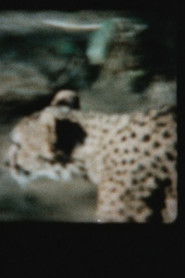
Cat's Cage
We filmed a cheetah roaming around at Tama Zoo. We projected that footage and followed the cheetah's movements on the screen with a camera. The cheetah was in a cage called a screen, so when we followed it, the darkness outside the screen came into the frame.Year:
1974

From the Window
The image captured by moving the camera left and right moves left and right on the screen. The screen was then re-shot by moving the camera left and right. When the image movement and the camera movement are in the same direction, there is no movement, and when they are in the opposite directions, the movement accelerates.Year:
1974

THE CRAMPED AREA
The first half of the film is about the silent sound of the cicadas penetrating the rocks. The overall view is of a horizontal rotation as you ascend from your feet to the sun, but this is the first half of the film. In the latter half of the sequence, a man appears in front of the screen with a guitar and performs an improvised performance in the style of the Tsugaru shamisen. The atmosphere of the film changes drastically as the sounds of nature are replaced with music, making this a strange film, for better or worse.Year:
1973
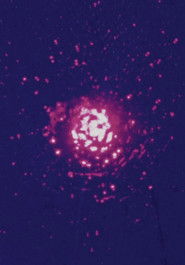
NEBULA
The light from the projector lens was projected through a sheet of ice, and the 8mm film was then immersed in a solution of diluted bleach and stirred to scratch it. After that, the dried film was peeled off. Traces of peeled emulsion were visible in the shape of perforations.Year:
1973

1・18
It depicts a day in a somewhat poor apartment life, where I eat and edit 8mm film. I was criticized for the terrible way I washed rice, but anyway, I edited many shots taken at each step of the movement together to recreate a certain time of day through the movement of my eyes.Year:
1973
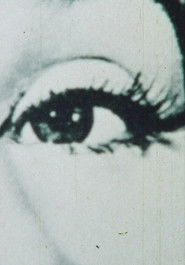
Marilyn Magdalena
If there are many photos taken at different times and places, and the same person appears in each photo, then by taking stop-motion pictures of those photos, it will become an animation of the same person moving. It would be fun to force the person to move. Furthermore, the large differences in the elements of each photo must produce something intense. The trigger for making this work was when I noticed that there were many photos of one person that gave me such expectations.Year:
1972

ASCENSION
I wondered what it would feel like to see another image at the moment the bubble bursts. I wondered if there was a crucial difference between splicing another image onto a frame just before the bubble bursts, and splicing another image onto a frame just after the bubble bursts, so I created this work to watch that moment over and over again.Year:
1972

Far from the explosive form of fruit
I once had a vivid feeling, basking in the sunlight in a field listening to the murmuring of melting snow, that I was surrounded by sensations, sounds and sights. I wanted to express that feeling.Year:
1972