Аватар персоны Jean Cau

Jean Cau

WriterActor
Jean Cau (8 July 1925, in Bram, Aude – 18 June 1993) was a French writer and journalist. Born in Bram, Aude, he was secretary to Jean-Paul Sartre, after which he was a journalist and reporter for L'Express, Figaro, and Paris Match. In 1961, he was awarded the Prix Goncourt for The Mercy of God. From the 1970s onwards he grew close to GRECE and his writings became infused with a sun-worshipping neopaganism. Jacques Marlaud dedicated an entire chapter to Cau in his study on contemporary literary and philosophical paganism. Source: Article "Jean Cau (writer)" from Wikipedia in English, licensed under CC-BY-SA 3.0.

08-07-1925

Birthday

Cancer

Zodiac Sign

-

Genres

2

Total Films

Also known as (male)

Bram, Aude, France

Place of Birth

Popular works

Creative career

actor

2 Works

producer

0 Works

director

9 Works

writer

9 Works

other

0 Works

Gaumont, the Étrange Anthology

Gaumont, the Étrange Anthology

To mark the 30th anniversary of L'Étrange Festival, Gaumont is opening up its archives to offer the best of its most secret, bizarre and crazy images, digitized for the first time. A unique program featuring black magic, surrealistic happenings, world records, the evolution of feminism, wild bets, vanished places, forgotten inventions and other delights.
0.0

Year:

2024

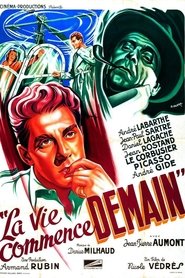
Life Begins Tomorrow

Life Begins Tomorrow

Documentary filmmaker Védrès' first semi-fictional feature was released in France in 1949 as La Vie Commence Demain. The film made it to the U.S. in 1952 as Life Begins Tomorrow. Made in cooperation with UNESCO, the film speculates on the future of mankind after the advent of Atomic Energy. Many prominent French artists and intellects contribute to the narration: Jean-Pierre Aumont plays The Man of Today, Andre Labarthe is the Man of Tomorrow, and Jean-Paul Sartre, Daniel Agache, Jean Rostand, Le Corbusier, Pablo Picasso and Andre Gide are respectively seen as "The Existentialist," "The Psychiatrist,' "The Biologist," "The Architect," "The Artist" and "The Author". Film clips of hospitals, schoolrooms, scientific laboratories, and even nightclubs are woven into Védrès' fascinating tapestry.
6.2

Year:

1950