Аватар персоны Jerzy Wójcik

Jerzy Wójcik

WriterDirector
Jerzy Wójcik (12 September 1930 – 3 April 2019) was a Polish cinematographer, author of screenplays and film and television director. Jerzy Wójcik graduated from the cinematography department of the Łódź Film School in 1955. He started working in film in 1956 as an assistant to cameraman Jerzy Lipman. He was a camera operator for Andrzej Wajda’s Kanał and Jerzy Kawalerowicz’s Prawdziwy Koniec Wielkiej Wojny / Real End of the Great War. Jerzy Wójcik’s name is linked to the films of ‘Polish school’ directors Andrzej Wajda and Andrzej Munk. His full-length feature debut as a cameraman was Munk’s Eroica in 1957. Two years later he was the cinematographer for Wajda’s Popiól i Diament / Ashes and Diamonds. Wójcik was also the cinematographer for several other films by Andrzej Wajda as well as films by Kazimierz Kutz, Stanislaw Różewicz, and Jerzy Kawalerowicz. In 1981 to 1982, Jerzy Wójcik taught cinematography at the University of Silesia in Katowice. Since 1982 he taught at Łódź Film School. He has also worked as a film director, with projects such as Lament in 1991 and Wrota Europy / The Gateway of Europe in 1999 to his credit. Jerzy Wójcik also wrote a book, Labirynt Światła / Labyrinth of Light, describing his professional experiences and presenting his philosophical reflections. Jerzy Wójcik has received some prestigious film industry awards, including the ‘Golden Camera 300’ for his lifetime achievement as a cinematographer at the International Cinematographers’ Film Festival in Bitola, Macedonia (1999), and the ‘Vitae Valor’ award for lifetime achievement at the third ‘Vitae Valor’ Film Festival in Tarnów. Jerzy Wójcik’s star in the Avenue of the Stars in Piotrkowska Street in Łódź was unveiled in 2002.

12-09-1930

Birthday

Virgo

Zodiac Sign

-

Genres

0

Total Films

Also known as (male)

Nowy Sącz, Poland

Place of Birth

Popular works

Creative career

actor

0 Works

producer

0 Works

director

35 Works

writer

4 Works

other

29 Works

Wrota Europy

Wrota Europy

6.0

Year:

1999

Wrota Europy

Wrota Europy

6.0

Year:

1999

Conversation with a Cupboard Man

Conversation with a Cupboard Man

Charles sits for hours in a wardrobe in a rented room on the attic, looking back on his whole life. He was brought up by a single mother who loved his only child with a sick desperate feeling and limited all his world to her own person. Charles' tragedy began with his adolescence. It made his mother aware of her feminity that resulted in her new marriage. Together with a new husband she decided to send the boy to a school for retarded children. Upon leaving the school Charles starts to seek his longing mother who moved out, in a meanwhile, not giving any address.
5.0

Year:

1994

Skarga

Skarga

A teenager gets killed on his way to school during the tragic events of December 1970 on the Polish coast. The boy's parents launch a crusade to bury their son despite the refusal from the communist authorities.
0.0

Year:

1991

Skarga

Skarga

A teenager gets killed on his way to school during the tragic events of December 1970 on the Polish coast. The boy's parents launch a crusade to bury their son despite the refusal from the communist authorities.
0.0

Year:

1991

Diabeł

Diabeł

The hard-working son of a dying country woman hires a stranger to take care of his mother.
0.0

Year:

1988

Angel in the Wardrobe

Angel in the Wardrobe

About a sound designer for films who years ago, while in bed with his mistress, failed to respond to calls for help outside his door. Now during the recording of the audio track for a new film he begins to hear strange noises on his headphones.
5.4

Year:

1988

Woman in a Hat

Woman in a Hat

A psychological portrait of Ewa, a young Polish theatre actress searching for her own way in life. She plays a minor role in Jasieński's 'The Ball of Mannequins', a complete opposite of her real personality, while aspires to star as Cordelia in Shakespeare's 'King Lear'. Ewa lives on her own, occasionally visiting a famous old actress to talk about theatre, taking care of a poor neighbor, and fights her sophisticated mother rejecting the truth about her beloved father, who died an alcoholic.
6.5

Year:

1985

Pensja pani Latter

Pensja pani Latter

The action takes place in Warsaw in the second half of the 19th century. The main character is the head of the girls' school - Mrs. Emma Latter. Ms Latter is struggling with the financial problems of her institution, because the parents of the students are still in arrears with payments. In addition to professional problems, she is tormented by problems with adolescent children. All this causes Mrs. Latter to experience a mental breakdown.
0.0

Year:

1983

The Lynx

The Lynx

Set during the German occupation of Poland during WWII. A priest in a small village meets a revolutionary who is on an assignment to kill a supposed Nazi collaborator.
6.8

Year:

1982

Elegia

Elegia

Story of Podgaje massacre in January 1945 in which SS troop murdered captured Polish soldiers.
0.0

Year:

1979

Passion

Passion

The last days in the life of Edward Dembowski (1822-1846), the organizer of the Cracow Uprising in 1846. The informal leader of the uprising, determined to fight for the unification of Polish lands and the liberation of the peasants, negotiates with other politicians.
5.0

Year:

1978

The Leaves Have Fallen

The Leaves Have Fallen

Two years after the war, during a train trip, Henryk (20) recollects the occupation period. He passes different train stations and recollects various situations from the past: his family life, working in a garage, guerrilla warfare, the fear that accompanied him every day. He’s looking at the travellers’ faces, including the ones who have survived the war.
5.0

Year:

1975

The Deluge

The Deluge

During the Swedish invasion of Poland, the brave warrior Andrzej Kmicic, considered a traitor to the nation, fights for a country, redemption and love across the 17th-century Polish territories.
7.3

Year:

1974

Face to Face

Face to Face

The film depicts a moral dilemma of a clerk who has to face a choice: whether to save a stranger or to pretend that he hasn't seen anything, so that he won't put himself into risk.
6.5

Year:

1969

Westerplatte Resists

Westerplatte Resists

Westerplatte is a small peninsula at the entry to the Gdańsk Harbour. Before World War II, it functioned as a Polish ammunition depot in the Free City of Danzig. Its crew consisted of one infantry company and a group of civilians, 182 people in total. It was the only Polish guard-post at the mouth of the Vistula River, with as little as five sentries, one field cannon, two anti-armour guns and four mortars. The first shots of World War II were fired there. This film tells the story of Westerplatte's courageous defenders.
6.8

Year:

1967

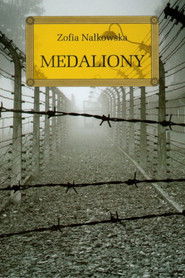
Medaliony

Medaliony

0.0

Year:

1967

Pharaoh

Pharaoh

Young Pharaoh Ramses XIII clashes with Egypt's clergy over influence on the affairs of the state and its coffers. inexperienced, but quite ambitious pharaoh is putting up a fight against a powerful clan of priests usurping rule over the country.
6.7

Year:

1966

Then There Will Be Silence

Then There Will Be Silence

Two Polish Army soldiers, both from different political backgrounds clash while fighting the Germans.
3.0

Year:

1966

Back to Life Again

Back to Life Again

Three idealists - a communist secretary, a former RAF pilot and a female political activist - need to face the hardships and accusations of postwar Stalinist years before being finally rehabilitated.
5.0

Year:

1965

Echo

Echo

It seems that nothing can ruin Henryk’s (Wieńczysław Gliński) happy life. He’s a respected lawyer with a loving son and wife. One day, he receives a letter from the prosecutor’s office. He’s accused of collaborating with the Gestapo. It’s an echo of his past under occupation.
6.2

Year:

1964

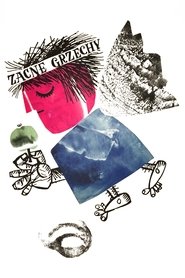
Good Sins

Good Sins

A carmelite monk travels through 17th century Poland and experiences various mishaps along the way.
8.0

Year:

1963

Przy torze kolejowym

Przy torze kolejowym

February 1943. A Jewish woman jumps out of a train and severely hurts herself. Other people arrive at the scene, but nobody is willing to help her.
0.0

Year:

1963

Mój stary

Mój stary

A boy awaits the return of his long-absent emigre father but is disappointed when they finally meet.
0.0

Year:

1962

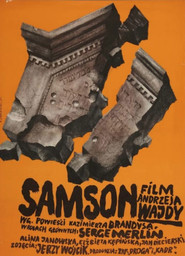
Samson

Samson

The hero is a Jewish youth. He, like his family, has always been silent and undemonstrative in the face of prejudice. Now he stands up for his right to survive, and in so doing represents the fighting spirit that culminated in the Warsaw Uprising.
4.6

Year:

1961

Time Past

Time Past

Fram is in a German POW camp where brutal, cold-hearted Gestapo officers like Weber or Von Steinhagen terrorize and execute their Polish prisoners. One day Fram sees a way to escape the camp and he takes it, heading out to find his fellow resistance fighters.
0.0

Year:

1961

Mother Joan of the Angels

Mother Joan of the Angels

A Polish priest arrives at a convent hoping to save the Mother Superior who is supposedly possessed by eight demons.
7.6

Year:

1961

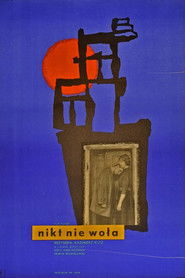
Nobody's Calling

Nobody's Calling

Shortly after World War 2 a young man arrives on the Recovered Territories and starts a romance with a young woman, all the while evading the ghosts of his past.
6.9

Year:

1960

Cross of Valor

Cross of Valor

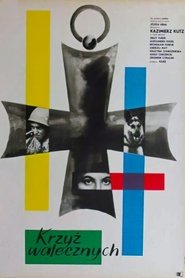
Three episodes showing the repercussions of war. A soldier is awarded with the Cross of Valor and vacation to home. But instead of his village, he finds only the charred ruins. A stray dog turns out to be the former guard at Auschwitz. A young widow is hailed as the wife of the hero but dreams of something else.
6.4

Year:

1959

Ashes and Diamonds

Ashes and Diamonds

A young academy soldier, Maciek Chelmicki, is ordered to shoot the secretary of the KW PPR. A coincidence causes him to kill someone else. Meeting face to face with his victim, he gets a shock. He faces the necessity of repeating the assassination. He meets Krystyna, a girl working as a barmaid in the restaurant of the "Monopol" hotel. His affection for her makes him even more aware of the senselessness of killing at the end of the war. Loyalty to the oath he took, and thus the obligation to obey the order, tips the scales.
7.4

Year:

1958

Eroica

Eroica

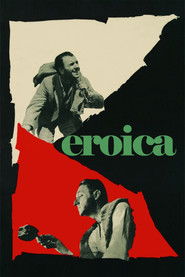
Tells two tales set during WWII: A seemingly feckless and selfish man finally takes up arms in the national struggle against the Nazis. Set in a POW camp, Polish inmates cling to their hopes for an eventual escape, encouraged by the legendary escape of one of their own.
6.9

Year:

1958

Koniec nocy

Koniec nocy

A group of young Łódź hoodlums spends their time shoplifting, partying and drinking heavily, until they are faced with serious consequences of their reckless behaviour.
4.0

Year:

1957

Koniec nocy

Koniec nocy

A group of young Łódź hoodlums spends their time shoplifting, partying and drinking heavily, until they are faced with serious consequences of their reckless behaviour.
4.0

Year:

1957

The Real End of the Great War

The Real End of the Great War

Róża marries a promising young architect, Juliusz. Then World War II breaks out and within weeks Juliusz is deported to a concentration camp. Months, and then years go by, until Róża abandons any hope that her husband might return. She meets and falls in love with another man, and tries to put her life back together, but one day, unexpectedly, Juliusz does return - a shattered, mere ghost of his former self, physically crippled and tormented by memories of the camps. First out of duty, then out of pity, Róża starts to care for him, but her feelings slowly are transformed into a kind of revulsion
8.6

Year:

1957

Kanal

Kanal

During the last few days of the Warsaw Uprising following World War II, a modest group of Resistance members remains. The band must take refuge in the sewers under the orders of leader Zadra, but it's only a matter of time before they will have to emerge. However, when they try, they are met only with intense hostility from the Nazis. Despite their attempts stay resolute through immense mental strain, it becomes increasingly apparent that they may be doomed.
7.7

Year:

1957