


Johannes Gierlinger
Director
-
Birthday
-
Zodiac Sign
-
Genres
0
Total Films
Also known as (male)
Place of Birth
-
Birthday
-
Zodiac Sign
-
Genres
0
Total Films
-
Also Known As (male)
-
Place of Birth
-
Birthday
-
Zodiac Sign
-
Genres
0
Total Films
Also known as (male)
Place of Birth
-
Birthday
-
Zodiac Sign
-
Genres
0
Total Films
-
Also Known As (male)
-
Place of Birth
actor
0 Works
producer
0 Works
director
11 Works
writer
0 Works
other
0 Works
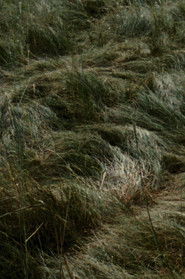
reliéf Relief
Johannes Gierlinger and Mira Klug approach the border region between Slovakia and Austria with precisely assembled images that make repressed history visible. Archive photos, landscape shots, and suddenly appearing human poses condense to that urgent certainty that it’s not possible to cast off the past.Year:
2023

Die Vergangenen Zukünfte
A political and poetic reflection on the nature and effects of revolutions. An exemplary starting point for this essaystic film is the March Revolution of 1848 in Vienna. What remains of a revolution? When is it considered to have failed and when and how are its achievements manifested? - The film combines historical struggles with today's forms of resistance and reflects on how the practice of collective memory inscribes itself in the present of a city and the actions of its residents. In view of current political developments, the film asks following Walter Benjamin: Do we have to protect the achievements of the past from the present?Year:
2021

Remapping the Origins
“Can a fascist say "I love you" in another language?” asks Johannes Gierlinger the director of Remapping the Origins. The polish city of Bialystok is the birthplace of Ludwik Lejzer Zamenhof a Polish medical doctor, inventor, and writer mostly known for creating Esperanto in 1873 while still in school, a constructed language that he believed could be a universal tool to help bridge the gap between different languages. But Bialystok is also the birthplace of David Abelevich Kaufman, known worldwide as Dziga Vertov, one of the most important cinema theorist ever, Soviet pioneer, revolutionary filmmaker, documentary, and newsreel director. The city is also the place where anarchistic communes were organized during the Russian Revolution and where the Nazis build a ghetto for Jews.Year:
2018
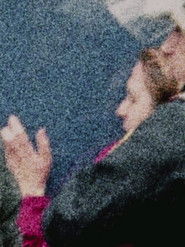
In Plato's cave?
In Plato's cave? is an essay on protest and on voices that linger on. “Sometimes we have to listen very carefully,” a woman hears lingering on her audio recordings as she tries to record sounds from another political event. A voice over narrator suggests three possible answers to a picture. Three answers that leave room for interpretation. Are we still in Plato's cave?Year:
2018

Die Ordnung der Träume
Two conversations, two cities, the question: is the only revolutionary thought of today, to let the dreamer sleeping? Die Ordnung der Träume is a film that revolves around the (e) motion of human beings, their resistance, their mental activity and the imagination of their worlds. Two people who search for each other, but miss to find, and yet remain in common. Two doubting figures whose conversation is characterized by the different perceptions and the skepticism on the other. In constant presence, a voice sinking into the thoughts of the figures; A traveler, a flaneur, a critical gaze that raises questions itself. An exploration and contemplation of the world; a gaze points at the magician and its deceptions, the faithful and their self-flagellation, the workers who build cities, and children who play young gods.Year:
2017
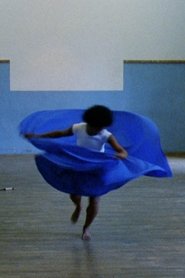
A subsequent fulfillment of a pre-historic wish
A subsequent fulfilment of a pre-historic wish is a Film about an female artist who died in a dubious accident. Connected in time trought the layers of rituals, nature, death and fragments of remembrance, a narrator searchs for her and a lost artwork and finds nothing more then pieces of a broken memory. The film revolves around Ana Mendieta, deals with the question of body, spirtuality, fleeing and belonging and relates to political realities. A connected track, a time loop, between the death of an artist and the question of death and losing within the historical and present politics. A Film in search for the traces of baffling death.Year:
2015

The Fortune You Seek Is In Another Cookie
THE FORTUNE YOU SEEK IS IN ANOTHER COOKIE is a dizzying experience in the essayistic tradition of Chris Marker and the early explorers. A film for anyone who yearns to see the world anew.Year:
2014
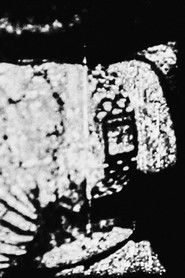
Vision of Traces
A film made by removing the surface of found footage filmstrip on to paper with the aid of chemicals. The visible elements of the found footage filmmaterial, which shows mostly rehearsals and not used filmscenes, are the remaining traces of that film printing process.Year:
2012
2012
In the film 2012, fear and desire are constantly oscillating. The camera takes us to the boundary of a closed property. Initially the eye is reluctant to approach even further but curiosity is takes over and forces us to enter the house.Year:
2012
Broken Time
Made out of Found Footage 16 mm Material “Broken time” follows the tradition of Hand Made Film and layering of Film and Material. It is a cinematic process of a Collage, a layering of Picture elements to generate a cinematic complex.Year:
2011
Chawani, Bashi
Chawani, bashi is a film about the ancient Kurdisch city of Hasankeyf, Turkey. Made of photographs taken in 2010 the film reflects on the disappearance of the city, on light, politics, loss and the grown up children.Year:
-
