Аватар персоны José Celso Martinez Corrêa

José Celso Martinez Corrêa

ActorWriterDirector
José Celso Martinez Corrêa (Araraquara, March 30, 1937 – São Paulo, July 6, 2023), known as Zé Celso, was a Brazilian director, actor, playwright and director. Working − whether directing, adapting, or actually in collaboration − with names ranging from Augusto Boal, Henriette Morineau, Fernanda Montenegro, Sérgio Britto, Raul Cortez, Bete Coelho and Flávio Império to Chico Buarque, William Shakespeare, Nelson Rodrigues, Max Frisch, Bertolt Brecht and Máximo Gorki, Zé Celso built one of the most original journeys on Brazilian stages.

30-03-1937

Birthday

Aries

Zodiac Sign

-

Genres

42

Total Films

Jose Celso Martinez Correa, Zé Celso Martinez

Also known as (male)

Araraquara, São Paulo, Brazil

Place of Birth

Popular works

Creative career

actor

42 Works

producer

0 Works

director

16 Works

writer

6 Works

other

0 Works

Peréio, Eu Te Odeio!

Peréio, Eu Te Odeio!

23 years in the making, “Pereio, Eu Te Odeio!” is a documentary on legendary Brazilian actor Paulo Cesar Pereio, an irreverent and controversial artist and public figure, as told by the testimonies of friends, family, and society members who hate him.
8.0

Year:

2023

Cafi

Cafi

It portrays the work of Carlos Filho, Cafi, a photographer from Recife, who for more than 40 years has dedicated himself to recording a large part of the events of dance, theater and Brazilian popular music. Recordings, concerts, tours and rehearsals by important artists passed through Cafi's lens.
0.0

Year:

2021

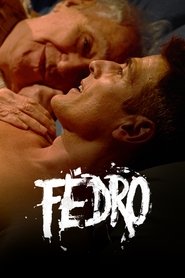
Fédro

Fédro

Twenty years after his debut as an actor, Brazil's sweetheart Reynaldo Gianechini meets his mentor, legendary director José Celso Martinez Corrêa for a first reading of Plato's Phaedrus.
4.8

Year:

2021

Desire Machine: 60 Years of Teatro Oficina

Desire Machine: 60 Years of Teatro Oficina

In six decades, Teatro Oficina has done more than revolutionize theatrical language in the country: the aesthetic influence of José Celso Martinez Corrêa's company extends from Tropicalism to the renewal of Brazilian audiovisual languages ​​from the 1960s onwards. The film revisits a story that it involves personalities such as Caetano Veloso, Glauber Rocha, Lina Bo Bardi, Chico Buarque and Zé do Caixão, brings together scenic art, ecology, architecture and sexuality, and mixes art and life in the search for a Brazilian based language.
5.0

Year:

2021

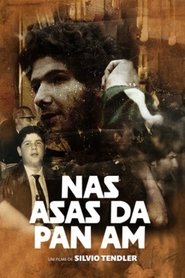
Nas Asas da Pan Am

Nas Asas da Pan Am

Silvio Tendler goes through his life remembering the movements he was part of during the brazilian dictatorship and his adherence to socialism.
0.0

Year:

2020

Race Antenna

Race Antenna

In 1979, while Brazil was going through the troubled moment of the Amnesty Law, Glauber Rocha directed the program Abertura for TV Tupi, in which he interrogated a contradictory and boiling Brazil head-on, full of utopias but always under the weight of secular wounds.
8.2

Year:

2020

Salve o Prazer!

Salve o Prazer!

0.0

Year:

2020

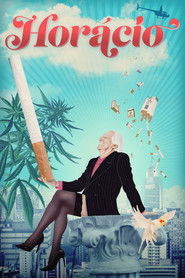
Horácio

Horácio

Horacio, an old smuggler hiding from the law, lives in a surreal, baroque apartment with Petulia, his daughter, and Milton, his favorite thug. While he keeps his daughter locked up in her bedroom, Horácio flirts with his goon, for whom he has had repressed feelings for years. However, Milton's love for a mysterious woman, and Petula's attempts to free herself with the help of a former lover, clash with Horacio's tyrannical whims.
5.5

Year:

2019

How Do You See Me?

How Do You See Me?

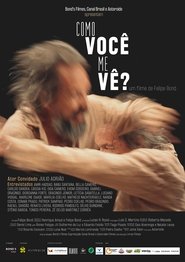
How Do You See Me? is a Brazilian documentary feature that entwines both experienced actors and beginners to explore the hardships and the happiness that are inherent to the job when detached from the glam and glitz of the gossip industry, creating a diverse and comprehensive mosaic of what it means to be an actor in Brazil, a country so full of contradictions. The film brings forward a reality that the masses usually don't get to know: the men and women moved by a deep passion for acting and touching people. With Julio Adrião, Matheus Nachtergaele, José Celso Martinez, Cássia Kis, Nanda Costa, Babu Santana, Luciano Vidigal and Letícia Sabatella, among others.
6.0

Year:

2017

Saudade

Saudade

0.0

Year:

2017

Paulo Autran – O Senhor dos Palcos

Paulo Autran – O Senhor dos Palcos

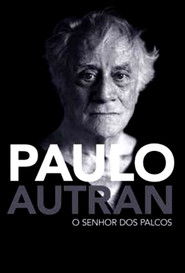
A portrait of the evolution of theater in the 20th century and a deep reflection on the art of acting through the career of Paulo Autran (1922-2007), one of the greatest actors in Brazil.
0.0

Year:

2017

Macumba Antropofaga

Macumba Antropofaga

Based on Oswald de Andrade's Anthropophagous Manifesto, Macumba was a hit with the audience that participated and interacted more with the work at each presentation.
2.0

Year:

2017

Pitanga

Pitanga

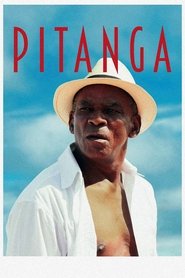
This documentary investigates the aesthetic, political and existential trajectory of emblematic Black Brazilian actor Antônio Pitanga. His career spans over five decades, and he has worked with iconic Brazilian filmmakers Glauber Rocha, Cacá Diegues and Walter Lima Jr. He was a prominent figurehead and outspoken activist during the Brazilian dictatorship, a period of unrest in Brazilian cinema. "Pitanga" deep dives into the world of Antônio and the history of Brazil. The documentary was directed by his daughter Camila Pitanga, one of widely recognised faces in Brazilian television and cinema right now. The film is also a poem, and a tender ode to fatherhood.
5.6

Year:

2016

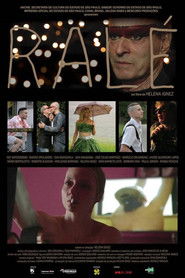
Ralé: The Lower Depths

Ralé: The Lower Depths

Young directors are filming “The Exhibitionist” in the middle of a farm in a paradise-like region. The film poetically investigates the Brazilian soul, with the Amazon as the center of the world, reflecting on existential issues, the right to sexual freedom and individuality.
6.2

Year:

2016

Zé Celso: Tupy or not Tupy

Zé Celso: Tupy or not Tupy

From the testimonies of Zé Celso himself, and excerpts from the play "Walmor Y Cacilda 64 - Robogolpe", which contains autobiographical elements, as well as from essays and scenes from older pieces by him, it is possible to know a little more about the life of the irreverent author. Playwright, director, actor and musician, Zé Celso began his career in amateur theater while still a student at the end of the 1950s. He "ate" the work of Oswald de Andrade and as an anthropophage, was one of Tropicália's founders.
5.0

Year:

2015

Satyrianas – 78 horas em 78 minutos

Satyrianas – 78 horas em 78 minutos

A document of one of the greatest cultural events of Latin America in an innovative way, the film mixes documentary and fiction to pay homage to the artists of the contemporary Brazilian theater, who come together in the city of São Paulo every year to celebrate the coming of the spring. The fictional storyline shows the shooting of the documentary which is directed by a foreigner director and his Brazilian second-rate crew. They join forces to make a successful film based on the event.
4.0

Year:

2012

Tropicália

Tropicália

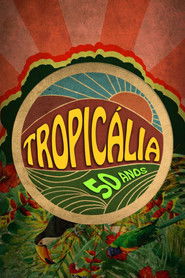
Set against the turbulent atmosphere of the 1960s, Tropicália is a feature length documentary exploring the Brazilian artistic movement known as Tropicália, and the struggle its artists endured to protect their right to freely express revolutionary thought against the traditional Brazilian music of that time.
7.1

Year:

2012

Pela Desordem Natural das Coisas

Pela Desordem Natural das Coisas

A deep dive into the life and work of Brazilian actress Maria Alice Vergueiro. The documentary explores her turbulent beginning in the theatrical world, highlighting her strength and courage during the Military dictatorship in Brazil, which culminated in the foundation of the Teatro do Ornitorrinco.
0.0

Year:

2012

Evoé: Portrait of an Anthropophage

Evoé: Portrait of an Anthropophage

A film that mixes labyrinthine recent testimonies and historical images of the career of the tropicalista director, actor and playwright Zé Celso, of Teatro Oficina, one of the greatest personalities of the Brazilian arts of all time. The documentary acquired its main verb in four trips to key points in the trajectory of Zé: Bahia badlands, Cururipe Beach in Alagoas (where Bishop Sardinha was devoured), Epidaurus and Athens in Greece and his apartment in São Paulo.
3.0

Year:

2011

Zé[s]

Zé[s]

A cosmic-semantic coincidence. Ze, Theater, Workshop. Zé Celso Martinez Corrêa, director of Teat (r) o Oficina Uzyna Uzona, from São Paulo. Zé Perdiz, a mechanic from Brasília whose workshop is transformed into a theater. Parallel lives. Cinematic encounter.
0.0

Year:

2010

Travessia

Travessia

The crossing of generations under the influence of military dictatorship and political openness. Documentary highlights the role of the organizers of the March for the Family with God for Freedom in 1964. Based on stories of life under the military dictatorship, stories and reflections of people who had a significant participation in that period, whether for or against the coup.
0.0

Year:

2009

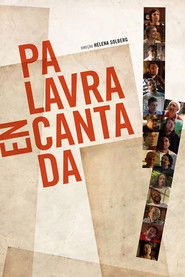
Palavra (En)Cantada

Palavra (En)Cantada

Palavra (En)Cantada makes a journey in the history of the Brazilian songbook with a look at the relationship between poetry and music, sewing testimonials of great names of our culture, musical performances and amazing research of images.
6.4

Year:

2009

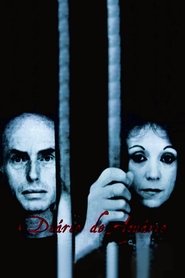
Diário De Aquário

Diário De Aquário

The pages of the artist Judith Malina's diary, imprisoned by the military dictatorship during the season of the Living Theater group in Brazil. The documentary chronicles the visit of the actress and her theatrical company to the country.
0.0

Year:

2009

Embodiment of Evil

Embodiment of Evil

Released from the Mental Health Wing of São Paulo State Penitentiary after forty years, the sadistic undertaker Zé do Caixão is back on the streets, haunted by ghostly visions and spirits of past victims but still set upon the goal that sent him to prison in the first place: finding a woman who can give him the perfect child.
5.2

Year:

2008

Milagrez

Milagrez

Documentary on "Antonio das Mortes", Glauber Rocha's 1969 film.
0.0

Year:

2008

Gal - from Tropicalism to the Present Day

Gal - from Tropicalism to the Present Day

The film has Gal's career as its guiding principle, drawing a parallel with the movement of which the singer was the muse and one of the main interpreters, and reaching the present day.
7.0

Year:

2006

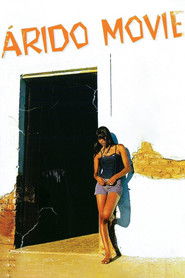
Dry Movie

Dry Movie

Weatherman from a TV network goes back to his hometown, Vale da Rocha, a place in Northeast Brazil, devastated by the drought. He is forced to face the geographic elements and his own memories.
6.3

Year:

2005

Glauber Rocha - The Movie, Brazil's Labyrinth

Glauber Rocha - The Movie, Brazil's Labyrinth

Documentary about Brazilian filmmaker Glauber Rocha, one of the most important names in the Cinema Novo, with interviews with some of his friends and colleagues.
5.8

Year:

2003

Os Sertões - A Terra

Os Sertões - A Terra

From 2000 to 2007, Teat(r)o Oficina Uzyna Uzona worked on the staging of Euclides da Cunha's epic book, Os Sertões, which describes the 19th Century War of Canudos in the Brazilian "sertão"(backlands). The result was the pentalogy of plays: A Terra (2002), O Homem I (2003), O Homem II (2003), A Luta I (2005), and A Luta II (2006). This first play is a carnival opera, the actors are the earth, the vegetation, the wind, the animals, the rivers, the drought. It reveals the most intimate secrets of nature, that also vibrate in the human and trans-human arteries. This work enriched by the experience that the subsequent works brought gains an updated insight into the human interference in the environment. Destructive power is proportional to financial power, and the discussion about the way space gets occupied was brought to the forefront, including the real-estate boom that surrounds today not only Teatro Oficina, but the whole world, now hotter and more arid.
0.0

Year:

2002

Lara

Lara

The life of Brazilian actress Odete Lara, muse of the movement called Cinema Novo in Brazil, who exchanged stardom for a quiet and religious life.
5.0

Year:

2002

Boca de Ouro

Boca de Ouro

0.0

Year:

1999

Hunting Season

Hunting Season

Hunting Season deals with the wave of homosexual murders that plagued São Paulo and Rio de Janeiro in the 1980s. With street statements and cultural and artistic figures such, such as Zé Celso, Jorge Mautner, Roberto Piva and others.
5.0

Year:

1988

Vianinha

Vianinha

5.0

Year:

1987

Infinita Tropicália

Infinita Tropicália

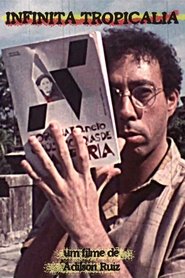
Tropicália was a Brazilian cultural movement that occurred between 1967 and 1968, inspired by Oswald de Andrade's anthropophagic ideals, pop art and the concretism. Twenty years later, this film revisits the movement and shows that Tropicalismo will never die.
0.0

Year:

1986

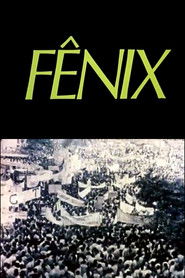
Fênix

Fênix

0.0

Year:

1980

A$$untina of the Amerikas

A$$untina of the Amerikas

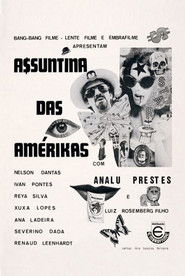
A$$untina of the Amerikas is a musical comedy of a prostitute that, in 24 hours, wakes up, fights her mother, puts her son in anarchy, has a date with Santa Claus, a blue bear and two girlfriends. Then she finally meets her old millionaire lover. They spend their time to talk about everyday life and make love. Based on the novels of Fernando Henrique Cardoso and Wilhelm Reich.
4.8

Year:

1976

The Awakening of the Beast

The Awakening of the Beast

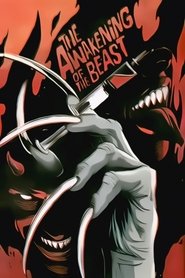
A psychiatrist experiments on four volunteers with LSD to examine 60's drug culture, soon unleashing an expert in depravity.
5.5

Year:

1970

América do Sexo

América do Sexo

Film in four segments: "Colagem", "Balanço", "Bandeira Zero" and "Sexta-Feira da Paixão, Sábado de Aleluia", having in common a strongly allegorical and gross protest tone in the approach of its subjects.
5.0

Year:

1969