

José María Ciganda
Director
-
Birthday
-
Zodiac Sign
-
Genres
0
Total Films
Also known as (female)
Place of Birth
-
Birthday
-
Zodiac Sign
-
Genres
0
Total Films
-
Also Known As (female)
-
Place of Birth
-
Birthday
-
Zodiac Sign
-
Genres
0
Total Films
Also known as (female)
Place of Birth
-
Birthday
-
Zodiac Sign
-
Genres
0
Total Films
-
Also Known As (female)
-
Place of Birth
actor
0 Works
producer
0 Works
director
24 Works
writer
1 Works
other
22 Works
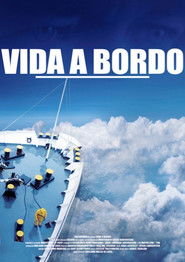
Life on Board
A ship, fifteen men, the river. A sensory film, a journey towards introspection. A portrait of loneliness, labour and absence, on board this floating society trapped in time. Could it be the reflection of our own « life on board »?Year:
2018
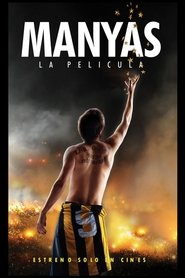
Manyas, La Película
More than a film about football, this documentary is the portrait of a passion. Through several testimonies, what is shown is the feeling of the fan of Peñarol and what he is capable of doing for the team of his loves. From the largest flag in the world to the most spectacular receptions, including tattoos, anecdotes, promises and much more.Year:
2011
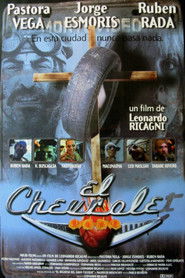
The Life Jacket Is Under Your Seat
The vicissitudes of a musician fresh from prison that seeks to resume playing music with his band, the Chevrolés, whose members are scattered around the city, earning a living wage through various activities.Year:
2002

The Recourse of Memory
Ten years after the Law of Expiration, this documentary analyses the historical background of Uruguay's recent past. It is a survey of the controversy stirred up in society by the fact that, thanks to this law, the armed forces personnel and police who committed crimes under the dictatorship (1973-1985) have gone unpunished, and it examines the scars the authoritarian regime left on a section of the population.Year:
2000
The Recourse of Memory
Ten years after the Law of Expiration, this documentary analyses the historical background of Uruguay's recent past. It is a survey of the controversy stirred up in society by the fact that, thanks to this law, the armed forces personnel and police who committed crimes under the dictatorship (1973-1985) have gone unpunished, and it examines the scars the authoritarian regime left on a section of the population.Year:
2000

The Implacable Purity of Oblivion
A musician and composer who grew up in Tacuarembó, Eduardo Darnauchans, was one of the main creators of popular music in Uruguay. He was persecuted for political reasons from 1962 to 1984, and this documentary covers his life and work as a reflection of that troubled time.Year:
1998
The Implacable Purity of Oblivion
A musician and composer who grew up in Tacuarembó, Eduardo Darnauchans, was one of the main creators of popular music in Uruguay. He was persecuted for political reasons from 1962 to 1984, and this documentary covers his life and work as a reflection of that troubled time.Year:
1998
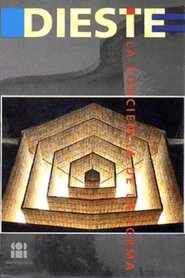
Dieste: the Consciousness of Form
The engineer Eladio Dieste, the most innovative architect in Uruguay, is interviewed by the architect Mariano Arana. He talks about the ethical responsibility involved in creating, the idea that the things that surround us should be beautiful, and how important it is to use our intelligence and creativity to produce original responses and generate our own ways of thinking.Year:
1997
Dieste: the Consciousness of Form
The engineer Eladio Dieste, the most innovative architect in Uruguay, is interviewed by the architect Mariano Arana. He talks about the ethical responsibility involved in creating, the idea that the things that surround us should be beautiful, and how important it is to use our intelligence and creativity to produce original responses and generate our own ways of thinking.Year:
1997
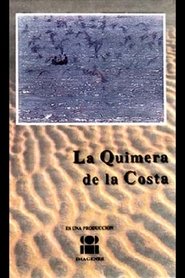
The Chimera of the Coast
This documentary examines the problems of Uruguay's Atlantic coast in the face of a scheme to exploit the area's tourist resources that is not geared to sustainable development.Year:
1994
The Chimera of the Coast
This documentary examines the problems of Uruguay's Atlantic coast in the face of a scheme to exploit the area's tourist resources that is not geared to sustainable development.Year:
1994
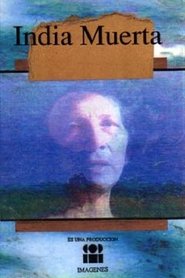
India Muerta
This is a marsh area in the very heart of the protected wetlands in the east of Uruguay, but today it has almost completely disappeared. A message in the Guaraní language, an "India Muerta" prayer, sounds the alarm about the dire consequences for nature of what human beings are doing.Year:
1992
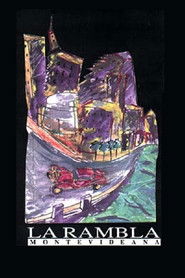
La rambla montevideana
A description of the Montevidean promenade as a vehicular route and as a communal space.Year:
1992

The Rocha Wetlands: The Secret of the Waters
In the east of Uruguay there is a little-known region of vast wetlands in a beautiful natural setting which is a sanctuary for thousands of species of flora and fauna. Although it is officially protected, it is under threat from rice producers who are draining parts of the area.Year:
1991

The Forgotten Land
This is the dramatic untold story of small farmers who suffer and struggle to subsist less than 80 kilometres from Montevideo. The reality of their daily lives is that the land is impoverished, middle men dominate the business, they cannot compete with firms that have new technology, and the market for their goods is small. They have to fight to survive in the wider context of the impact of regional integration - the Mercosur - and the world crisis that other countries are also going through.Year:
1991
The Forgotten Land
This is the dramatic untold story of small farmers who suffer and struggle to subsist less than 80 kilometres from Montevideo. The reality of their daily lives is that the land is impoverished, middle men dominate the business, they cannot compete with firms that have new technology, and the market for their goods is small. They have to fight to survive in the wider context of the impact of regional integration - the Mercosur - and the world crisis that other countries are also going through.Year:
1991

Onetti, Portrait of a Writer
A long interview with Uruguay's greatest writer, in Madrid a few months before his death. From his bed, Onetti talks about literature, creativity, and his origins.Year:
1990
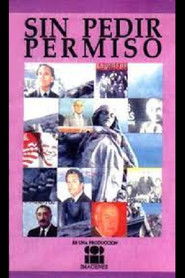
Without Asking Permission
The subject is women and their participation in politics, and this is used as a pretext for a humorous, provocative, female perspective on official (male) discourse and the almost nonexistent participation of women in Uruguayan politics.Year:
1989
Without Asking Permission
The subject is women and their participation in politics, and this is used as a pretext for a humorous, provocative, female perspective on official (male) discourse and the almost nonexistent participation of women in Uruguayan politics.Year:
1989
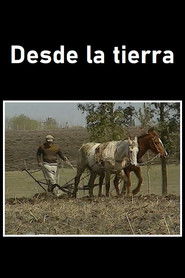
Desde la tierra
In 1988, the indebtedness of the land adjudicators of the National Colonization Institute faced a controversial refinancing law that made their subsistence unfeasible. The settlers envisioned an opaque future in which the depopulation of the campaign was going to worsen with more emigration and with the disappearance of more rural establishments.Year:
1988
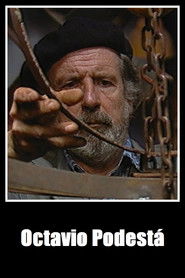
Octavio Podestá
A record of the works and reflections of this notable Uruguayan sculptor as a starting point to question the fate of art in our society, a question of how this artistic expression remains limited to a restricted area due to the lack of a true cultural policy.Year:
1988

Voices For a Story
Women in an isolated backwater in the countryside tell the story of how they live, and talk about their work in a cooperative that processes wool to make good quality clothing.Year:
1987
La jeringa
Free adaptation of the story “Muebles El Canario” by Felisberto Hernández, with Leo Maslíah in the leading role.Year:
1987
La jeringa
Free adaptation of the story “Muebles El Canario” by Felisberto Hernández, with Leo Maslíah in the leading role.Year:
1987