


José Mário Branco
Actor
25-05-1942
Birthday
Gemini
Zodiac Sign
-
Genres
15
Total Films
Also known as (male)
Place of Birth
25-05-1942
Birthday
Gemini
Zodiac Sign
-
Genres
15
Total Films
-
Also Known As (male)
-
Place of Birth
25-05-1942
Birthday
Gemini
Zodiac Sign
-
Genres
15
Total Films
Also known as (male)
Place of Birth
25-05-1942
Birthday
Gemini
Zodiac Sign
-
Genres
15
Total Films
-
Also Known As (male)
-
Place of Birth
actor
15 Works
producer
0 Works
director
12 Works
writer
1 Works
other
11 Works
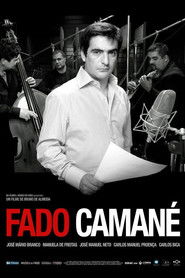
Fado Camané
Documentary about the Portuguese singer Camané and the process of creating one of fado's key works, revealing a rigorous search that allows him to achieve masterful interpretations.Year:
2014

Mudar de vida: José Mário Branco, vida e obra
A documentary about the life and work of musician, composer, poet, actor, activist, columnist, and music producer José Mário Branco, a multitalented man who has been using his songs to transform the country and whose lyrics make as much sense today as they did 40 years ago. The shooting began in 2005 and covered seven years of rehearsals, recordings, talks and concerts, both in Portugal and France. In this film, José Mário Branco talks about music, his convictions, his generation, the dictatorship, the colonial war and his imprisonment and exile. It is the portrait of a man for whom “the song [was always] a weapon.”Year:
2014
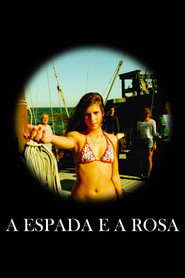
The Sword and the Rose
Manuel bids farewell to his routine and boards a 15th century vessel under pirate law. Treason on board triggers a series of terrible events our protagonist overcomes while keeping his moral principles intact.Year:
2010
Encontros
Mesmerized by the songs of Peroguarda villagers in southern Portugal’s Alentejo region, young Portuguese modern poet Antonio Reis, Corsican researcher of Portuguese folk music Michel Giacometti, and film director Paulo Rocha visited the village one after another in the late 1950s. This work refreshes the soul and flows with songs and poetry seeped in sadness, as well as the atmosphere of the quiet sea and village, fields adorned with vibrant red flowers, and roads traveled by Reis and the others, while interspersing images from Paulo Rocha’s films.Year:
2006
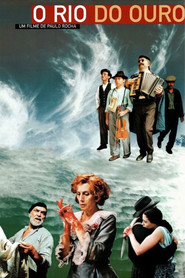
River of Gold
Carolina, an aging local grande dame who works at a crossing point on the titular river, marries another late-in-life character, the dredging-boat operator Antonio. Not long after their union, she becomes intensely jealous of Antonio's fondness for their winsome goddaughter, Joana, and insinuates herself into a relationship brewing between Joana and a mystical gypsy gold salesman. Soon, tempers are flaring, mystical secrets are being revealed and death is hovering over the central characters.Year:
1998
Polifonias - Paci é saluta, Michel Giacometti
Traveling by the experience and by the roots of one of the strongest manifestations of Portuguese popular culture – singing polyphonic Alentejo. Evoking Michel Giacometti, the film questions the origins of the “sing” in the context of Mediterranean culture.Year:
1997
Atlântida: Do Outro Lado do Espelho
On an isolated Portuguese island, a nameless man makes a mental journey which brings him into contact with the strange and menacing world without peace and harmony.Year:
1994

Poor George
One night Jorge will meet with a Japanese industrialist, who will allow him to abandon his teaching position and resume his chemical work. However, when he gets home he finds a person there.Year:
1993

Aqui D'El Rei!
At the end of the nineteenth century, an army force led by Major Mouzinho de Albuquerque, a cavalry officer, imprisoned in Mozambique the tribal chief Gungunhana, who had rebelled against Portuguese government and sovereignty. Mouzinho instantly becomes a national hero but his raising popularity worries the State.Year:
1992

The Sound of the Shaking Earth
Freely based on Gide ('Paludes') and Hawthorne ('Wakefield'), this is a film about a writer who never wrote anything and who blows at nightfall the breath of frost. The poem by Carlos Queiroz to which the above sentences belong is not cited in 'O som da Terra a Tremer', but the atmosphere is that, between written letters never received. Fiction within fiction, stories within stories, like those Chinese boxes in which there is always one inside another. Or the two margins of the same river, always being lateral.Year:
1990
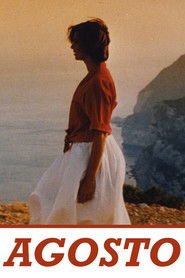
Agosto
Summer of 1964. The professor Carlos and the couple Dário and Alda spend time together in the beach during vacations. Away from the colonial war, everything seems lost in time.Year:
1988
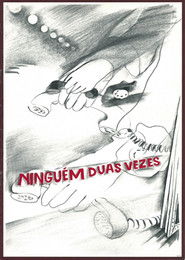
Ninguém Duas Vezes
Director Jorge Silva Melo has developed a viable, though highly intellectual mystery story about the world of art and culture and murder in this somewhat theatrical presentation. When German artist Bernd Hoffmann (Michael König) arrives in Lisbon to oversee the installation of his paintings in a joint exhibition with another Berlin artist, Hanna Brauer (Charlotte Schwab), Hanna never shows up. Hoffmann is puzzled because he is certain he saw a video sequence with Hanna at the exhibition, and he begins to look for her. Another Lisbon cultural center, a theater, is also having problems that may or may not be related -- and the mystery deepens when Hanna is found dead, either by her own hand, or murdered.Year:
1985
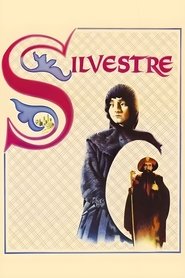
Silvestre
A bewitching combinatory adaptation of the Bluebeard tale and a 15th century Portuguese fable of a damsel who disguises herself as a knight errant.Year:
1982
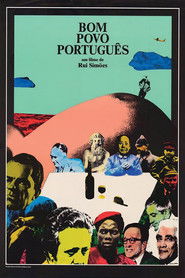
Good Portuguese People
Using film and television footage taken during the revolutionary movement of April 25, 1974 in Portugal, and mixing it with music and live interviews with common people, the director conveys a vivid account of the period in which a military coup evolved to a socialist revolution, then was tempered into a formal European style democracy.Year:
1981
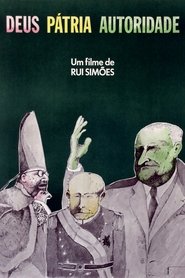
Deus Pátria Autoridade
The history of Portugal since the Republican revolution of 1910 to the revolutionary period following the military coup of April 24, 1974, recounted with a marxist perspective, using historic sound and film documents. The title refers to a trilogy of values proclaimed by Salazar, prime minister of Portugal in 1936.Year:
1976
