


Kamran Shirdel
DirectorWriter
-
Birthday
-
Zodiac Sign
-
Genres
0
Total Films
Also known as (male)
Iran
Place of Birth
-
Birthday
-
Zodiac Sign
-
Genres
0
Total Films
-
Also Known As (male)
Iran
Place of Birth
-
Birthday
-
Zodiac Sign
-
Genres
0
Total Films
Also known as (male)
Iran
Place of Birth
-
Birthday
-
Zodiac Sign
-
Genres
0
Total Films
-
Also Known As (male)
Iran
Place of Birth
actor
0 Works
producer
0 Works
director
27 Works
writer
8 Works
other
2 Works
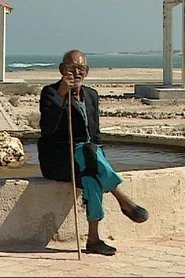
Solitude Opus 1
Waiting for Godot on Kish Island in the Persian Gulf, an island where decay and luxury life are neighbours. A man in his eighties believes that he is still in charge of a complex for alternative forms of energy which was abolished long ago. The pictures - an homage to the late and famous Iranian director Sohrab Shahid-Saless - contrast the comment speaking about the perspectives for a great future.Year:
2002
Solitude Opus 1
Waiting for Godot on Kish Island in the Persian Gulf, an island where decay and luxury life are neighbours. A man in his eighties believes that he is still in charge of a complex for alternative forms of energy which was abolished long ago. The pictures - an homage to the late and famous Iranian director Sohrab Shahid-Saless - contrast the comment speaking about the perspectives for a great future.Year:
2002

Cradle of Sun
Cradle of SunYear:
2001

Mobarakeh Steel Complex
Mobarakeh Steel ComplexYear:
1997
The Shoga (Glass and Gas) Company
"I have not been very active as a social filmmaker anymore after the revolution, though I had great plans and projects at the start of the revolution! So far I have made many so-called commissioned industrial films for national oil, gas, and steel companies as well as for government ministries, in which I tried to bring the films as close as possible to my taste and to my way of thinking and make the films' sponsors to see the world from content and formal viewpoints. Some of these films encountered serious censorship problems and part of them were cut for their public screenings, such as Gas, Fire, Wind and The Genaveh Project, both of which were filmed during the Iran-Iraq war." - Kamran ShirdelYear:
1990
A Look at Bonyad-e Mostazafan Industries
Bonyad-e Mostazafan (Mostazafan Foundation) is an Iranian para-state conglomerate of companies from across the spectrum of industries, including finance, media, food, agriculture, energy, tourism, construction, and mining. Bonyad-e Mostazafan is ostensibly a charitable organization charged with providing benefits for it's eponymous "poor and oppressed," however it is also a multi-billion dollar enterprise that is exempt from oversight and regulation that functions as a revenue source for various revolutionary apparatus, including security and military forces.Year:
1989

Genaveh Project
Genaveh ProjectYear:
1988

Wagon Pars
Shirdel made a fertile production of highly praised industrial and educational films. "Wagon Pars" is a fine example of his industrial documentaries.Year:
1987

Gas, Fire, Wind
Year:
1986

Therefore Hangs a Tale
The film's story is about a school that is expecting the arrival of an inspector, and everyone is anxious about the inspector’s visit. This film is a loose adaptation of The Government Inspector by Nikolai Gogol.Year:
1977

Pearls of the Persian Gulf: Dubai 1975
Year:
1975
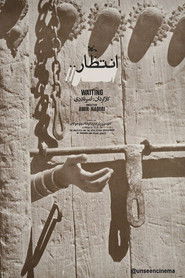
Waiting
A dialogue-free film that follows a boy in southern Iran whose daily chore is bringing an elegant glass bowl to get filled with ice, and then returning home.Year:
1974
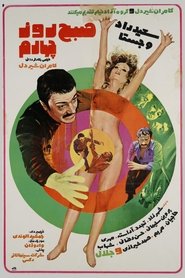
The Morning of the Fourth Day
A free adaptation from Godard's Breathless that follows Amir, a foul guy who has killed a man in Abadan. He returns to Tehran and continuing his misdeeds trying to convince his girlfriend Zarry to escape with him to the south of Iran.Year:
1973
The Morning of the Fourth Day
A free adaptation from Godard's Breathless that follows Amir, a foul guy who has killed a man in Abadan. He returns to Tehran and continuing his misdeeds trying to convince his girlfriend Zarry to escape with him to the south of Iran.Year:
1973

Paykan
Short documentary about the Paykan automobile assembly-lineYear:
1969
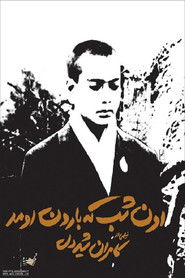
The Night It Rained
Initially banned for seven years, the film treats the questionable and controversial newspaper story of a heroic village boy who prevented a train disaster as an antiauthoritarian, Rashomon-like puzzle.Year:
1967
The Night It Rained
Initially banned for seven years, the film treats the questionable and controversial newspaper story of a heroic village boy who prevented a train disaster as an antiauthoritarian, Rashomon-like puzzle.Year:
1967
The Night It Rained
Initially banned for seven years, the film treats the questionable and controversial newspaper story of a heroic village boy who prevented a train disaster as an antiauthoritarian, Rashomon-like puzzle.Year:
1967

Tehran Is the Capital of Iran
Tehran Is the Capital of Iran (1966-79) documents life in a deprived district in the south of Tehran. The images of destitution in Tehran's poor areas is accompanied by a variety of spoken accounts: the official viewpoint on the district's living conditions, what the inhabitants have to say, and occasional extracts read out of school manuals. The key element in Shirdel's film is the counterpoint effect he creates with image and sound. His impressively powerful portrayal of social unease helps reinforce the impact of his astonishing documentary images and social themes.Year:
1966
Tehran Is the Capital of Iran
Tehran Is the Capital of Iran (1966-79) documents life in a deprived district in the south of Tehran. The images of destitution in Tehran's poor areas is accompanied by a variety of spoken accounts: the official viewpoint on the district's living conditions, what the inhabitants have to say, and occasional extracts read out of school manuals. The key element in Shirdel's film is the counterpoint effect he creates with image and sound. His impressively powerful portrayal of social unease helps reinforce the impact of his astonishing documentary images and social themes.Year:
1966

Women's Quarter
The film shows the life of prostitutes in Tehran's city brothels, an area known as Shahre Now. The film closely follows a number of women and communicates how the burden of social constraints led them to surrender in the face of their common fate. The film does explore the possibility of re-education and development for these women, but in no way does it paint over the hard and brutal reality. The film was produced on behalf of the Organization of Iranian Women and was immediately banned while shooting was still going on. After the revolution, a portion of the material was found, and Shirdel decided to finish the film using photos by the late Kaveh Golestan that were taken more than ten years after the film itself was shot.Year:
1966
Women's Quarter
The film shows the life of prostitutes in Tehran's city brothels, an area known as Shahre Now. The film closely follows a number of women and communicates how the burden of social constraints led them to surrender in the face of their common fate. The film does explore the possibility of re-education and development for these women, but in no way does it paint over the hard and brutal reality. The film was produced on behalf of the Organization of Iranian Women and was immediately banned while shooting was still going on. After the revolution, a portion of the material was found, and Shirdel decided to finish the film using photos by the late Kaveh Golestan that were taken more than ten years after the film itself was shot.Year:
1966
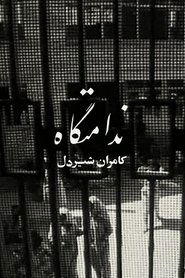
Women's Prison
Women's Prison recounts the life of the prisoners and the problems their families encounter in their struggle to survive. Here again filmmaker Kamran Shirdel employs the cinema verité style. The interviews with the prisoners, social workers and teachers serve as commentaries for "constructed" documentary images.Year:
1965
Women's Prison
Women's Prison recounts the life of the prisoners and the problems their families encounter in their struggle to survive. Here again filmmaker Kamran Shirdel employs the cinema verité style. The interviews with the prisoners, social workers and teachers serve as commentaries for "constructed" documentary images.Year:
1965
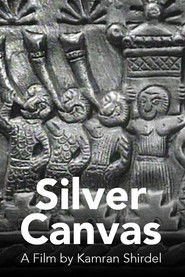
Silver Canvas
Boom-e simin - Documentary, ShortYear:
1965
Silver Canvas
Boom-e simin - Documentary, ShortYear:
1965

The Mirrors
Kamran Shirdel's 1964 diploma film at the Centro Sperimentale di Cinematografia of Rome unfolds in an urban apartment with a despondent man, who appears to be an artist or a writer, contemplating his existence through mirrors set about the room. Featuring the music of Anton Webern's Six Pieces for Orchestra Opus 6, the film has no dialogue. Gli Specchi, also known as The Mirrors, was made in the same period that saw Shirdel working as an assistant director for John Huston on The Bible and it went on to win the diploma of honor in the World Cinema School Film Festival in Tokyo in 1965.Year:
1964
