

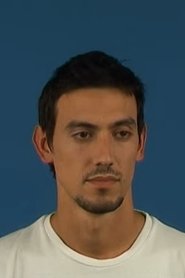
Köken Ergun
Director
-
Birthday
-
Zodiac Sign
-
Genres
0
Total Films
Also known as (female)
Place of Birth
-
Birthday
-
Zodiac Sign
-
Genres
0
Total Films
-
Also Known As (female)
-
Place of Birth
-
Birthday
-
Zodiac Sign
-
Genres
0
Total Films
Also known as (female)
Place of Birth
-
Birthday
-
Zodiac Sign
-
Genres
0
Total Films
-
Also Known As (female)
-
Place of Birth
actor
0 Works
producer
0 Works
director
9 Works
writer
0 Works
other
2 Works
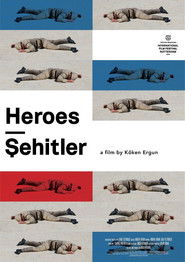
Heroes
Köken Ergun spent two years among the droves of tourists, both Turkish and Australian, that gather in Gallipoli to commemorate the soldiers who died there during one of the First World War's biggest battles. 'Heroes' to some, 'martyrs' to others.Year:
2019
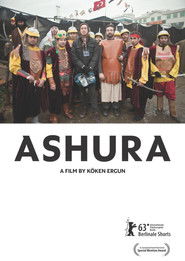
Ashura
The Battle of Karbala was a military engagement that took place on 10 Muharram, 61 AH (October 10, 680) in Karbala, in present day Iraq, between the forces of Yazid I, the Umayyad caliph and Hussein, the grandson of prophet Muhammad. Hussein and all his supporters were killed; women and children were taken as prisoners. This battle is central to Shia Muslim belief in which the martyrdom of Hussein is mourned by an annual commemoration, Ashura. There are approximately 1 million Caferi Shiites in Turkey, most of which live in Istanbul and the eastern border town of Igdir. In Istanbul they inhabit a shantytown neighborhood in the outskirts of the city, which they started building in the late 1970s. The neighborhood is called Zeynebiye, referring to Husseins courageous sister, Zeyneb. In ASHURA, artist Köken Ergun has worked in close collaboration with the people of Zeynebiye, documenting their preparations for the ceremonies in 2010.Year:
2013
Tanklove
One morning, a tank appears in the daily scene of Jyderup, a small village in Denmark. The unusual war icon seems to emerge out of nothing at the horizon; it follows a long, straight road and then heads directly into town. The tank seems to be part of the landscape itself. The inhabitants approach it not with surprise or fear, but with enthusiasm. Is this a strange reaction, or just typical for those who live in a peaceful welfare state and who only witness war in the context of television, games and cinema entertainment?Year:
2009
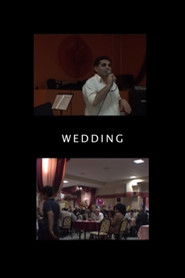
Wedding
In this three-channel video installation, Köken Ergun points his camera at various Turkish wedding ceremonies and marital rituals performed in Berlin, depicting them as mirros of cultural production. Shot by shot, he creates a fictive documentation of the entire process.Year:
2008
The Flag
This work was shot during Children's Day on 23 April, a festive day celebrating the forming of the Turkish parliament and the official end - in 1920 - of the Ottoman Empire. On this day, children perform pompous patriotic rituals that were conceived by the elders.Year:
2007
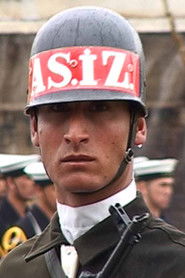
I, Soldier
“I, Soldier” is the first part of Köken Ergun’s video series in which he deals with the state-controlled ceremonies for the national days of the Turkish Republic. The nationalistic attributes attached to these large-scale ceremonies are underlined in a non-descriptive and almost voyeuristic point of view. I, Soldier was shot at the National Day for Youth and Sports, the day that marks the start of the independence war of the Turkish public under the leadership of Mustafa Kemal Atatürk against the Allied Forces back in 1919. The annual ceremony held at the biggest stadium of each city consists of figurative dances of high school students, choreographed in a timeless socialist-realist manner. In the last decade, popular songs have replaced the usual military marches, which accompanied the choreography.Year:
2006
I, Soldier
“I, Soldier” is the first part of Köken Ergun’s video series in which he deals with the state-controlled ceremonies for the national days of the Turkish Republic. The nationalistic attributes attached to these large-scale ceremonies are underlined in a non-descriptive and almost voyeuristic point of view. I, Soldier was shot at the National Day for Youth and Sports, the day that marks the start of the independence war of the Turkish public under the leadership of Mustafa Kemal Atatürk against the Allied Forces back in 1919. The annual ceremony held at the biggest stadium of each city consists of figurative dances of high school students, choreographed in a timeless socialist-realist manner. In the last decade, popular songs have replaced the usual military marches, which accompanied the choreography.Year:
2006
Untitled
A man covers his head with several headscarfs, one by one... .Year:
2004
Untitled
A man covers his head with several headscarfs, one by one... .Year:
2004