Lizzie Fitch
-
Birthday
-
Zodiac Sign
-
Genres
19
Total Films
Also known as (male)
Bloomington, Indiana
Place of Birth
-
Birthday
-
Zodiac Sign
-
Genres
19
Total Films
-
Also Known As (male)
Bloomington, Indiana
Place of Birth


-
Birthday
-
Zodiac Sign
-
Genres
19
Total Films
Also known as (male)
Bloomington, Indiana
Place of Birth
-
Birthday
-
Zodiac Sign
-
Genres
19
Total Films
-
Also Known As (male)
Bloomington, Indiana
Place of Birth
actor
19 Works
producer
7 Works
director
59 Works
writer
1 Works
other
50 Works

Plot Front
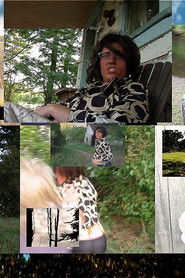
A delirious movie installed inside a ghostly barn made with prefabricated materials. The oscillatory movement of the rocking chairs on which visitors sit partly helps to alleviate the syncopated rhythm of the montage and the frenzy of images that follow. A series of brassy characters in wigs and thick make-up map the various locations of the film: a lazy river, a hobby barn, and forest watchtower.Year:
2019

Mark Trade
Shot in 2013 - In 'honor, of cause fake news - less gravity here - don't bird watch with a gun - remember your dreams before they remember you : the sloppy mix, bullshit version coming near soon USA.Year:
2016

Temple Time
Shot in a former Masonic temple in Los Angeles – a five-story warren of large, cavernous rooms akin to a windowless convention center – Temple Time unfolds like a horror-movie group expedition in a campsite wasteland.Year:
2016

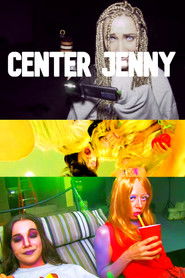
Center Jenny
The film focuses on the life of Jenny who has, according to many of the other characters, become too “left-of-center” while pursuing her interests.Year:
2013

Item Falls
In Item Falls, we are peaking. We start out at a casting call, but before long we're firmly in the grip of hallucination, shedding our anxieties and evidently regressing to the animation era, a time when stunt chickens were mere chicklets. Friendly archetypes float in and out of what seems like our bedroom. The red-headed Jenny has returned, but this time she's squeaky and trusting. Unlike in Center Jenny, here our perspective is literally centered. The camera seems to be the in middle of the room, which is good, because we're too blissed out to move. Luckily, our hallucinations look directly at us.Year:
2013

Roamie View: History Enhancement
Roamie View: History Enhancement reveals JJ as a husk of his former self, overwhelmed by too many experimental personalities and reverted to factory presets. He hires Roamie Hood's (Alison Powell) company to roam backwards through time to research an opportunity for an edit that could alter his future-present.Year:
2010

P.opular S.ky (section-ish)
In P.opular S.ky (section ish), a character played by Trecartin informs us that she wants ‘to live in a world where narration is the devil’. The ability to script oneself is an inalienable right, and anything that opposes that right must be rejected.Year:
2010

Temp Stop
Temp Stop, as the title implies, has a disjunctive quality that separates it from the other parts of Re'Search Wait'S. As if emanating from the basement of Any Ever, each scene plays like a hidden-away epilogue rendering characters comparatively surreal--in part because they are often straightforward and ordinary. The movie opens with a less omnipotent Y-Ready barking an abusive monologue to hypothetical subservients and bidding Able to use The Re'Search to brainwash JJ into a duplicate of Wait. Able's work alter ego, Past Jessica, is battered by her office. She is out of time, and by that extension, timelessness in Any Ever is not equated with limitlessness but with total lack: no time.Year:
2010

Ready
In Ready, Wait, played by Trecartin, is introduced as the eponymous figure of the series. Wait waits. He forsakes a "career" in favor of a "job," the execution of which Trecartin calls a "work performance." A careerist like Y-Ready (Veronica Gelbaum) may call the shots, but she is locked in her own endless narcissistic ascent, whereas Wait can retire from his job at anytime, and does, only to come back from vacation marked for containment. A third type of worker, Able (Lizzie Fitch), more fluidly adopts and discards the gestures of job and career, positing herself as a hobbyist who contrives the situations and outcomes she needs to keep her wave going.Year:
2010

K-CoreaINC. K (section a)
The video revolves around an unending "meeting" - a busy, aimless meeting that goes in circles to evade a traditional narrative arc. The meeting is essentially a party, and the entire company bumps and grinds with itself everywhere from in boardrooms to airplanes. K-Corea INC. K processes ideas of automation and containment, embodied by these hyper-controlled locations and by the seemingly looping actions that take place in them. Meetings, where discrete parts of a corporate body come together to attempt to "get on the same page," display the futility of corporate unity, and of individual purpose or voice remaining intact within a corporate culture.Year:
2009

Sibling Topics (Section A)
Trecartin returns to his conception of family-as-business-enterprise, casting parent figures as managers and executives on one end of the spectrum, estranged children as freelancers on the other. The director plays four sisters named Ceader, Britt, Adobe and Deno, the boundaries of whom are indistinct. It is difficult to tell where one sister ends and the next begins. The sisters' questing—for identity, for romance, etc.—leads them on an episodic series of adventures, several of which are defined as "premises." A Trecartin premise plays out as a predetermined situation where the character initiating it has already set the tone, terms, and trajectory of the experience in their mind. The actual, lived event serves only as the shading-in of the outline.Year:
2009

I-Be Area
Dazzling and raucous, Ryan Trecartin's first feature-length video takes cues from chat rooms, social networking web sites, YouTube, John Waters, and Pee-wee’s Playhouse, and then turns them upside down and inside out to create an entirely singular video genre. In I-BE AREA, Trecartin intertwines the stories of an incredible ensemble cast to follow a day in the life of I-BE II, the rebellious clone of I-BE.Year:
2007

(Tommy-Chat Just E-mailed Me.)
Trecartin describes (Tommy-Chat Just E-mailed Me.) as a "narrative video short that takes place inside and outside of an e-mail." Trecartin's intense visualization of electronic communication is inhabited by a cast of stylized characters: Pam, a lesbian librarian with a screaming baby in an ultra-modern hotel room; Tammy and Beth, who live in an apartment filled with installation art; and Tommy, who is seen in a secluded lake house in the woods. Pam, Tommy and Tammy are all played by Trecartin, who, wearing his signature make-up, jumps back and forth between male and female roles. Totally self-absorbed and equipped with vestigial attention spans, the characters are constantly communicating with one another on the phone or online.Year:
2006

A Family Finds Entertainment
Ryan Trecartin’s film A Family Finds Entertainment is a camp extravaganza of epic proportions. Starring Trecartin’s family and friends, and the artist himself in a plethora of outrageous roles, A Family Finds Entertainment chronicles the story of mixed up teenager Skippy and his adventures in ‘coming out’. In this over the top celebration of queerness, Trecartin’s film mines the bizarre and endearing in an unabashed pastiche of ‘bad tv’ tropes. Cheesy video special effects, dress-up chess costumes, desperate scripts, and ‘after school special’ melodrama combine in the fluency of youth-culture lingo, reflecting a generation both damaged and affirmed by media consumption.Year:
2005

What's The Love Making Babies For
Trecartin's extraordinary digital manipulations reach a new level as he speculates in vivid animation about reproduction, sexuality, and contemporary moralities. Collapsing footage appropriated from television, the Internet, and pop culture, Trecartin and his elaborately costumed collaborators manufacture an alien yet familiar reality. Inside this startling new video world, technophile gods wearing acid-washed denim argue about the future of gender and produce cryptic TV commercials. In a surreal backyard town meeting, characters deliver disjointed polemics assembled from clashing phrases that could have originated in ad campaigns, instant messaging conversations, or twisted episodes of syndicated science fiction. Constructed from the raw material of disposable media clichés and fads, Trecartin's narrative leaves us to answer the riddles he poses.Year:
2003

Wayne's World
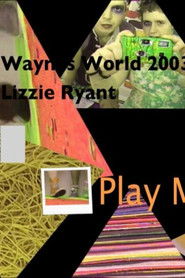
Trecartin and his collaborator/co-star Lizzie Fitch ponder the messages delivered by the most banal forms of mass media and pop culture in their own unique version of a music video. They voice questions in song and dance segments that feature a deliberately ill-fitting pastiche of discarded fashions of the past two decades and recycled pop-music clichés. Totally immersed in their meticulously crafted private universe, Trecartin and Fitch coyly point at the gaudy artifice surrounding us in our own.Year:
2003

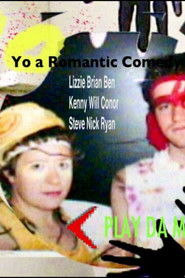
Yo! A Romantic Comedy
In Yo! A Romantic Comedy, Trecartin borrows clichés from hip-hop culture and genre films to craft a dark, dream-like narrative that veers from comic melodrama to goth fantasy. Applying his signature digital editing and delirious sound processing to remarkable effect, Trecartin creates an alternative narrative universe that suggests a kind of psychodramatic hyper-reality.Year:
2002

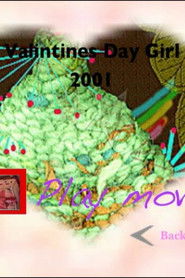
Valentine's Day Girl
Trecartin crafts a fantastical narrative about a girl whose obsessive personal utopia is disrupted. Trecartin's collaborator, Lizzie Fitch, plays a girl obsessed with Valentine's Day. Everything in her hyperactive, sped-up world revolves around Valentine's Day: red, white, and pink love-themed decorations cover every surface; heart shapes abound; Valentine's Day treats are everywhere. Her private festivities suddenly go awry as a hoard of Christmas-themed intruders appear and take her hostage in her own apartment. Gagged and bound, she is forced to watch while her ecstatic but sinister captors stage a frenzied Christmas intervention.Year:
2001

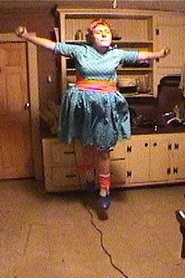
Kitchen Girl
In Kitchen Girl, Trecartin's frequent collaborator Lizzie Fitch throws herself into a state of total hysteria, portraying a girl who takes the childhood game of "playing house" to a dark and disturbing place. After pretending to cook dinner for her "kids," represented by colorful plush toys, she finds them lacking in appreciation of her efforts and throws them out the window. Fitch's overwrought performance is perfectly matched by Trecartin's skillful, hyperkinetic editing. Together they turn Trecartin's kitchen into a dimly lit world of mental trauma. Combining the innocuous with the malevolent, Fitch and Trecartin escort the viewer on a whirlwind tour of household dysfunction, child abuse, and isolation.Year:
2001