

Luis Correia
Producer
-
Birthday
-
Zodiac Sign
-
Genres
0
Total Films
Also known as (female)
Place of Birth
-
Birthday
-
Zodiac Sign
-
Genres
0
Total Films
-
Also Known As (female)
-
Place of Birth
-
Birthday
-
Zodiac Sign
-
Genres
0
Total Films
Also known as (female)
Place of Birth
-
Birthday
-
Zodiac Sign
-
Genres
0
Total Films
-
Also Known As (female)
-
Place of Birth
actor
0 Works
producer
9 Works
director
13 Works
writer
0 Works
other
4 Works
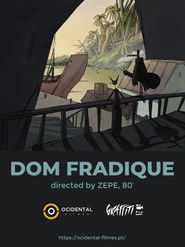
Dom Fradique
C and B are twin cats who live in a rundown harbour town, inhabited by downtrodden birds who, under the yoke of an oppressive and silencing power, have lost the ability to sing or fly. C is a restless dreamer and B is a pragmatic thinker, but both are determined to change their destiny and save the town. Dom Fradique unravels the adventures of these twin cats who, although choosing distinct paths, embody the transformation of both the place they inhabit as well as their own selves, echoing present day themes that unsettle younger generations and the challenges they face, on a social, ecological and political level. What they discover will change them, their lives, and their town forever.Year:
-
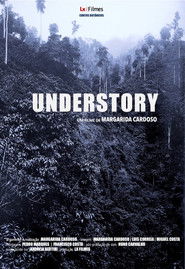
Understory
Men and plants have always traveled together in a reciprocal relationship that - for better or for worse - has drastically transformed the world. The mythical cacao tree, native to the Amazon Basin, has spread throughout the world along the narrow equatorial belt. Planted on a large scale using forced labor, the history of cacao has always been linked to the dark side of industrial production and the greed of the mass markets. The director Margarida Cardoso ("The Murmuring Coast", "Yvone Kane", "Kuxa Kanema, the birth of Cinema", "Christmas 71") follows the path of his previous films, exploring and revealing the relations between the brutality of colonial history and its effects in the present.Year:
2019
The Plan That Came from the Bottom Up
A plan to avoid job losses at a factory in 1976 becomes the starting point for an incisive account of our current and future economic situation.Year:
2018
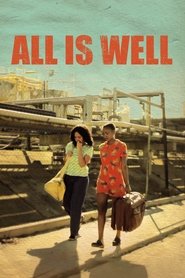
All Is Well
As the summer of 1980 ends, 16 and 17 year old sisters Maria and Alda flee to Lisbon from Angola?s civil war. In the hands of fate, they must learn to live without money in a foreign city. On the edge of the law, the two have to grow up and become women. When the problems are already overwhelming, news comes that makes them unbearable. This blow, however, will give them the push to decide their futures: Alda is going to France and Maria back to Angola in search of her roots.Year:
2012
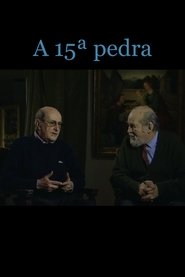
The 15th Stone
Joáo Bénard da Costa, director of the Portuguese National Film Archives [deceased in 2009], interviews the dean of contemporaneous film directors [96-years-old then]. Two humanists of different philosophical backgrounds, both with their long, entire lives dedicated to culture in general (music, painting, literature) and to film in particular, discuss freely, sometimes haltingly, the director's power as a creator or a magician, the philosophy beyond particular scenes in classic movies, film technique, the importance of color, sound and music to films, art versus entertainment, and much more. Their talk takes place in a museum room, seating in front of "The Annunciation" (a 1510 oil painting by João Vaz, a Portuguese artist), which eventually leads to a discussion of 'Leonardo da Vinci', and the relationship between a trend-setter master and his disciples.Year:
2007
The State of the World
An omnibus project examining, well, the state of the world.Year:
2007
Tarrafal
Pedro Costa's segment from "O Estado do Mundo".Year:
2007
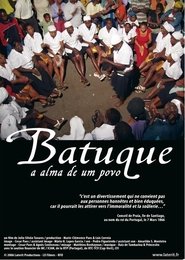
Batuque, the Soul of a People
In 1462, the first African slaves were settled on the island of Cape Verde brought by the Portuguese colons. It is supposed that they were the first inhabitants of the archipelagos. They carried with them the rhythms and the seeds of what became the BATUQUE: a music form, performed mostly by women, both singers and dancers. The singers, repeat very strong lyrics, sitting in a circle and beating the rhythms with their hands on a piece of cloth between their legs. While one woman performs a very sensual dance with her hips in the middle of the circle. During the colonial era, it has been strongly forbidden but it remained alive in clandestinity. The group Raiz de Tambarina, one of the oldest groups of Batuque on Santiago island, is composed of ordinary people, saleswomen, fish merchants, drivers... Through their every day life and performances we discover Cape Verde today and their passion for the Batuque.Year:
2006
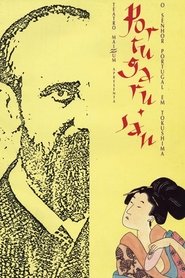
Portugaru San - O Sr. Portugal em Tokushima
Theatrical dramatization of Island of Loves.Year:
1993