Аватар персоны Luis García Berlanga

Luis García Berlanga

ActorWriterDirector
One of the best known filmmakers in the world and director of some of the most famous films of Spanish cinema, tender in his vision of the characters, but satirical to the point of biting in his social analysis, clearly critical despite the censorship of the Franco regime. He was born in 1921 into a wealthy Valencian family. After the Second World War, he studied at the Escuela Oficial de Cine (IIEC/EOC), where he would later become a professor. There he met Juan Antonio Bardem, and together they made their first film. His narrative ability, together with the sharpness of his satire, bordering on nonsense, made him a popular filmmaker, but also valued by critics. Nevertheless, within his comic line he oscillates between tenderness and the grotesqueness of his choral comedies. Between both extremes are his first films, written in collaboration with Rafael Azcona, in which he develops a black humor, characteristic of both, corrosive denunciations of social hypocrisy and the death penalty. In recent years he was president of the Filmoteca Nacional de España and director of a collection of erotic novels and short stories.

12-07-1921

Birthday

Cancer

Zodiac Sign

-

Genres

20

Total Films

Luis Gª Berlanga, Luis García-Berlanga Martí, Berlanga, Луис Гарсия Берланга

Also known as (male)

Valencia, España

Place of Birth

Popular works

Creative career

actor

20 Works

producer

1 Works

director

51 Works

writer

28 Works

other

0 Works

El joven Berlanga

El joven Berlanga

The early days of the future genius of Spanish cinema Luis García Berlanga, from his birth in Valencia in 1921 to his departure to Madrid in 1947 to become a filmmaker.
6.5

Year:

2022

The Invisible Half: Luis García Berlanga's The Executioner

The Invisible Half: Luis García Berlanga's The Executioner

Documentary about Spanish director Luis García Berlanga's "The Executioner" (1963)
0.0

Year:

2012

Enrique Herreros

Enrique Herreros

The story of Enrique Herreros (1903-1977), cartoonist, advertiser, poster designer, talent manager, actor, producer and filmmaker, and the most daring of mountaineers; the man who, along with his companions from the so-called “other Generation of '27,” brought Hollywood to Madrid's Gran Vía, turning a grey and sinister post-war city into the capital of an incipient and ambitious cultural industry.
6.5

Year:

2011

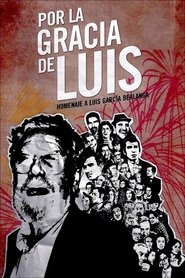
Por la gracia de Luis

Por la gracia de Luis

A walk through the work of Luis García Berlanga (1921-2010) that is neither a documentary nor a narrative movie, but a tribute to one of the greatest directors of Spanish cinema. Anything can happen: the performers are not themselves, but their characters; there are no interviews, but greetings; a series of entrances and exits. A joyful reunion, a celebration of life.
5.0

Year:

2009

Calle Bardem

Calle Bardem

A documentary on the revolutionary life and career of director Juan Antonio Bardem, including interviews with many of his colleagues, including Luis Garcia Berlanga.
6.0

Year:

2005

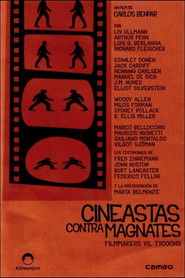
Filmmakers vs. Tycoons

Filmmakers vs. Tycoons

How the cinema industry does not respect the author's work as it was conceived, how manipulates the motion pictures in order to make them easier to watch by an undemanding audience or even how mutilates them to adapt the original formats and runtimes to the restrictive frame of the television screen and the abusive requirements of advertising. (Followed by “Filmmakers in Action.”)
6.2

Year:

2005

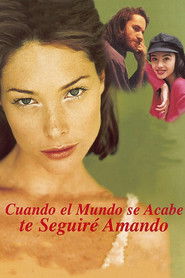
Cuando el mundo se acabe te seguiré amando

Cuando el mundo se acabe te seguiré amando

Natalia, a successful painter, and Hugo, a writer in a creative rut, are going through a rough patch in their relationship. After Hugo moves out in an attempt to finish his novel, Natalia is determined to do whatever it takes to reunite with him.
2.0

Year:

1998

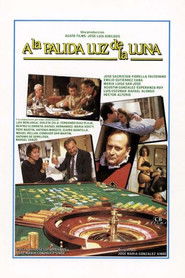
A la pálida luz de la luna

A la pálida luz de la luna

Carmen leaves her husband Julio to go live with an intellectual who has made a career in the United States. While, Julio goes away to live of rent to house of an aristocrat come to less. After meeting several colorful characters, Julio decides to recover Carmen.
3.3

Year:

1985

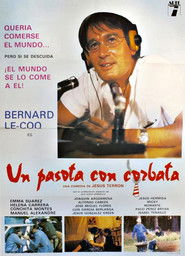
De mica en mica s’omple la pica

De mica en mica s’omple la pica

A young man who likes the good life and easy money gets a proposition to represent a shady business company in Europe.
2.0

Year:

1984

A Tied Blasé

A Tied Blasé

0.0

Year:

1981

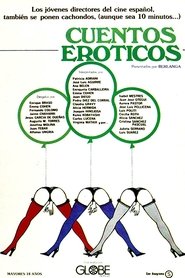
Erotic Stories

Erotic Stories

A set of nine stories whose central theme is eroticism. The different directors of the film deal from philosophical aspects to others that are almost pornographic, but always with a common denominator: sensuality.
3.7

Year:

1980

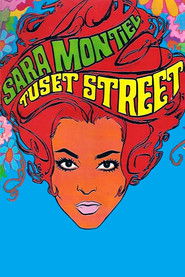
Tuset Street

Tuset Street

Barcelona 1967. The pop culture revolution. Jordi (Patrick Bauchau) is a rich playboy who runs around with a bunch of high-end hippies, smoking, drinking, dancing and daydreaming about Tuset Street, an effort to develop a popular street in the newer section of Barcelona after the models of Haight Ashbury Street in San Francisco and Carnaby Street in London. Jordi and his gang represent the new Barcelona, wealthy, artificial and striving for imported sophistication. On the older side of the city is El Paralelo, the theater district. At El Molino, one of its many music halls, performs Violeta (Sara Montiel), a showgirl in the old style tradition who supplements her singing income with prostitution. Somehow Violeta represents the old values, the "real world" living along side an artificial creation such as Tuset.
1.0

Year:

1968

Días de viejo color

Días de viejo color

In the Easter holidays of 1967, three friends come to Torremolinos willing to flirt and experience strong emotions. Contact with a new environment, in which while some find the lies that hide behind the luxury and splendor and dangers that accompany life easier, others find true love.
4.5

Year:

1968

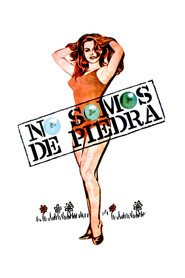
No somos de piedra

No somos de piedra

Lucas, shy and repressed, and sanctimonious Enriqueta are parents of nine children, so he decide to convince her to take the contraceptive pill.
7.0

Year:

1968

Las pirañas

Las pirañas

Ricardo is an executive who has great success with women and behaves almost like a play-boy. His wife, Carmen, an attractive housewife without children, it feels ignored by him and seeks solace from her mother, who proposes Carmen a change in the way she acts in order to do not lose permanently her husband or even fall into madness.
5.7

Year:

1967

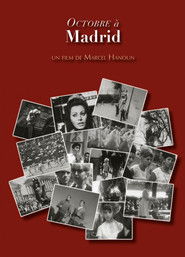
October in Madrid

October in Madrid

Initially a made-to-order documentary on Spain, the film becomes an open-ended work-in-the-making about the creative process. “Settling in the Spanish capital to make a documentary, Hanoun sketches out for us the different steps involved in making a film. The author turns his hesitations, his doubts and difficult working conditions into the constituents of his work”. (Raphaël Bassan)
5.9

Year:

1965

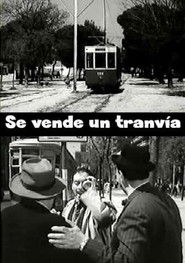
Streetcar for Sale

Streetcar for Sale

This excellent short film written by the magnificent filmmaker duo of Luis García Berlanga and screenwriter Rafael Azcona was to be part of a series entitled Los Pícaros (The Rogues) which was never continued. These two artists were responsible for such masterpieces of Spanish cinema as Plácido and El verdugo (The Executioner). Here, Berlanga and Azcona collaborated for the first time, setting the stage for the post-war "Berlanguiana" vision that would develop. José Luis López Vázquez plays Julián, a seedy swindler, who with his cronies tries to sell a streetcar to a rich but naive farmer, a newcomer to the city. High jinx ensue. With this film begins the great stage of Berlanga's filmmaking in which he mixes a little social criticism and notes of anti-clericalism with a great deal of farce.
7.0

Year:

1959