María Esther Palant
Director
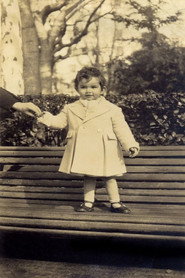
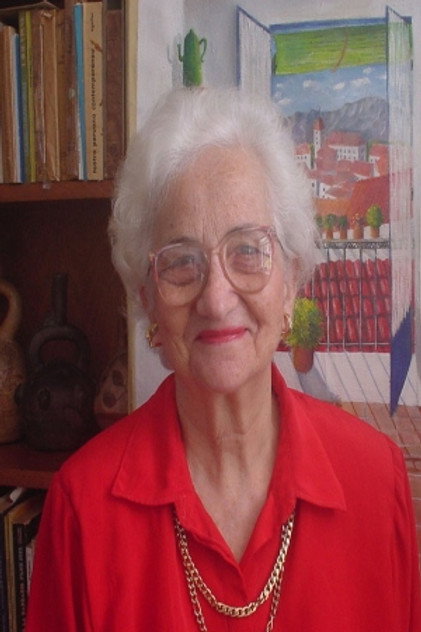
María Esther Palant was born in Buenos Aires, Argentina, in 1932. The daughter of a surgeon and stenographer for the Argentine Congress, she studied sculpture and painting in her country. In 1962, the young plastic artist undertook the making of a 35mm short film about the great Argentine sculptor Agustín Riganelli, marking her in the cinema, and supported by the Argentine Film Fund. Maria Esther launched into filming with the concern of creating a method so that the sculptures could rotate on a base. She considered that photography and lighting would be vital to achieve a poetic climate in the image, which she undoubtedly achieved. The short film “AGUSTÍN RIGANELLI” received several awards from the National Endowment for the Arts: for direction, lighting, as well as for the music that was composed for the film. Her relationship with Peru began in the early 1950s, when some Peruvian shorthand teachers decided to travel to Buenos Aires to personally learn the Palant System, which had been created by María Esther’s father, Miguel Palant. Later they commented to her, in long letters that were interspersed, that they had managed to make the System official in Peru and that they began to teach it in some School Units with great success. After a while, they wrote to her that they had had the initiative to open a place called INSTITUTO PALANT. For several years this place was located on Ignacio Merino street on the Lince Municipality straight, in front of a movie theater. Eight years later, in May 1964, María Esther traveled to Lima to fulfill what her father had wanted: to visit the Palant Institute. The cultural attaché gave her several letters of introduction to different people in Peru, including Dr. Francisco Miró Quesada. This is how, in the impressive library of the newspaper, she told him that she was a filmmaker and that her husband, the film director Oscar Kantor, had won the Youth Award at the Cannes Film Festival for his documentary “Los Junqueros” in those days. In a few days, several rolls of some documentaries in 35 millimeters were in Lima, the same ones that were projected in the cinema that was then in the Jirón de la Unión. They liked them a lot, and it was proposed that they be exhibited to the President of the Republic in the special room that the Government Palace has. So it was that the architect Fernando Belaúnde, president of Peru, at the end of the projection, asked her countless questions about education and the Argentine film industry. In 1966, after several trips to Peru, María Esther Palant and her husband Oscar Kantor, accompanied by their children Silvia and Jorge, decided to reside in the country. In 1972, Maria Esther obtained Peruvian nationality. María Esther Palant’s filmography consists of 24 short films that reflect her passion for painting, sculpture and art in general. Her legacy in Peruvian cinematography is also reflected, by participating in the creation of the First School of Film and Television, at the University of Lima, together with Rafaela García Sanabria de Pinilla, Enrique Pinilla, Manuel Chambi and her husband Oscar Kantor. This fact marks a change in education in Peru, since it was the first time that a higher education institution brought together under one faculty the various subjects related to communication.
-
Birthday
-
Zodiac Sign
-
Genres
0
Total Films
Also known as (female)
Buenos Aires, Argentina
Place of Birth
-
Birthday
-
Zodiac Sign
-
Genres
0
Total Films
-
Also Known As (female)
Buenos Aires, Argentina
Place of Birth