

Marianna Kireeva
DirectorWriter
-
Birthday
-
Zodiac Sign
-
Genres
0
Total Films
Also known as (female)
Place of Birth
-
Birthday
-
Zodiac Sign
-
Genres
0
Total Films
-
Also Known As (female)
-
Place of Birth
-
Birthday
-
Zodiac Sign
-
Genres
0
Total Films
Also known as (female)
Place of Birth
-
Birthday
-
Zodiac Sign
-
Genres
0
Total Films
-
Also Known As (female)
-
Place of Birth
actor
0 Works
producer
0 Works
director
14 Works
writer
1 Works
other
0 Works

Smile!
A docudrama presenting the events which explain how and why Charles Spencer Chaplin made alterations to his original ending of the famous movie “Modern Times” following his encounter with the Soviet director Fridrikh Ermler.Year:
2024
Smile!
A docudrama presenting the events which explain how and why Charles Spencer Chaplin made alterations to his original ending of the famous movie “Modern Times” following his encounter with the Soviet director Fridrikh Ermler.Year:
2024
Another Life
Year:
2008
9 1/2
Year:
2008
Stone Flower
The plot of the famous post-war film tale here becomes a metaphor for the dramatic path of Russian cinema from the magnificently decorated pavilions of the "little picture" era to the living reality of the "thaw" period.Year:
2006
Other People's Children
Two generations of cinematographers — fathers and children — in search of a new common language: in life, on the screen, on the set...Year:
2006
Return
A man returns from the war, hoping that he has finally won the right to live his private life. But the state saved by him remembers its rights. And the "City of Dreams" returns to the screen — even more ambitious, illogical and dehumanized than before the war.Year:
2005
City of Dreams
By the end of the 30s, the ideal world erected on the screen is declared the only true reality. The invasion of fascist Germany destroys this illusion. A person is left alone with history — both in life and on the screen. And in this fight he manages to survive.Year:
2005
Border
Having escaped from the clutches of "agitprom", Soviet cinema in 33-34 years again comes into motion. But this movement is almost immediately prescribed a clear boundary. Artists become hostages of their own discoveries. The border is locked.Year:
2005
Cold House
The era of "agitpropfilm" is coming in the domestic cinema. The private life of an individual is declared a fiction. He is either expelled or dissolves into the orderly ranks of the working masses. Modern reality is presented on the screen as a field of incessant class battles. And only the arrival of sound in the early 30s gradually returns Soviet cinema to simple human values.Year:
2004
People and Monuments
The pathos of universal unity against the backdrop of the overthrown imperial monuments triumphs on the Russian screen with the arrival of the cinema youth. But the closer we get to the "year of the great turning point", the more palpable this pathos is replaced by the pathos of the class struggle. New monuments appear in place of the dropped ones. And the "little man", not having had time to grow up, finds himself again at the foot of new pedestals. Monumental forms in cinema crowd the living human content of films.Year:
2003

Seal
It is not immediately that the cinematic space is filled with fresh shots. The orders of the new government are initially carried out by the filmmakers remaining in Soviet Russia with pre-revolutionary experience. The agitfilm of the Civil War is replaced by a "revolutionary melodrama" by the mid-20s. The expansion of film production requires new personnel: young people come from the "left" theater, who in the very near future will have to create a new revolutionary cinema.Year:
2003
Winter Garden
The beginning of the domestic feature film is the story of the transformation of a naive fairground splint into a salon mystical melodrama. Having gone under the shadow of glass pavilions-greenhouses, early Russian cinema is trying to hide from the impending historical catastrophe. The revolutionary storms that have broken out drive some of the film visionaries first to the Crimea, and then to emigration. For those who remained, the struggle for survival in the new conditions begins with the development of the genre of agitfilm.Year:
2002
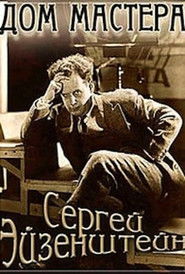
Eisenstein: The Master's House
A documentary biography of Russia's greatest filmmaker.Year:
1998