Аватар персоны Neville D'Almeida

Neville D'Almeida

ActorDirectorWriterProducerExecutive Producer
A Brazilian filmmaker, screenwriter, actor, photographer and multimedia artist, involved with contemporary art, installations, art objects and performances, Neville Duarte Almeida was born in 1941 in the Brazilian city of Belo Horizonte. Raised by a Methodist Christian family, he studied theater at the Scholastic Theatre of Minas Gerais and participated at the local Center of Film Studies, where he started to work as an filmmaker. Some of his transgressive, avant-garde films were censored or banned by the Brazilian military dictatorship, after which he went on to directing films aimed to a more commercial approach. His 1978 film "Lady on the Bus", starring Sônia Braga, was a box-office champíon and still holds its place as the the third highest-grossing Brazilian film of all time.

15-05-1941

Birthday

Taurus

Zodiac Sign

-

Genres

36

Total Films

Neville Duarte D'Almeida, Neville D'Almeida, Neville Duarte, Neville Duarte de D'Almeida

Also known as (male)

Belo Horizonte, Minas Gerais, Brazil

Place of Birth

Popular works

Creative career

actor

36 Works

producer

7 Works

director

66 Works

writer

21 Works

other

5 Works

Tiro Certo

Tiro Certo

0.0

Year:

2025

Peréio, Eu Te Odeio!

Peréio, Eu Te Odeio!

23 years in the making, “Pereio, Eu Te Odeio!” is a documentary on legendary Brazilian actor Paulo Cesar Pereio, an irreverent and controversial artist and public figure, as told by the testimonies of friends, family, and society members who hate him.
8.0

Year:

2023

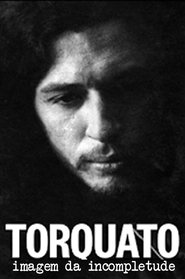
Torquato, Imagem da Incompletude

Torquato, Imagem da Incompletude

A reflection on the works and thinking of the last years of production by Torquato. Such as the magazine "Navilouca", the film "Terror da Vermelha", the column "Geleia Geral" and the controversial Cinema Novo X Marginal, among other passages important aspects of Brazilian culture in the 60s and 70s.
0.0

Year:

2020

Candango: Memoirs from a Festival

Candango: Memoirs from a Festival

In 1965, a year after the military coup in Brazil, an oasis of freedom opened in the country's capital. The Brasília Film Festival: a landmark of cultural and political resistance. Its story is that of Brazilian cinema itself.
5.0

Year:

2020

Os Espetaculares

Os Espetaculares

An egotistical stand-up comedian fights with a spectator and gets fired. To be able to pay his son's pension, he decides to participate in a comedy group contest. Now he will need to work harmoniously with the rest of the team.
6.8

Year:

2020

Ivan, the TerrirBle

Ivan, the TerrirBle

Ivan Cardoso is the inventor of the terrir, a subgenre that mixes comedy, Brazilian chanchadas and classic American horror. This film promotes a rescue of his work by mixing archival material, animations and fictional reconstructions.
1.0

Year:

2020

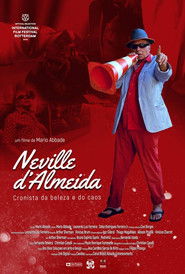
Neville D'Almeida: Chronicler of Beauty and Chaos

Neville D'Almeida: Chronicler of Beauty and Chaos

This film seeks to rescue the role of filmmaker Neville D'Almeida by using many rare images, numerous interviews, vast archival and audiovisual material.
10.0

Year:

2019

Dunas do Barato

Dunas do Barato

A rescue of the history of Ipanema beach in the 1970s, when the construction of a pier changed the landscape and created fertile soil for a generation of artists and sportsmen.
6.0

Year:

2017

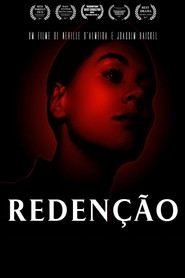
Redemption

Redemption

A young woman travels to solve a matter of life or death. As she seeks to do what she needs, the city exposes itself with its curious characters.
5.0

Year:

2017

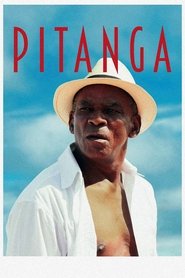
Pitanga

Pitanga

This documentary investigates the aesthetic, political and existential trajectory of emblematic Black Brazilian actor Antônio Pitanga. His career spans over five decades, and he has worked with iconic Brazilian filmmakers Glauber Rocha, Cacá Diegues and Walter Lima Jr. He was a prominent figurehead and outspoken activist during the Brazilian dictatorship, a period of unrest in Brazilian cinema. "Pitanga" deep dives into the world of Antônio and the history of Brazil. The documentary was directed by his daughter Camila Pitanga, one of widely recognised faces in Brazilian television and cinema right now. The film is also a poem, and a tender ode to fatherhood.
5.6

Year:

2016

Plínio Marcos — Nas Quebradas do Mundaréu

Plínio Marcos — Nas Quebradas do Mundaréu

The theatrologist, actor, director and overall polemist Plínio Marcos gets his life traced through images of the many spectacles he has put on interviews from various moments in his life, from the most rebellious and marginal, when he lacked resources for his art, to when he was invited to go to Paris and talk about his work
0.0

Year:

2013

Ecos de Cannes

Ecos de Cannes

0.0

Year:

2008

Milagrez

Milagrez

Documentary on "Antonio das Mortes", Glauber Rocha's 1969 film.
0.0

Year:

2008

A Marca do Terrir

A Marca do Terrir

Compilation of early Ivan Cardoso's films in Super 8, including "Nosferato no Brasil (Nosferato in Brazil)"
2.0

Year:

2005

Luz-Lux-Lúcia

Luz-Lux-Lúcia

A documentary short on Glauber Rocha's mother Lúcia.
0.0

Year:

2005

A Miss e o Dinossauro

A Miss e o Dinossauro

A short documentary on Belair, an independent Brazilian film company that lasted for only five months in 1970.
5.0

Year:

2005

Glauber Rocha - The Movie, Brazil's Labyrinth

Glauber Rocha - The Movie, Brazil's Labyrinth

Documentary about Brazilian filmmaker Glauber Rocha, one of the most important names in the Cinema Novo, with interviews with some of his friends and colleagues.
5.8

Year:

2003

Razor in the Flesh

Razor in the Flesh

The story of three characters in a brothel room: the prostitute Neusa Sueli, the gigolo Vado and the homosexual Veludo speak of their lives and expose their marginality.
4.5

Year:

1997

Dib

Dib

Documentary that addresses, through the testimony of directors and actors, the work of Dib Lutfi, considered one of the greatest photographers of Brazilian cinema.
0.0

Year:

1997

Killed the Family and Went to the Movies

Killed the Family and Went to the Movies

In Rio de Janeiro, after an altercation with his father and mother, a young man named Bebeto kills his family and goes to a movie theater, where he watches four weird vignettes.
5.3

Year:

1991

Sermões

Sermões

Based upon the life story of Father Antonio Vieira, born in Lisbon in 1608 and deceased in Salvador, Bahia, in 1697. He's considered the first Brazilian writer and one of the most important aesthete of linguistic and of the Portuguese language of all times, a master in the art of metaphor, of verbal relations and analogy. He was persecuted and condemned by the Portuguese Court of Inquisition due to his position against native slavery, against the intolerance to the Jewish people and to the colonial politics of exploration.
6.4

Year:

1989

Moon Over Parador

Moon Over Parador

Little known actor, Jack Noah, is working on location in the dictatorship of Parador at the time the dictator dies. The dictator's right hand man, Roberto, makes Jack an offer he cannot refuse.. to play the dictator. Jack's acting skills fool the masses but not close friends and employees of the dictator.
5.7

Year:

1988

Areias Escaldantes

Areias Escaldantes

In the near future, in the country of Kali, a group of young terrorists carry out robberies, kidnappings and murders under the orders of a mysterious big boss known as "Entity" and are pursued by the pompous and inefficient Special Police.
4.0

Year:

1985

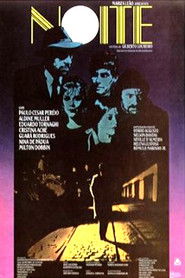
Noite

Noite

Somwhere in the city of Porto Alegre, a man who has lost his memory is questioned by a group of police officers about the barbaric murder of a socialite. Without recognizing himself in the documents he carries in his pocket, he wanders through the underworlds of the city in search of an answer.
2.0

Year:

1985

Horror Palace Hotel

Horror Palace Hotel

An unusual look at 1978 Brasilia Film Festival and the politics that make certain films fashionable or not.
6.0

Year:

1978

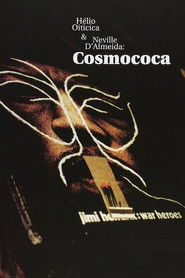
Cosmococa

Cosmococa

In 1973, exiles from Brazil during the military dictatorship, artist Hélio Oiticica and filmmaker Neville D’Almeida lock themselves in an apartment in Manhattan and fantasize a series of iconic sensory installations called quasi-cinema - experience blocks in Cosmococas. The work features slide projections on the walls of the rooms, showing drawing sessions carried out by the artists, using cocaine for doodling and a pocket knife as a brush.
0.0

Year:

1973

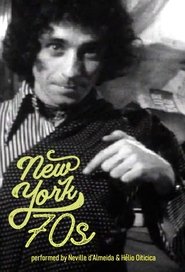
New York, 70s

New York, 70s

Experimental short film, shot in Super 8.
0.0

Year:

1973

Mangúe-Bangúe

Mangúe-Bangúe

The quasi-fictional story of transgender sex workers living in Rio de Janeiro's swampy red light district, who are joined by a group of hippies and a runaway stockbroker, "Mangue-Bangue" is the paradigmatic expression of the post-1968 spirit of desbunde, the Brazilian slang catchword for "sex, drugs, and rock 'n' roll".
5.7

Year:

1971

No Way, Spider

No Way, Spider

Spider, a banker, lives with three women. This tycoon is a caricature of Brazil's bourgeoisie, his trajectory is the starting point for an essay on the mental underdevelopment of Brazilian elites, in which black humor sets the tone for sharp criticism.
6.2

Year:

1970

Garden of War

Garden of War

Edson is having an affair with a left-wing aspiring movie director during Brazil's military dictatorship years. He tries to get some easy money for her film, but ends up being arrested and tortured as his torturers suspect he's involved in a plot to overthrow the military government.
7.1

Year:

1969

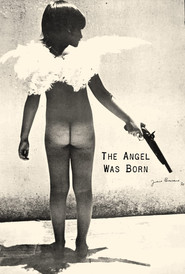
The Angel Was Born

The Angel Was Born

Santamaria and Urtigo are two bandits on the run, one is white, the other black. Santamaria is a mystical visionary and believes in the imminent coming of a purifying angel. Urtiga, his inseparable companion, is a simple-minded and ingenious man who follows Santamaria around and participates in the crimes he commits. The two bandits take over a house after kidnapping its owner and his girlfriend.
7.0

Year:

1969

The Red Light Bandit

The Red Light Bandit

Born and raised in the misery of Brazilian slums, Jorge becomes a luxury house burglar in São Paulo and gets nicknamed "The Red Light Bandit" by the sensationalist press. In addition to wearing a red flashlight, he talks to his hostages in an irreverent tone and makes bold breakthroughs to later spend the money extravagantly. His world is the decadent neighbourhood of Boca do Lixo.
7.6

Year:

1968

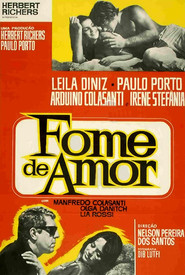
Hunger for Love

Hunger for Love

An extended research tour of US university film programs introduced dos Santos to the American avant-garde filmmakers, among them Jonas Mekas and Stan Brakhage, who would directly inspire his formally radical adaptation of an allegorical short story about adultery and colonialism by Guilherme de Figueiredo. Filmed in both Manhattan and Brazil and set against the background of the Vietnam War and its protests, Hunger for Love uses a rigorously abstract soundtrack and narrative structure to evoke the acute paranoia of the period building up to the December 1968 military coup that tipped Brazil perilously close to a conservative dictatorship. With its harsh critique of the decadent tendencies of the Sixties counterculture, Hunger for Love offers a key expression of the self-consciously “ideological” phase of Cinema Novo. -Harvard Film Archive
5.2

Year:

1968

BLABLABLÁ

BLABLABLÁ

The tensions experienced by three different people during the military dictatorship in Brazil: a politician, a revolutionary and a common citizen.
6.6

Year:

1968