

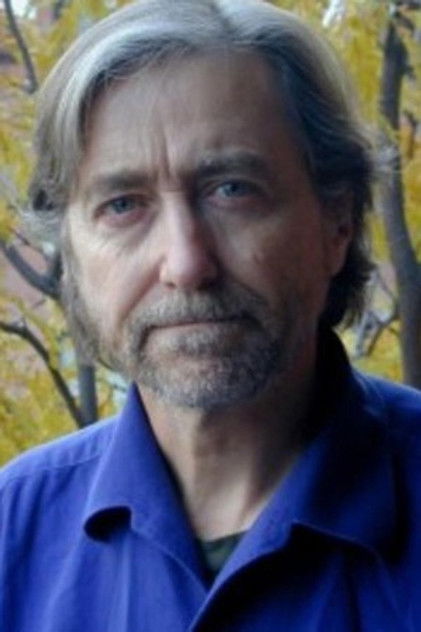
Nigel Markham
DirectorWriter
-
Birthday
-
Zodiac Sign
-
Genres
0
Total Films
Also known as (male)
Newfoundland, Canada
Place of Birth
-
Birthday
-
Zodiac Sign
-
Genres
0
Total Films
-
Also Known As (male)
Newfoundland, Canada
Place of Birth
-
Birthday
-
Zodiac Sign
-
Genres
0
Total Films
Also known as (male)
Newfoundland, Canada
Place of Birth
-
Birthday
-
Zodiac Sign
-
Genres
0
Total Films
-
Also Known As (male)
Newfoundland, Canada
Place of Birth
actor
0 Works
producer
0 Works
director
59 Works
writer
1 Works
other
52 Works

Bedlamer
On the shores of a small fishing village lives a lonely settlement of men - capturing and domesticating otherworldly creatures that were never meant to be tamed.Year:
2024
Skeet
After being released from prison, Billy Skinner returns to his low-income neighbourhood feeling like a fish out of water; the area has changed dramatically, and what was once a predominantly white neighbourhood is now mostly occupied by refugee families.Year:
2024

Miss Campbell: Inuk Teacher
Part oral history and part visual poem, Miss Campbell: Inuk Teacher is the story of Evelyn Campbell, a trailblazer for an Inuit-led educational system in the small community of Rigolet, Labrador.Year:
2023

Hebron Relocation
Through a tapestry of reflection, rare footage and her own home, Inuk filmmaker Holly Andersen tells the little-known story of the forced relocation of an Inuit community from Hebron, north of Nain, to more southerly locations along the Labrador Coast. Although that painful disruption of 233 lives occurred more than 50 years ago, the repercussions of the move last to this day.Year:
2023
Spirit Song Festival
Nearly a decade ago, the Spirit Song Festival began as one day event. It has since blossomed into a weeklong, award winning, world-class gathering of Indigenous artists with audience members in the thousands. Through the lens of an Indigenous-led SJIWFF Framed Documentary program, and in partnership with First Light, this short documentary charts the rise of the festival through performances by, and interviews with, Indigenous icons and artists from across Canada.Year:
2022

Nalujuk Night
Nalujuk Night is an up close look at an exhilarating, and sometimes terrifying, Labrador Inuit tradition. Every January 6th from the dark of the Nunatsiavut night, the Nalujuit appear on the sea ice. They walk on two legs, yet their faces are animalistic, skeletal, and otherworldly. Snow crunches underfoot as they approach their destination: the Inuit community of Nain. Despite the frights, Nalujuk Night is a beloved annual event, showing that sometimes it can be fun to be scared. Rarely witnessed outside of Nunatsiavut, this annual event is an exciting chance for Inuit, young and old, to prove their courage and come together as a community to celebrate culture and tradition. Inuk filmmaker Jennie Williams brings audiences directly into the action in this bone-chilling black and white short documentary about a winter night like no other.Year:
2021

HAND. LINE. COD.
In the coldest waters surrounding Newfoundland's rugged Fogo Island, "people of the fish"—traditional fishers—catch cod live by hand, one at a time, by hook and line. After a 20-year moratorium on North Atlantic cod, the stocks are returning. These fishers are leading a revolution in sustainability, taking their premium product directly to the commercial market for the first time. Travel with them from the early morning hours, spend time on the ocean, and witness the intricacies of a 500-year-old tradition that's making a comeback.Year:
2016
Touch
When a single mom, facing eviction, is offered a night’s work, she unsuccessfully seeks a babysitter for her two small children. Desperate, she reaches out to the last person she wants to ask for a favour.Year:
2016

Maudie
Canadian folk artist Maud Lewis falls in love with a fishmonger while working for him as a live-in housekeeper.Year:
2016
Maudie
Canadian folk artist Maud Lewis falls in love with a fishmonger while working for him as a live-in housekeeper.Year:
2016

Puffin Patrol
“Puffin Patrol” takes viewers into the world of the Atlantic puffin. Travel to remote locations where the puffin’s unique migration patterns and feeding habits are being studied. See where puffin populations are at risk and meet the biologists who study the bird’s greatest stressors. Follow the people of Witless Bay, Newfoundland as they rescue lost and confused pufflings from the roadside and see how this simple task teaches us about environment.Year:
2015
Clipper Gold
It's a fine, frail line between fantasy and reality when the doleful, downtrodden state of a couple's relationship unfurls against the backdrop of a feed of moose sausages and tea. Sexual frustration, co-dependency, domestic despair and just a hint of missing male libido all play out within the crestfallen subtleties of opposing table manners and passive aggressive tea-brewing rituals.Year:
2014

Just Himself: The Story of Don Jamieson
As a broadcaster and politician, Don Jamieson provided an invaluable public service to Canadians and notably to the people of his home province, Newfoundland and Labrador.Year:
2011
Regarding Our Father
Gerald S. Doyle was one of the first collectors of Newfoundland folk songs. He was also an avid cinematographer who left a collection of 12 hours of colour film, shot in outport Newfoundland and Labrador in the 1930's, 40's, and 50's.Year:
2011
Regarding Our Father
Gerald S. Doyle was one of the first collectors of Newfoundland folk songs. He was also an avid cinematographer who left a collection of 12 hours of colour film, shot in outport Newfoundland and Labrador in the 1930's, 40's, and 50's.Year:
2011

The Strangest Dream
The Strangest Dream tells the story of Joseph Rotblat, the history of nuclear weapons, and the efforts of the Pugwash Conferences on Science and World Affairs - an international movement Rotblat co-founded - to halt nuclear proliferation.Year:
2009
Down to the Wood
An unusual request forces Delph the barber to come to terms with possible loss.Year:
2009
Cut from the Same Cloth
In discovering the secret past of an old St. John's neighborhood, a family learns that love can lead down an uncharted road that is best followed with the heart.Year:
2009
Sweet Pickle
After 30 years of salt beef and baloney, the instinctively vegan Isabel hops a bay bus to the city supermarket. But a nosy stock boy, a cashier with his laminated flip book of produce codes could wreak havoc with her newfound confidence.Year:
2009
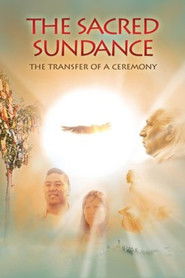
The Sacred Sundance: The Transfer of a Ceremony
This feature-length documentary chronicles the Sundance ceremony brought to Eastern Canada by William Nevin of the Elsipogtog First Nation of the Mi'kmaq. Nevin learned from Elder Keith Chiefmoon of the Blackfoot Confederacy in Alberta. Under the July sky, participants in the Sundance ceremony go four days without food or water. Then they will pierce the flesh of their chests in an offering to the Creator. This event marks a transmission of culture and a link to the warrior traditions of the past.Year:
2008
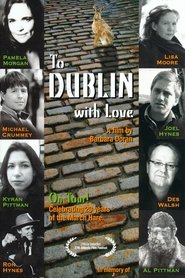
To Dublin with Love
Inspired by the late poet Al Pittman's 'March Hare' late winter music and literary celebrations, director Barbara Doran-along with a clutch of her close friends, associates and artistic collaborators from St. John's and the rest of the Rock-travel to Dublin to examine the close cultural relationships between Newfoundland and Ireland in this boisterous documentary film.Year:
2007
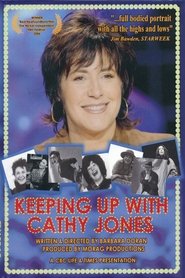
Keeping Up with Cathy Jones
"Keeping Up with Cathy Jones" is a biographical romp through the life and times of this outrageously funny lady of stage, screen and television. From the first celluloid glimpses of "CATHY AT 16", "THIS HOUR HAS 22 MINUTES", her one woman shows and stand-up routines to interview clips with Cathy, her family and friends, this is a highly charged bio-pic; a salute to Newfoundland's comic genius."Year:
2006
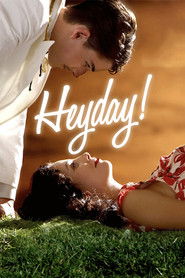
Heyday!
During World War II, the usually sleepy town of Gander, Newfoundland is abuzz with activity as the stopover point for many flights between North America and the European Theater. Teenager Terry Fleming, who lives just outside of Gander, is feeling conflicted. He wants to work in Gander so that he can have access to the plethora of movie stars and GIs flying though the area.Year:
2006
Becoming 13
Explores the intimidating terrain of girlhood by following three 12-year-olds over the period of one year. As these girls move from childhood to maturity, it's clear that peer pressure is an important influence, but as the films shows, the greatest influence in a young girl's life is family.Year:
2006

My Ancestors Were Rogues and Murderers
An exploration of the unique culture of Newfoundland's outports, the film revisits the PR coup that launched the animal rights movement onto the international stage: the 1977 Newfoundland visit, orchestrated by the International Fund for Animal Welfare, of French actress turned animal rights activist Brigitte Bardot to protest the area's ancestral sealing activities. Soon, inhabitants of the island's northern outports we're being introduced to the world as the epitome of brutality.Year:
2005

Hospital City
As debate in Canada and the world rages over health care, Hospital City offers a moving, human portrait of the people whom the issues touch most closely.Year:
2004
Pleasant Street
Gerry Rogers' latest film features Leida and Ken, another Pleasant Street resident and cancer patient, on a journey that is by turns harrowing, funny, gut-wrenching and inspiring. "Pleasant Street" is not just a follow up to "My Left Breast" - it is a powerful depiction of a two people learning how to navigate the struggles of a terrible illness while witnessing first hand the powerful love of community.Year:
2004

Bloomsday Cabaret
An exploration of music in the life, and writing, of James Joyce. Two Newfoundland actors, a Toronto opera singer and a New York Joycean scholar travel to Dublin and join forces with a group of Irish musicians to tell the story of music in the life, and writing, of the great Irish writer James Joyce.Year:
2004
The Invisible Machine
On a calm Sunday morning in 1978 residents of Bell Island, Newfoundland hear an odd, high-pitched hum, immediately followed by a sudden and terrifying blast resounding for hundreds of miles. Outbuildings are destroyed, livestock electrocuted, televisions explode and power lines vaporize. The Invisible Machine unravels the mystery of the Bell Island "boom" and in doing so takes a chilling look at the U.S. military's experimentation with electromagnetic pulse (EMP) weapons.Year:
2004
The Man Who Studies Murder
Elliott Leyton, the subject of this riveting documentary by filmmaker Barbara Doran, can't help but be fascinating; that's because Leyton, who teaches at the Memorial University in Newfoundland, is also a valuable ally for law enforcement officials who need his expertise in psychology and criminal behavior to catch some of the most heinous criminals: serial killers.Year:
2003

Behind the Red Door
Natalie, a gifted New York photographer, has a troubled past reflected in her art. When she struggles to make ends meet in the city, her agent, arranges an assignment in Boston for a considerable sum of money. Unable to turn it down in her dire straits, Natalie takes the job -- only to find that her estranged gay brother, Roy, is the employer. Roy wants to mend their broken past, but must convince her to stay long enough to do so.Year:
2003
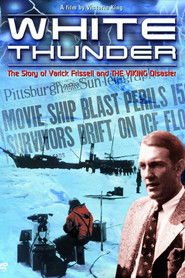
White Thunder
A riveting account of the tragic adventure of filmmaker Varick Frissell and his filming of "The Viking" (1931) and the tragic events that befell that adventure into early film-making.Year:
2002
Baking Lessons
A beautiful baker teaches eager students the art of baking bread. Set to irresistibly funky dance music, Baking Lessons is a fun filled romp through a most unusual tutorial. You will never view a two-bun loaf in quite the same way.Year:
2002
Forever in Our Hearts: Memories of the Hebron Relocation
In 1999, Innu community members who, 40 years previously, had been forcibly relocated from their remote northern region of Labrador to established settlements in the province, return to Hebron to reminisce and reckon with the destructive impact the relocation had on their traditional ways of life and Indigenous identity. This film serves as a companion piece to Carol Brice Bennett’s book "IkKaumajannik Piusivinnik – Reconciling With Memories," and stands as the only known audio-visual document of the reunion of a resettled community in Newfoundland & Labrador.Year:
2001

The Shipping News
An emotionally-beaten man with his young daughter moves to his ancestral home in Newfoundland to reclaim his life.Year:
2001

Tommy... A Family Portrait
A tribute to Canadian comedy icon Tommy Sexton (1957-1993). A founding member of the Newfoundland comedy troupe CODCO Tommy died of complications from AIDS on December 13, 1993.Year:
2001
Tommy... A Family Portrait
A tribute to Canadian comedy icon Tommy Sexton (1957-1993). A founding member of the Newfoundland comedy troupe CODCO Tommy died of complications from AIDS on December 13, 1993.Year:
2001

Salvation
This documentary portrays the front-line street workers who serve the needy under the umbrella of the Salvation Army. Shot in Toronto at Christmastime, the film chronicles the small hopes and tiny victories of life lived below the poverty line and the daily rewards for those who work to serve others.Year:
2001
My Left Breast
Gerry Rogers, a filmmaker in Newfoundland, documents her personal battle with breast cancer. With her partner Peggy and lots of support from family and friends, she makes her way to recovery.Year:
2000

Violet
It seems like everyone in Violet’s family dies at age 55. Her mother did, her father did, and as this movie opens Violet, played by Mary Walsh, learns that her brother, Leonard has also died. He too was 55, an age she is now fast approaching herself. His death causes Violet to begin an existential tailspin as her family gathers round. They are Andrew Younghusband who plays her son Carlos, a gay professor of languages who has returned from Montreal. Actor and director Barry Newhook plays Rex who is a musician and daughter Ramona is played by Susan Kent. As the movie unfolds it turns out that Violet has a lot to live for, including a romance with farm manager Rusty played by Peter MacNeill.Year:
2000
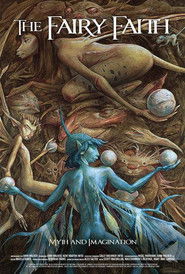
The Fairy Faith
Walker takes us on a personal journey into a world of myth and imagination that he learned from his grandmother. He travels from the Moors of Devon and the Highlands of Scotland to the brooding Celtic landscapes of Ireland and the intimate hills of Cape Breton, in his search of this potent “otherworld” of the imagination.Year:
2000
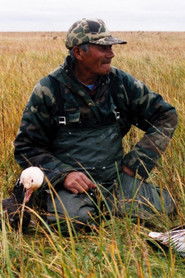
Okimah
This documentary focuses on the goose hunt, a ritual of central importance to the Cree people of the James Bay coastal areas. Not only a source of food, the hunt is also used to transfer Cree culture, skills, and ethics to future generations. Filmmaker Paul M. Rickard invites us along with his own family on a fall goose hunt, so that we can share in the experience.Year:
1998

Rain, Drizzle, and Fog
St. John's, Newfoundland and Labrador, is North America's most easterly landfall. For half a millennium, its perfect harbour has provided a safe refuge in the middle of the treacherous North Atlantic. For 300 years of its history it was an actual crime to try and settle--Newfoundland was the private preserve of British fishing merchants. But people stayed, despite the colonial masters, despite the lack of law and order, despite hellish weather and raging seas. And the city grew--lurching through centuries of crisis, disaster, privation. For filmmaker Rosemary House, "This is still a hard rock land, a dirty old town at the back of beyond. And yet the St. John's townie is so proud, you'd swear we lived in Paris." In this documentary, she explores her city with the help of six locals, Mary Walsh, Andy Jones, Anita Best, Brian Hennessey, Ed Riche, Des Walsh, writers and performers all. (Source: National Film Board)Year:
1998
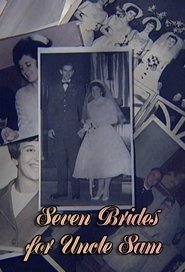
Seven Brides for Uncle Sam
This documentary shares the stories of seven women from Newfoundland who married American soldiers. From the beginning of World War II to the end of the Cold War, Newfoundland housed some of the largest military bases outside of the U.S. As a result, as many as 40,000 Newfoundland women married American soldiers. Using a combination of interviews and old war footage, Seven Brides for Uncle Sam shows how some of the most important events in world history can serve as the backdrop to the timeless tales of romance, heartbreak and joy.Year:
1997

An Untidy Package: Women and the Newfoundland Cod Moratorium
An Untidy Package sets out to dispel the popular misconception that Newfoundland women weren’t major players in the cod fishery before the moratorium, and that the federal compensation they received was only added to their husband’s claims to increase their family’s allowance. We learn at the outset that one third of the 35,000 workers displaced were women. Using the viewpoint of some of these women, this video examines the cod crisis and its social implications for families.Year:
1997
The Elf
In this Christmas drama, a boy and his family discover he is an elf.Year:
1996
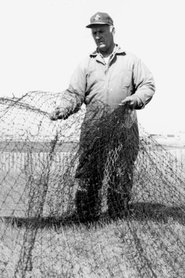
Taking Stock
It was a way of life. It was the backbone of a society. And then the cod fishery off the east coast of Newfoundland collapsed. Taking Stock traces the history leading up to the crisis and the calling for a moratorium of the northwest Atlantic cod fishery. It presents the key players in this complex and tragic story, focusing on those who are now trying to come to grips with an uncertain future. How did the calamity happen? What signals did we ignore? Did we chose the right model in setting up an industry? Ultimately, Taking Stock holds a message for the Canadian as well as the global community: In trying to attain economic success, we must recognize that there are limits to how far we can exploit nature's delicate ecosystems.Year:
1994
Taking Stock
It was a way of life. It was the backbone of a society. And then the cod fishery off the east coast of Newfoundland collapsed. Taking Stock traces the history leading up to the crisis and the calling for a moratorium of the northwest Atlantic cod fishery. It presents the key players in this complex and tragic story, focusing on those who are now trying to come to grips with an uncertain future. How did the calamity happen? What signals did we ignore? Did we chose the right model in setting up an industry? Ultimately, Taking Stock holds a message for the Canadian as well as the global community: In trying to attain economic success, we must recognize that there are limits to how far we can exploit nature's delicate ecosystems.Year:
1994
Subway to Tickle Gut
One of three films in the “Hall Trilogy” with lots of local talent. Two women with roots in Newfoundland find themselves trapped together on a stalled subway train.Year:
1992

Secret Nation
A graduate history student returns to her native Newfoundland, searching for proof of a conspiracy surrounding the referendum that saw Newfoundland join Canada.Year:
1992

Puppets Against Aids - Township to Tundra
In 1992, an independent South African puppetry group, the African Research and Educational Puppetry Program, were invited by OXFAM (Canada) to bring their highly successful educational program 'Puppets Against Aids' to tour rural and regional Canada for twelve weeks. This is the one-hour documentary that was produced from their Canadian Tour.Year:
1992
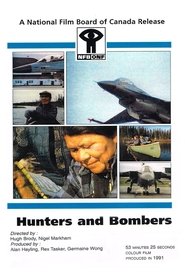
Hunters and Bombers
The hunters are the Innu people and the bombers are the air forces of several NATO countries, which conduct low-level flights over the Innu's hunting terrain. The impact of the jets is hotly debated by peace groups, Indigenous people, environmentalists and the military. But what is often overlooked are the many complex changes underway in Innu society, as social and technological changes confront a traditional hunting culture.Year:
1991
Pelts: Politics of the Fur Trade
The fur trade is Canada's oldest industry, but today some people challenge the morality of killing animals for their fur. This film examines the public relations war raging between the industry and its opponents and takes an objective look at the ethical, environmental and economic issues raised by the debate. The struggle to win over public opinion has been joined by Indigenous peoples in Canada who fear that their way of life will be jeopardized if the fur industry is destroyed. The cycle of the industry is followed from the trapper's bush camp and the fur ranch to the final sale of a coat in the furrier's salon. Throughout the film, the conflicting opinions of fur industry representatives, animal rights activists and Indigenous people challenge the viewer to consider all aspects of this complex debate. —NFBYear:
1989
Pelts: Politics of the Fur Trade
The fur trade is Canada's oldest industry, but today some people challenge the morality of killing animals for their fur. This film examines the public relations war raging between the industry and its opponents and takes an objective look at the ethical, environmental and economic issues raised by the debate. The struggle to win over public opinion has been joined by Indigenous peoples in Canada who fear that their way of life will be jeopardized if the fur industry is destroyed. The cycle of the industry is followed from the trapper's bush camp and the fur ranch to the final sale of a coat in the furrier's salon. Throughout the film, the conflicting opinions of fur industry representatives, animal rights activists and Indigenous people challenge the viewer to consider all aspects of this complex debate. —NFBYear:
1989
Pelts: Politics of the Fur Trade
The fur trade is Canada's oldest industry, but today some people challenge the morality of killing animals for their fur. This film examines the public relations war raging between the industry and its opponents and takes an objective look at the ethical, environmental and economic issues raised by the debate. The struggle to win over public opinion has been joined by Indigenous peoples in Canada who fear that their way of life will be jeopardized if the fur industry is destroyed. The cycle of the industry is followed from the trapper's bush camp and the fur ranch to the final sale of a coat in the furrier's salon. Throughout the film, the conflicting opinions of fur industry representatives, animal rights activists and Indigenous people challenge the viewer to consider all aspects of this complex debate. —NFBYear:
1989

Finding Mary March
This film discusses the search for the last remains of Demasduit (Mary March), one of the last of the Indigenous Beothuk people, set in the Red Indian Lake area of Central Newfoundland. A young girl, Bernadette Buchans, believes that she is related to Mary March. Throughout the whole film, Bernadette and her father Ted are searching for the grave of her mother. An archaeologist/ photographer, Nancy George, accompanies them and she also believes that she has family connections to the Beothuks.Year:
1988
Finding Mary March
This film discusses the search for the last remains of Demasduit (Mary March), one of the last of the Indigenous Beothuk people, set in the Red Indian Lake area of Central Newfoundland. A young girl, Bernadette Buchans, believes that she is related to Mary March. Throughout the whole film, Bernadette and her father Ted are searching for the grave of her mother. An archaeologist/ photographer, Nancy George, accompanies them and she also believes that she has family connections to the Beothuks.Year:
1988
Finding Mary March
This film discusses the search for the last remains of Demasduit (Mary March), one of the last of the Indigenous Beothuk people, set in the Red Indian Lake area of Central Newfoundland. A young girl, Bernadette Buchans, believes that she is related to Mary March. Throughout the whole film, Bernadette and her father Ted are searching for the grave of her mother. An archaeologist/ photographer, Nancy George, accompanies them and she also believes that she has family connections to the Beothuks.Year:
1988
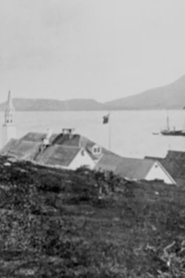
The Last Days of Okak
This short documentary tells the story the once-thriving town of Okak, an Inuit settlement on the northern Labrador coast. Moravian missionaries evangelized the coast and encouraged the growth of Inuit settlements, but it was also a Moravian ship that brought the deadly Spanish influenza during the world epidemic of 1919. The Inuit of the area were decimated, and Okak was abandoned. Through diaries, old photos and interviews with survivors, this film relates the story of the epidemic and examines the relations between natives and missionaries.Year:
1985