


Nobuo Yamada
Writer
11-07-1932
Birthday
Cancer
Zodiac Sign
-
Genres
0
Total Films
Also known as (male)
Shanghai, China
Place of Birth
11-07-1932
Birthday
Cancer
Zodiac Sign
-
Genres
0
Total Films
-
Also Known As (male)
Shanghai, China
Place of Birth
11-07-1932
Birthday
Cancer
Zodiac Sign
-
Genres
0
Total Films
Also known as (male)
Shanghai, China
Place of Birth
11-07-1932
Birthday
Cancer
Zodiac Sign
-
Genres
0
Total Films
-
Also Known As (male)
Shanghai, China
Place of Birth
actor
0 Works
producer
0 Works
director
55 Works
writer
55 Works
other
0 Works
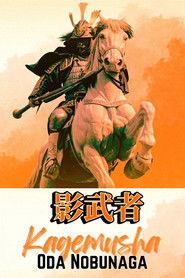
Shadow Warrior of Nobunaga Oda
In Tensho 9, as Oda Nobunaga nears the unification of Japan, he assigns trusted generals to conquer remaining regions. Meanwhile, a peasant farmer named Sahei, resembling Nobunaga, is chosen by Hideyoshi and Sen no Rikyu to act as Nobunaga’s shadow. Furious at the idea of a double, Nobunaga confronts Sahei, who courageously performs the "Atsumori" dance, impressing Nobunaga enough to accept him as his Kagemusha. Sahei’s first test as the shadow warrior comes at a memorial service for the Oda family.Year:
1996

Ritsuko: Her Love, Her Death
Winner of the 1992 Galaxy Award Encouragement Prize and the 1992 Japan Commercial Broadcasters Association Award Excellence Prize. Winner of the 10th ATP Award '93 Grand Prix. Winner of the 10th ATP Award '93 Excellence Prize. Selected as one of the "Best 20 Programmes" at the 10th ATP Award '93. "Through the story of a couple, we ask what it means to live and love. Kazuo (Sato Koichi) and Ritsuko (Imai Miki) were happily married through an arranged marriage during the war. One year later, Kazuo is sent to the city as a member of an army press corps. When he returns home after completing his mission, he finds Ritsuko, who has contracted intestinal tuberculosis and is bedridden. [This section is taken from "J-com magazine" 2004/02 (published by J-com Kansai)]"Year:
1992
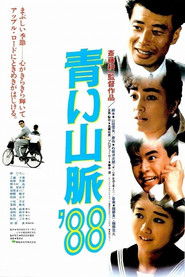
The Blue Mountains '88
Year:
1988

Don Matsugoro's Big Adventure
Don Matsugoro and his son Don Jr fight against a disgustingly reach family who tries to take over a kid's playground called Children Land.Year:
1987
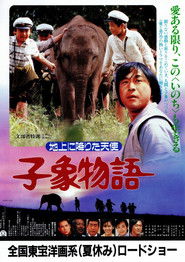
Baby Elephant Story: The angel who descended to earth
In the winter of 1945, Sakura the elephant gave birth to a baby elephant at Tokyo Fujimi Zoo under the watchful eye of the zookeeper Shota Tanabe. Around the same time, Shota's wife, Setsuko, also gave birth to a son. Hanako, the baby elephant, grows up while deepening her bonds with elementary school students who love zoos. However, as Japan enters the Pacific War, the military orders the animals in the zoos of five major cities to be killed.Year:
1986
Tasogare ni hyōteki o ute
Year:
1982
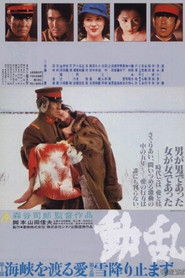
The Revolt
When a young soldier is killed while trying to prevent his younger sister, Kaoru, from being sold into a life of prostitution, his commander, Col. Miyagi, tries to honor his dying wish to rescue his sister. Upon finding Kaoru at a party working as a geisha and later rescuing her from committing suicide, Col. Miyagi allows her to move in with him. Over time, the two grow close, but in spite of Kaoru's growing feelings for him, Col. Miyagi is unable to bring himself to return her love. On the night of his deployment to war, Col. Miyagi finally admits his feelings for Kaoru, but will they ever be able to enjoy a peaceful life together now that a very violent and bloody military revolt is under way...Year:
1980

The Last Game
After the war-time government orders the disbanding of the Big-Six baseball league, the teams of Waseda and Keio universities play one final game before they are drafted into the armed forces and face the hardships of military service.Year:
1979
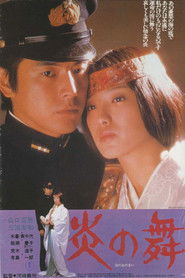
Dances of Flame
Year:
1978
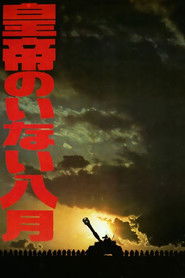
August without Emperor
Taking the Chilean coup as an example, a group of young officers plan to overthrow the Japanese government on V-J Day. They aim to abolish the post-war constitution, restore the national army and revive the traditional spirit of Japan. As the conspiracy is exposed, the coup squadrons are wiped out one by one. The remaining squadron takes over a night train bound for Tokyo.Year:
1978

The Corporation
Year:
1976

Two in the Amsterdam Rain
Akira, a Japanese expat working in Amsterdam, falls in love with a Japanese woman at Schiphol Airport who he thinks is his high school love.Year:
1975
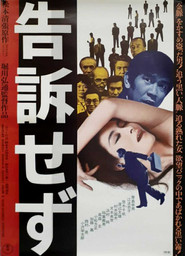
Without Complaint
Based on the novel of the same name by Seichô Matsumoto.Year:
1975

The Family
Set in the post-World War II climate of the 1960s in Kobe, the movie explores the struggle for power within the powerful Manpyo family.Year:
1974
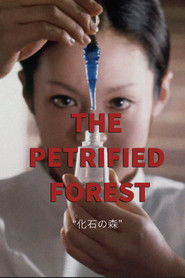
The Petrified Forest
Follows a young med student's relationships with two women: a dangerous affair with a childhood friend and his mother's struggle to rebuild their estranged relationship.Year:
1973
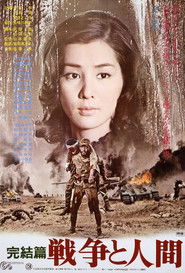
Men and War III: The Final Chapter
Final part of epic drama about war and its effects upon human beings, follows the fortunes of the Godai family through the Sino-Japanese War through the Soviet Union's sudden attack upon Japanese troops at the end of the war.Year:
1973

Sunset Sunrise
Directed by Koreyoshi Kurahara in 1971, Sunset Sunrise (Hi wa shizumi, hi wa noboru) is a “hippie” road movie chronicling the trek that a handful of people take in order to reach Katmandú, the capital of Nepal.Year:
1973

Sapporo Winter Olympics
A documentary about the 1972 Winter Olympic Games in Sapporo, Japan.Year:
1972
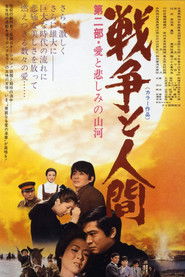
Men and War II: Land of Love and Sorrow
Second part of an epic drama of war and its effects upon human beings, follows the fortunes of the Godai family from 1935 through Japan's invasion of China. Based on the novels by Jumpei Gomikawa, who also penned The Human Condition.Year:
1971
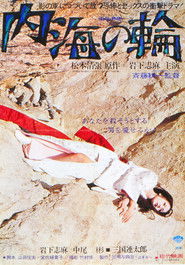
Shadow of Deception
It was five years ago when Minako spent a night with Sozo, younger brother of her ex-husband. She now lives in a local town with a rich old man who owns a dry goods store. Minako travels to Tokyo on business every three months, during which time she continues to meet Sozo, who has married the daughter of his respected teacher.Year:
1971
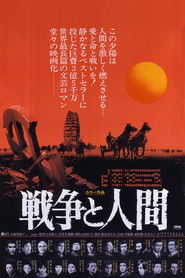
Men and War I: Prelude to Destiny
The upstart Godai family conglomerate plans to strengthen ties with the hardliners in the Kwantung Army as they plan military expansion into Manchuria.Year:
1970
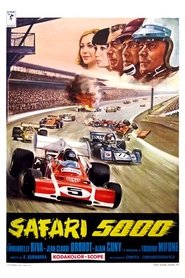
Safari 5000
A Japanese racing driver for Nissan named Godai (Yujiro Ishihara) have a rivalry with a French driver named Pierre (Jean-Claude Drouot). Godai is enlisted to race in an annual endurance race, The East African Safari Rally. Peripheral to this is the story concerning Godai's former lover Yuko (Ruriko Asaoka), a fashion designer, and her friend Anna (Emmanuel Riva), who happens to be Pierre's wife.Year:
1969

One Day at Summer's End
A Yasuzō Masumura film about a love affair starring Ayako Wakao. The literal title is The Two Who Got Wet.Year:
1968
Two Hearts in the Rain
Love story of a working-class boy and girl.Year:
1968

Two in the Shadow
A man is involved in a fatal car accident, and though he is blameless, his company transfers him to a remote branch in a small town. Before he leaves, he gives the man's widow a large sum of money that she uses to move back to her hometown.Year:
1967
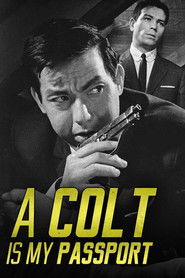
A Colt Is My Passport
A gang lord hires Kamimura, a hit man, to take out a rival boss who's gotten greedy.Year:
1967
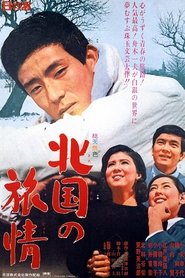
Journey to the North
Winter holidays at the university. Eikichi visits a city in the north of the country, the hometown of Yuko, a classmate for whom he has feelings. However, Yuko, having returned home, has just become engaged to a local young man, and the sudden appearance of Eikichi makes others worry that their good relationship will be spoiled. An epic about pure love, which tells the story of a man who leaves his beloved woman, praying for her happiness. Adapted from the novel "Kiri no Naka no Shojo" Yojiro Ishizaka.Year:
1967

The Harbor of No Return
A jazz pianist named Shiro Tsuda returns from an overseas tour unwittingly carrying drugs that have been sewn into his jacket. When he stops by to see his girlfriend Kyoko, he walks in to find an unknown man attacking her. While struggling with the man, who is armed, Shiro accidentally shoots and kills her. The intruder knocks Shiro down and takes the drugs from Shiro's jacket. Shiro realizes that he was being used as a drag smuggler. He is sent to prison for three years for killing his girlfriiend. When he is released, he is determined to find out who set him up.Year:
1966
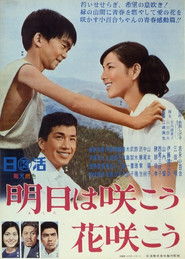
When the Flowers Bloom
Hiroko, who has a weekly magazine reporter as her lover is assigned as a public health nurse in a remote village. However, there is widespread poverty and ignorance beyond her imagination.Year:
1965

Why Are We Young?
After ten years of study in the US, Nonomura Kensuke returns to Japan to be an English teacher at a local high school. Kensuke's nontraditional teaching style stirs up the school, but the students gradually accept him.Year:
1965
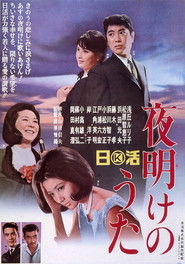
Song of Dawn
Musical actress Noriko feels frustrated by the futility of her affair with a married man. Then she is offered a role in a new production that appears to mirror her own private life... An excellent work that stylishly depicts its gradually evolving heroine.Year:
1965
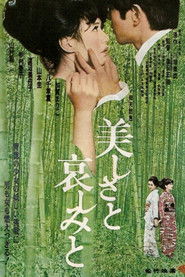
With Beauty and Sorrow
When the man who seduced the famous painter Otoko as a teenager--and then wrote a bestselling novel about it--reappears in her life, her pupil--and lesbian lover--hatches a plot to destroy the man and his family.Year:
1965
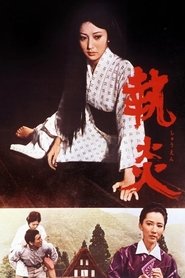
The Flame of Devotion
The tragic tale of Kiyono, a young woman from the mountain who fell in love with Takuji, a fisherman's son, and her devotion to him during a time of war.Year:
1964
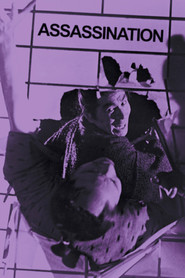
Assassination
Assassination begins with the events of 1853 when "four black ships" anchored at Edo Bay, sparking civil unrest and the major political manoeuvring that saw the end of the Tokugawa Shogunate. At a time when assassination had become a disturbing political tool, Shinoda's film follows Hachiro Kiyokawa, an ambitious, masterless samurai whose allegiances drift dangerously between the Shogunate and the Emperor.Year:
1964
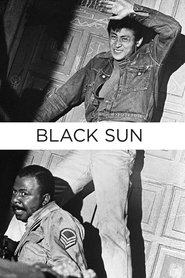
Black Sun
Akira, a young, jazz-obsessed drifter, returns to his squat, a ruined church, and finds Gill, a wounded African-American GI, on the run after the death of a white GI. Despite terrible misunderstandings and culture clash, Akira agrees to help Gill escape towards the sea, dodging military police along the way.Year:
1964
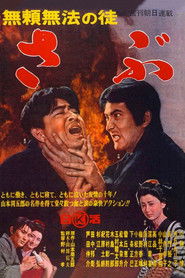
Punishment of a Lawless Villian
In the early Meiji era, two contrasting craftsmen, who had been bound by a ten-year strong friendship, suddenly hated each other and face many obstacles. Adapted from Shugoro Yamamoto novel.Year:
1964

Kakedashi keiji
Year:
1964

I Fly for Kicks
A musical film with Yūjirō Ishihara and Ruriko Asaoka.Year:
1963

Glass-Hearted Johnny
Joe Shishido is an ambitious bike racetrack tout who becomes inadvertently involved in a triangle with a vulnerable prostitute (Izumi Ashikawa) and her brutal yakuza pimp (George Ai).Year:
1962
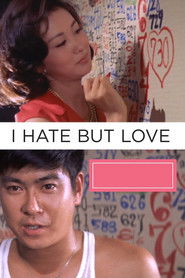
I Hate But Love
A celebrity, dissatisfied with his personal and professional lives, impulsively leaves fast-paced Tokyo to deliver a much-needed jeep to a remote village. When his controlling manager, the woman he loves, follows, the two must reconcile while dodging reporters.Year:
1962

Keep Your Chin Up
Kawanishi Kyu and Tomoda Ryoji, two waifs, are inmates of a Reform School. One night, the boys succeed in a mass escape and split up. Kyu and Ryoji hear the sirens shrieking behind them and panic. Kyu pretends he has been hit by a small truck and Ryoji demands that they be taken to a hospital, little dreaming that Nagai, the driver, is the official guardian of juveniles. The next morning the two boys hear a light knock, and Nagai's daughter, Noriko enters, but surprise is changed to fear as they see her father approaching with Kume, the Juvenile Officer. Their one thought is escape but Kyu discovers his leg is stiff and it pains him to move. In the excitement, he had not realized he had really been hit by the truck. He sends Ryoji away while he waits alone for Officer Kume. Nagai takes Kyu under his wing, while Ryoji finds himself again in the hard-boiled world.Year:
1962

Love in Ginza
Hanjiro is a struggling painter that shares a tiny apartment in the back streets of Ginza with his jazz pianist friend who works at a bar. When he and his sweet heart, Hisako decide to get married, Hanjiro is faced with a tough decision. Needing to buy a ticket back home to tell his mother the good news, he compromises his creative principles for love and sells his portrait of Hisako. Hisako heads to the station to see him off, but gets hit by a car...Year:
1962

The Storm over Arabia
A young man travels to Egypt and becomes embroiled in an independence movement by chance. Produced entirely on location overseas, which was groundbreaking at the time.Year:
1961

Lost in the Sun
Year:
1961

Where the Horizon Meets the Sun
Year:
1961
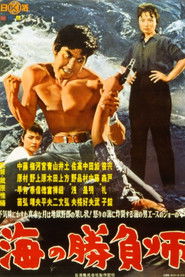
Gambler in the Sea
Joe, a master diver, explodes his fighting spirit and friendship across raging seas and scorching deserts in this gorgeous and entertaining epic.Year:
1961
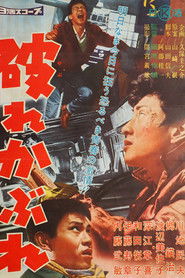
Yabure Kabure
Ambitious action drama about a young man living a carefree life of women and money, struggling to crawl out of the mire, and his lover who tries to save him at his own peril.Year:
1961

For This We Fight
1961 Japanese movieYear:
1961

Man at the Bullfight
An unprecedented, extravagant, passionate film set in Spain and Southern Europe. It depicts the passionate Yujiro who risks his life to invite bullfighting.Year:
1960

The Warped Ones
A juvenile delinquent gets out of the pen and immediately embarks on a rampage of untethered anger, most of it directed at the girlfriend of the journalist who helped send him up.Year:
1960

The Day of Youth
At Tokyo Gakuen University, Takema, son of Tatsunosuke, chief of the Waku gang, is a freshman who wishes to prepare himself for a better life away from gang activities despite the wishes of his father who wants him to assist strengthen the gang against the Kawano group. Takema's classmate, Akiko, is the daughter of Eiko who operates a restaurant, and through her he obtains a lodging in the house of Shiu, a dancing mistress. The students enjoy their life, but most have their troubles. Sakamoto works as a laborer on the docks to help pay for his schooling, and Akiko worries over the relationship between her mother and Sakurai, a corrupt politician, suspected to be involved in graft over jet aircraft.Year:
1960

The Poem of the Blue Star
Might Guy Akira's unique action drama depicts the bizarre fate of a young doctor who vows to avenge his girlfriend, who was shot by a yakuza on a whim!Year:
1960

When a Man Risks His Life
Year:
1959
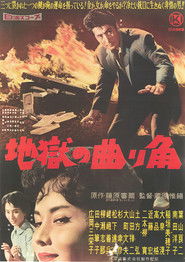
A Turning to Hell
Maki, a porter at the Sakura Hotel, finds a body in Room No. 2 and picks up a piece of paper on which is written "one-third of the key", also the part of a key. From a newspaper he learns that the dead man is an official who has been detained as a suspect in a bribery case involving 150,000,000 yen and that another suspect named Matsunaga is still in custody. Maki realizes that if he can obtain the other two-thirds of the key, he will be a multi-millionaire.Year:
1959

The Wild Reporter
Seven years ago, Ishimatsu Toshio, a talented radio producer at Zen Nihon Hōsō, witnessed a crazed drug addict murder his wife and then commit suicide, though Toshio was able to save the lives of their two children. Just transferred from Shimizu to Tokyo, Toshio hopes to produce a program that will expose the drug trade in Tokyo. One day, Toshio stops into a noodle shop where he is mistaken for a drug dealer and passed a bagful of drugs. The real dealer arrives in time to follow Toshio home. That night Toshio is attacked by the dealer, who turns out to be Kenji, one of the children Toshio had saved. Kenji can't bring himself to kill Toshio, so he runs away and goes into hiding from the mafia. While continuing to investigate the drug trade, Toshio searches for Kenji to get Kenji's testimony for his program.Year:
1959
