

Pallavi Paul
Director
-
Birthday
-
Zodiac Sign
-
Genres
0
Total Films
Also known as (female)
Place of Birth
-
Birthday
-
Zodiac Sign
-
Genres
0
Total Films
-
Also Known As (female)
-
Place of Birth
-
Birthday
-
Zodiac Sign
-
Genres
0
Total Films
Also known as (female)
Place of Birth
-
Birthday
-
Zodiac Sign
-
Genres
0
Total Films
-
Also Known As (female)
-
Place of Birth
actor
0 Works
producer
0 Works
director
9 Works
writer
0 Works
other
2 Works
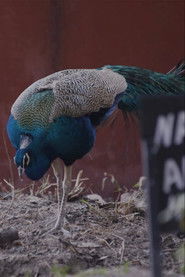
How Love Moves
Following Shamim Khan’s and his co-workers’ daily care for the Islamic Delhi Gate Cemetery over the last two years, the film attempts to comprehend an event unprecedented in the recent history of the world – the COVID-19 pandemic – through the eyes of a keeper of the dead.Year:
2023
How Love Moves
Following Shamim Khan’s and his co-workers’ daily care for the Islamic Delhi Gate Cemetery over the last two years, the film attempts to comprehend an event unprecedented in the recent history of the world – the COVID-19 pandemic – through the eyes of a keeper of the dead.Year:
2023
The Blind Rabbit
A magical tiger stalks like a phantom. Because no one ever catches more than a glimpse, it is spoken of with the highest esteem. This allegorical fiction starts Pallavi Paul’s attempt to describe systematic police violence in Delhi on the basis of individual events suppressed from official history. She does so in an associative edit of texts, images and sounds, making effective use of the scattered fragments of documentation still extant, including hurriedly safeguarded video and audio recordings of eyewitness accounts as well as those of the police and security forces.Year:
2021
The Dreams of Cynthia
The Dreams of Cynthia chases the inner life of its primary protagonist, who is at once imagined as a literary character, a measure of time, a form of experience, and a landscape. She also bears witness to the lives of two people: an executioner and a trans woman whose lives are intertwined within a small town in North India.Year:
2017
Long Hair, Short Ideas
The film Long Hair, Short Ideas attempts to create a conversation between the pressures of excavating a political moment and the elasticity of the documentary form. Starting from the desire to look at the women’s movement, the artist found herself immersed in the viscosity of struggles. The inability to find perspectival stability started to become the very site from which possibilities sprouted. The film is constructed around Vidrohi’s (the revolutionary poet) wife. Her relationship to the radical movement is traced via the turbulent political history of India in the 1970s (Emergency and the gagging of free press and civil liberties) and her intimate experiences around domesticity, sexuality and labour. In revisiting her abandonment by her husband and the choices that she had to make as a result, Paul not only recasts the traditionally absent figure of the "revolutionary’s wife" but also pushes us to rethink the orders of ‘silence’ and 'absence' within new precincts.Year:
2014
Shabdkosh
"Shabdkosh (A Dictionary) occurs in the silences between poems. A contemplation of the need to be heard against the imperatives of forgetting. Many forms of "last records" are conjured to create "deceased time". A time that is not simply un-alive but has a force much beyond the world of the living. Salvador Allende’s haunting last speech hangs in the air mingling with Vidrohi’s obsession with being recorded, while images of hunters and the hunted slowing trickle in. All these together form the skin of the question that Spicer asks of Lorca: "What did you want to do with a poem once it was over?" Should "silence" and "records" always be placed antithetically, or can a new imagination of practice emerge from the world of the forgotten and the misplaced?" – Pallavi PaulYear:
2013
Nayi Kheti
"In Nayi Kheti (New Harvest) I have tried to create three impossible, unfeasible conversations. In the anarchic text After Lorca, poet Jack Spicer writes to Federico Garcia Lorca nearly twenty years after Lorca’s death. Unlike in the book, in the video, amidst the relentless velocity of images and sounds, Lorca has to write back. Simultaneously, Poul Henningson, credited with the invention of the pH lamp, speaks about the desire of the scientist to reverse the rhythm of the day and the night. Caught within this question of light and darkness is the image of cinema itself. It has now been scratched out, cut open and remade to the extent that what now exists is only a trail of what we recognised as the filmic. Located as a witness to all these metaphysical, scientific and aesthetic exchanges are the poems of Vidrohi, a vagabond political poet." – Pallavi PaulYear:
2013
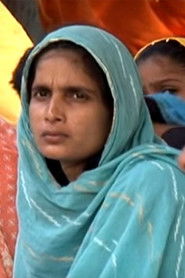
There is Something in the Air
As a call from the periphery of sanity, the film is a series of dream narratives, and accounts of spiritual possession as experienced by women 'petitioners' at the shrine of a Sufi Saint in North India.Year:
2011
