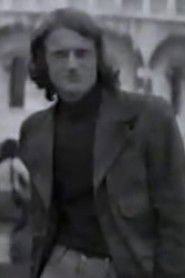
Аватар персоны Paolo Gioli

Paolo Gioli

DirectorActor
Paolo Gioli was born in Sarzano di Rovigo in 1942; he studied at the Fine Arts Academy in Venice and then in New York, where he came into contact with the New American Cinema, the New York School, and where he met Leo Castelli and Martha Jackson. In 1970 he settled in Rome where he frequented the authors of the Cooperativa Cinema Indipendente and the Filmstudio, and started to produce his own films. He moved to Milan in 1976 and focused his attention on photography: in this period he started using polaroid photos as a powerful means to broaden his research on instant photography, printing his work on different materials such as paper and canvas. Gioli is considered one of the most important photographers and film makers of his generation, and has held numerous solo exhibits in some of the most important museums such as the Centre Pompidou in Paris, the MoMA in New York and the Palazzo delle Esposizioni in Rome.

12-10-1942

Birthday

Libra

Zodiac Sign

-

Genres

4

Total Films

Also known as (male)

Sarzano di Rovigo

Place of Birth

Popular works

Creative career

actor

4 Works

producer

0 Works

director

44 Works

writer

0 Works

other

3 Works

Paolo Gioli: Free Films Made Freely

Paolo Gioli: Free Films Made Freely

Feature-length retrospective interview with Italian avant-garde filmmaker Paolo Gioli.
0.0

Year:

2007

Ritratto di Piero Bargellini

Ritratto di Piero Bargellini

From Paolo Brunatto's series "Scheggie Di Utopia".
0.0

Year:

2005

The Perforated Cameraman

The Perforated Cameraman

In L’operatore perforato (1979) that plump sprocket hole comes into its own. It multiplies like a virus, riding serenely on the surface, nearly obliterating the images trembling underneath it. Near the close of the film, we watch another cameraman, perhaps shooting a Fatty Arbuckle imitator, cope with the invasion of perforations, not only from the top and center but from the edge. By now, when we can hardly tell the difference between frame and perforations, cinema’s two round-cornered rectangles, the image can be anything—a picture, or a zone of blank white.
6.0

Year:

1979

Hilarisdoppio

Hilarisdoppio

Self-shot: a film shot without a camera operator. Sole witness: the movie camera. Fixed, directed at a single expanse, obedient to the orders of wires that I manipulate: characters splitting in two through the asymmetrical filtration of the comings and goings of self-irony. Composed of various extracts of historical films, such as the Eisensteinian battleship, intercut with stairways of various sorts; the unceasing use of negatives persecuted by positives and vice versa; a cinematic-theatrical dialogue between philosophical doubling and filmic doubling.
0.0

Year:

1973