

Paolo Rosa
DirectorWriter
-
Birthday
-
Zodiac Sign
-
Genres
0
Total Films
Also known as (female)
Place of Birth
-
Birthday
-
Zodiac Sign
-
Genres
0
Total Films
-
Also Known As (female)
-
Place of Birth
-
Birthday
-
Zodiac Sign
-
Genres
0
Total Films
Also known as (female)
Place of Birth
-
Birthday
-
Zodiac Sign
-
Genres
0
Total Films
-
Also Known As (female)
-
Place of Birth
actor
0 Works
producer
0 Works
director
7 Works
writer
1 Works
other
0 Works

Il mnemonista
First violin in the orchestra of a big city, S. has an extraordinary memory, which leads him to remember every detail of what falls under his attention. When he realizes that he can no longer read a score, because the notes before his eyes explode into moving and colorful points, he decides to contact Professor L., an internationally renowned psychologist.Year:
2000
Miracoli - Storie per corti
Year:
1994
Where's yankel?
This is the incredible story of a group of Kletzmer musicians during a break in their concert. In a few minutes out of the stage fights, unexpected events happen that stem from the telling a brief little story.Year:
1994
Where's yankel?
This is the incredible story of a group of Kletzmer musicians during a break in their concert. In a few minutes out of the stage fights, unexpected events happen that stem from the telling a brief little story.Year:
1994

L’osservatorio nucleare del sig. Nanof
Year:
1984

Lato 'D'
A worn record by Lou Reed, clips of film, texts that run on the video and are erased: traces of D. Sounds and images collected and rearranged, which recompose a simulated portrait, perhaps not resembling its original, but in which an attempt has been made not to lose that found charge of poetry and provocation. This film was made in 1982, on randomly recovered Super 8 material, shot by D., a seventeen-year-old boy, between 1977 and 1978, and completed with texts taken from interviews recorded in the same period. We have tried to transform forgotten finds, made of hallucinated and lucid self-portraits, significant of an original way of experiencing the condition of youth into active and narrated documentation.Year:
1983
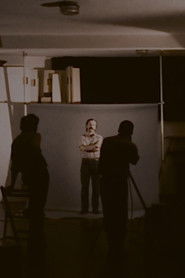
Facce di festa
Shot in the span of a few hours at a party held in Milan in 1979, the film takes the form of a reflection on a fragment of a lost youth reality in search of new references. Young people who, emerging from years of intense political activism and profound social and cultural changes (the 70s), are about to enter a new decade (the 80s) lived under the banner of rampantism and hedonism. A document attentive to individual behavior, to original ideas, to communicative intentions that go beyond parched languages. Facce di festa is built by assembling material collected with different cinematographic techniques: hidden camera, behavioral interviews, descriptive images. In the film, there is an attempt to create a delicate but tenacious interference between the author's narration and the viewer's perception. The camera becomes a vehicle for forcing the cinematographic narration by seeking a new space in the presence of the spectator.Year:
1980