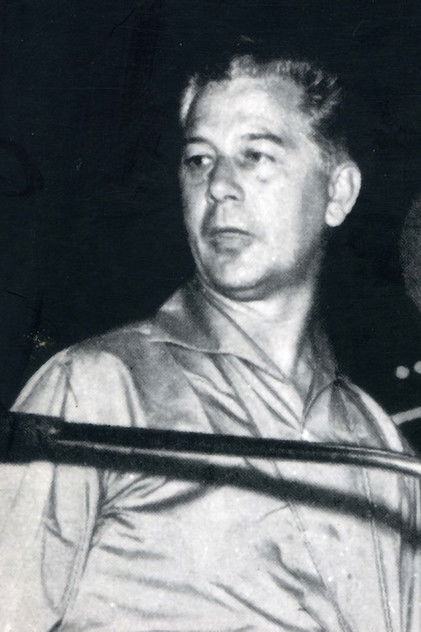
Paul Zils
18-06-1915
Birthday
Gemini
Zodiac Sign
-
Genres
0
Total Films
Also known as (male)
Wuppertal, Germany
Place of Birth
18-06-1915
Birthday
Gemini
Zodiac Sign
-
Genres
0
Total Films
-
Also Known As (male)
Wuppertal, Germany
Place of Birth

18-06-1915
Birthday
Gemini
Zodiac Sign
-
Genres
0
Total Films
Also known as (male)
Wuppertal, Germany
Place of Birth
18-06-1915
Birthday
Gemini
Zodiac Sign
-
Genres
0
Total Films
-
Also Known As (male)
Wuppertal, Germany
Place of Birth
actor
0 Works
producer
0 Works
director
34 Works
writer
1 Works
other
3 Works
Asiatische Religionen
Asiatische Religionen (1965) is a German-language miniseries directed by Paul Zils and Gisela Bonn, with narration by Paul Klinger. The series explores various Asian religions, delving into their philosophies, rituals, and cultural impacts. Through a combination of interviews, visual storytelling, and expert insights, the miniseries offers viewers an in-depth understanding of the diverse religious traditions across Asia.Year:
1965

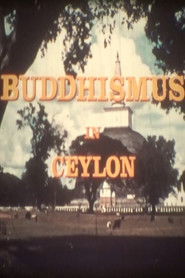
Buddhismus in Ceylon
Directed by Paul Zils and co-written with Regi Siriwardena, Buddhismus in Ceylon is a documentary exploring the practice of Buddhism in Sri Lanka. The film traces the religion’s arrival from India over 2000 years ago, emphasizing its purest form as practiced in Ceylon. It highlights key rituals such as the Festival of Lights, the veneration of the Bodhi tree, and the Buddhist monastic journey. The documentary also contrasts the discipline of Buddhist teachings with the occasional resort to amulets and Hindu deities, offering a comprehensive view of Sri Lanka’s Buddhist culture and its path toward nirvana.Year:
1963

Buddhismus in Ceylon
Directed by Paul Zils and co-written with Regi Siriwardena, Buddhismus in Ceylon is a documentary exploring the practice of Buddhism in Sri Lanka. The film traces the religion’s arrival from India over 2000 years ago, emphasizing its purest form as practiced in Ceylon. It highlights key rituals such as the Festival of Lights, the veneration of the Bodhi tree, and the Buddhist monastic journey. The documentary also contrasts the discipline of Buddhist teachings with the occasional resort to amulets and Hindu deities, offering a comprehensive view of Sri Lanka’s Buddhist culture and its path toward nirvana.Year:
1963
The Vanishing Tribe
The Vanishing Tribe (1959) is a short documentary directed by Paul Zils and Fali Bilimoria, focusing on the Todas, the indigenous inhabitants of the Nilgiri Hills in South India. The film delves into the unique customs, rituals, and daily life of the Toda community, highlighting their traditional practices that have remained largely unchanged over generations. Through intimate cinematography, the documentary captures the essence of Toda culture, offering insights into their social structure, religious ceremonies, and the challenges they face in a rapidly changing world.Year:
1959
Martial Dances of Malabar
Martial Dances of Malabar (1958) is a short documentary directed by Paul Zils, focusing on the traditional martial arts of the Malabar region in India. The film showcases the intricate movements and techniques of these martial dances, highlighting their cultural significance and the discipline involved.Year:
1958
Fifty Miles from Poona
Fifty Miles from Poona (1957) is a short documentary directed by Fali Bilimoria and Paul Zils, offering an intimate portrayal of the daily life of a rural Hindu family in India. The film provides a window into traditional practices, rituals, and the rhythms of rural existence, highlighting the family's interactions with their environment and community. Through its observational style, the documentary captures the essence of rural life, emphasizing themes of family, tradition, and the connection to the land.Year:
1957
Maa, the Story of an Unmarried Person
Maa, the Story of an Unmarried Person (1956) is a short documentary directed by Paul Zils, highlighting the challenges faced by unmarried mothers and their children in India.Year:
1957
New Life of a Displaced Person
New Life of a Displaced Person (1957) is a short documentary directed by Paul Zils, focusing on the experiences of displaced individuals in India. The film offers an intimate portrayal of their daily lives, challenges, and the resilience they demonstrate in adapting to new environments. Through observational cinematography, Zils captures the human aspects of displacement, highlighting themes of survival, community, and the quest for stability. The documentary provides valuable insights into the socio-economic conditions of displaced persons in mid-20th-century India.Year:
1957
Textiles
Directed by Paul Zils, 'Textiles' is a documentary film exploring aspects of India's textile industry during the mid-20th centuryYear:
1956
The School
Directed by Paul Zils and sponsored by the U.S. Technical Cooperation Mission (TCM), this short documentary explores educational development initiatives in post-independence India. The film highlights efforts to promote literacy and modernize schooling systems as part of collaborative development programs between India and the United States.Year:
1956
The Ripening Seed
"The Ripening Seed" is a 1956 drama film directed by Paul Zils. Specific details about the film's plot and cast are limited.Year:
1956
Agriculture
"Agriculture" is a 1955 short documentary film co-directed by Paul Zils and Fali Bilimoria. The film focuses on agricultural practices in India during the mid-20th century, highlighting traditional farming methods and the challenges faced by farmers. It also explores the impact of modernization and government initiatives aimed at improving agricultural productivity. The documentary provides insights into the socio-economic conditions of rural India and the efforts to enhance food production post-independence.Year:
1955
Fisherfolk of Bombay
"Fisherfolk of Bombay" is a 1955 short documentary film directed by Paul Zils. The film focuses on the lives and livelihoods of the fishing communities in Bombay (now Mumbai), providing insights into their daily routines, challenges, and cultural practices. This documentary is part of Zils's extensive work in India, where he played a significant role in developing the country's documentary film movement.Year:
1955
Oraons of Bihar
"Oraons of Bihar" is a 1955 short documentary film directed by Paul Zils. The film focuses on the Oraon tribe, one of the largest indigenous communities in South Asia, with a significant population in Bihar, India. It explores their traditional lifestyle, culture, and social structure, providing insights into their language, customs, and the role of the village headman, known as the 'munda'. This documentary is among the early ethnographic films in India, highlighting the rich cultural heritage of the Oraon people.Year:
1955
Ujala
"Ujala" is a 1954 short documentary film directed by Paul Zils. Specific details about the film's content are limited, but it is categorized as a documentary short.Year:
1954
Family in Bangalore
Documentary produced for Burmah-Shell about changing social patterns in India. It illustrates the breakdown of traditional life-styles and the introduction of a more fragmented society with the growth of India's industrial development. [Part of the 'Life in India' series.]Year:
1954
Shabash
Paul Zils's third feature film, Shabash (1952), is a comedy and was one of six features on his production schedule at the time. Specific details about the film's plot and cast are scarce, and it appears that the film may be lost.Year:
1952

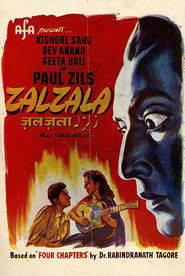
Zalzala
Bengal's struggle to get rid of British domination by terrorism and underground intrigue.Year:
1952
Our India
Directed by Paul Zils, Our India is a short documentary film written by Minoo Masani. The film focuses on India's post-independence socio-political landscape, documenting the nation's early years of independence and its efforts toward development. With its documentary style, the film emphasizes themes such as national unity, social progress, and the challenges faced by a newly independent India.Year:
1950
India is Ours
Though times have changed, Ram still uses old ways of farming due to a drought in the village. His brother, Bala, goes to Bombay to earn his living. Mahadev, a Zamindar in the village, eyes Usha, the lover of Bala. Due to the drought, the crops fail in the village, and Shikh Sahib, a social worker, comes to help the farmers, and shows them new ways of farming. Ramu goes to Bombay to take a loan for cooperative farming and asks Bala to turn back to the village, but he refuses. [The film is a socio-economic study of post-independence India, blending documentary elements with narrative storytelling. The film is often described as a "simple story woven into the documentary design" and features actors like Prithviraj Kapoor and Dev Anand.]Year:
1950
The Last Jewel
"The Last Jewel" is a 1949 film co-directed by Paul Zils and Fali Bilimoria. Specific details about the film's plot and content are scarce, and it appears that the film may be lost.Year:
1949
A Tiny Thing Brings Death
"A Tiny Thing Brings Death" is a 1949 documentary directed by Paul Zils and Fali Bilimoria. The film focuses on the impact of malaria in India, highlighting the disease's prevalence and the efforts to combat it. Notably, the documentary features actor Sombhu Mitra, who portrays a malaria victim, bringing a dramatic element to the film.Year:
1949
White Magic
"White Magic" is a 1949 drama film co-directed by Paul Zils and Fali Bilimoria.Year:
1949
Two Worlds
"Two Worlds" is a 1949 drama film directed by Paul Zils.Year:
1949
General Motors in India
"General Motors in India" is a 1949 documentary co-directed by Paul Zils and Fali Bilimoria. The film explores General Motors' operations in India during that period, highlighting the company's influence on the nation's industrial landscape. While specific details about the documentary's content are limited, it is recognized as part of Zils' extensive work in Indian documentary cinema.Year:
1949
Child
"Child" is a 1948 short documentary directed by Paul Zils. Unfortunately, specific details about the film's content are scarce, and it appears that the film may be lost.Year:
1948
Mother-Child-Community
"Mother-Child-Community" is a 1948 documentary co-directed by Paul Zils and Fali Bilimoria. The film is recognized for its exceptional cinematography by Dr. P.V. Pathy and the poetic imagery crafted by Zils.Year:
1948
Kurwandi Road
"Kurwandi Road" is a 1948 short documentary directed by Paul Zils. The film was produced for CIBA, a Swiss chemical and pharmaceutical company, and focuses on the construction of a road in the Kurwandi region of India. This project was significant as it facilitated access to remote areas, promoting development and connectivity. The documentary highlights the challenges faced during the construction process and underscores the importance of infrastructure in regional development.Year:
1948
India's Struggle for National Shipping
India's Struggle for National Shipping is an Indian documentary and corporate film released in August 1947. It was directed by German filmmaker Paul Zils and produced by The Scindia Steam Navigation Company Ltd. The films features archival coverage and some new footage shot by P. V. Pathy. The film narrates the struggles of Indian shipping industry which was suppressed by the British authorities for long time. It also includes the archival footage of opening of Scindia House in 1938 by Vallabhbhai Patel and Shanti Kumar Morarjee welcoming him. The film also features Mahatma Gandhi and his Swadeshi Movement.Year:
1947
Community
"Community" is a 1947 documentary directed by Paul Zils, a filmmaker known for his significant contributions to Indian documentary cinema. Unfortunately, specific details about the film's content are scarce, and it appears that the film may be lost.Year:
1947
Bombay, the Story of Seven Isles
1945 documentary directed by Paul Zils. The film explores the history and development of Bombay (now Mumbai), highlighting its transformation from a collection of seven islands into a major urban center.Year:
1945

Fanny Elssler
Prince Klemens von Metternich orders Friedrich Gentz, one of his aides, to keep the Duke of Reichstadt---Napoleon Francois Joseph Charles---son of Napoleon and heir to the French throne, from thinking about French politics. Gentz enlists the help of ballerina Fanny Elsser, all the rage in several European capitals, to keep the Duke distracted.Year:
1937

Seven Slaps
William MacPhab loses seven-pounds in the stock market and decides to slap the man who was responsible for the stock manipulation that caused him to lose his money. Astor Terbanks, the stock-market manipulator is surprised the next day when he gets soundly slapped by MacPhab, and the latter promises to deliver one more a day for the next six days. Terbank's daughter, Daisy, is amused by the procedure and is attracted to MacPhab.Year:
1937

Lucky Kids
After completing work on the British musical Invitation to the Waltz, Lillian Harvey returned to her adopted country of Germany to star in the comedy-with-music Glueckskinder (Children of Fortune). Harvey plays Ann Garden, an unemployed actress who ends up in night court on a loitering charge. Here she meets Gil Taylor (Willy Fritsch), a struggling songwriter temporarily employed as a court reporter. Hoping to keep her out of jail, Gil impulsively tells the judge that he's engaged to Ann -- whereupon the judge, equally impulsively, marries the couple on the spot! After this inauspicious start, Ann and Gil embark upon a rocky (but tuneful) whirlwind romance.Year:
1936