Pavel Kogan
DirectorWriter
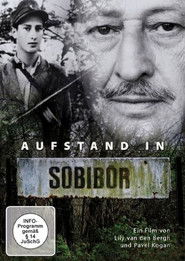
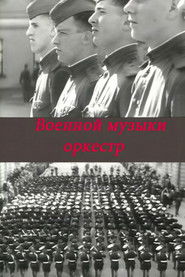
Pavel Kogan was born on July, 9, 1931 in Leningrad. He got two external high school degrees, that of Leningrad State University and GITIS; was employed as dumb performer by Kirov (presently Mariinsky) Opera. Finding himself, by vagaries of fate, in the cinema, he directed more than 35 documentary films. These films include, on the one hand, such as “The band of military tunes” (1968) in partnership with P. Mostovoy, which got the best film award, the Golden Dove, of Leipzig Festival; on the other hand, such as the full-length “Mutiny in Sobibor” (1989) being a revelation to Pavel himself as it was his first encounter with the Jewish subject and the topic of European Jewry’s holocaust, and being the first international Soviet-Dutch project. In 1989, the film was awarded with Joris Ivens prize at the Amsterdam international Festival.
For twenty years he was teaching the film directing at Leningrad Institute of Theatre, Music and Cinematography. For over ten years he hosted “Cinema and time” show on Leningrad TV, hence called “Kapler of Leningrad”.
In 1992, Pavel fell seriously ill. Medicine in Russia, along with Germany and Israel turned out to be ineffective. Pavel passed away November, 3, 1998. He was buried in Komarovo.
Pavel reminisced once about himself:- «I was the third infant of the family. The elder brother went to battlefields to be killed in the first month. During the siege of the city, my sister, a university student, served in the army, in AA defence. Father died from starvation under siege; he was a clockmaker, buried in a mass grave in Piskarievskoye cemetery. Mother died soon after the break-through, in post-war time. At the age of 14, I started working in the evenings making hairpins, knitting fisherman’s nets, botching up crates. Gradually, I finished secondary school, dreaming of entering a department of linguistics, but the tide had been turning already, “With a name like yours [a Jewish name], one has nothing to do here”.
It was in 1948. I entered the university for political economy, when it was sought after by no one. But how can one live on the scholarship alone? A certain lass let to know that it was possible to be employed by Kirov Theatre, in a troop of supers, saying, “With a black stocking spread on your face, you will represent a negro boy in “Aida” performance”. My pay was 40 roubles a month. In my infancy, I had been admitted to the cello class. I seem to have been pitch perfect after all, but we had absolutely no money for the instrument, so I changer over to the cornet-a-piston. I learned to play the cornet until happened to break a tooth, yet I kept a passion for brass music for life. While in the Theatre, learnt all at the Opera by heart. There was some aptitude for literature, too. One sketch of mine was published by Boris Polevoy, in the “Yunost’” magazine, he urged me to keep on writing. Whereas at the stage, I did but serve the top hat and gloves to Lemeshev as Lensky. Lucky for me, I was cashiered from the Theatre. After 10 years at that, and again – because of my nationality.
Yet it was year 1959. I was walking along Kriukov canal and saw hard-by – and I had been unaware that quite hard-by the Teatre it was – the studio “Lenkinokhronika” (Leningrad documentary). There I forced myself into being the assistant stage manager – “
09-07-1931
Birthday
Cancer
Zodiac Sign
-
Genres
0
Total Films
Also known as (male)
Leningrad, Soviet Union
Place of Birth
09-07-1931
Birthday
Cancer
Zodiac Sign
-
Genres
0
Total Films
-
Also Known As (male)
Leningrad, Soviet Union
Place of Birth