Аватар персоны Ralf Kirsten

Ralf Kirsten

DirectorWriter
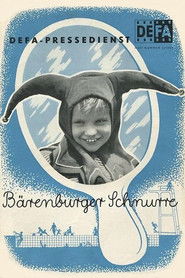
Ralf Kirsten (30 May 1930 – 23 January 1998) was a German film director and screenwriter. He directed 22 films between 1955 and 1986. His 1984 film Where Others Keep Silent was entered into the 14th Moscow International Film Festival. After doing an apprenticeship as an electrician, Kirsten went to university to study German literature and theatre, first at Humboldt University of Berlin, and later the Theater Institute in Weimar. He then went on to study film direction at the Film and TV School of the Academy of Performing Arts in Prague (FAMU) alongside fellow East German Frank Beyer. He graduated in 1956, and began working in television. In 1960, Kirsten joined DEFA, the state-owned film studio of the German Democratic Republic (GDR), where he had previously produced both his FAMU diploma film, Bärenburger Schnurre (English: Bärenburger Farce), and his first feature film, Skimeister von morgen (English: Ski Champions of the Future). His first film for DEFA was Steinzeitballade (English: Stone Age Ballad), an experimental film about rubble women in post-war Berlin, which was well received by critics. In 1961 Kirsten found popular success with Auf der Sonnenseite (English: On the Sunny Side), a comedy about a factory worker who dreams of becoming a star, featuring Manfred Krug in the lead role. Kirsten and Krug would go on to collaborate on several other films. In 1966, Kirsten directed a film adaptation of Der verlorene Engel, a Franz Fuhmann novel about sculptor Ernst Barlach. The film was initially banned, and was only shown in public for the first time in 1970, with a general release the following year. Kirsten made several films about historical figures, including 1984's Where Others Keep Silent, about the early 20th century German communist leader Clara Zetkin. When DEFA closed following the reunification of Germany, Kirsten taught at the Konrad Wolf Film University of Babelsberg. He died in Berlin on 23 January 1998.

30-05-1930

Birthday

Gemini

Zodiac Sign

-

Genres

0

Total Films

Also known as (male)

Leipzig, Germany

Place of Birth

Popular works

Creative career

actor

0 Works

producer

0 Works

director

35 Works

writer

16 Works

other

1 Works

Käthe Kollwitz – Pictures of a Life

Käthe Kollwitz – Pictures of a Life

Kathe Kollwitz was 47 years old, and already a well established artist in Germany and abroad when Peter, her youngest son, volunteered to join the German army in WWI and was killed two weeks later. This painful tragedy changed Kollwitz's life and art forever.
5.0

Year:

1987

Käthe Kollwitz – Pictures of a Life

Käthe Kollwitz – Pictures of a Life

Kathe Kollwitz was 47 years old, and already a well established artist in Germany and abroad when Peter, her youngest son, volunteered to join the German army in WWI and was killed two weeks later. This painful tragedy changed Kollwitz's life and art forever.
5.0

Year:

1987

Wo andere schweigen

Wo andere schweigen

Ten days in the life of socialist politician Clara Zetkin. In August 1932, she is summoned from Archangelskoje near Moskow to open the new legislative session because at seventy-five, she is the oldest representative in the German Reichstag. Although she is ill and almost blind, she see this as her chance to make her voice heard amid the growing Nazi influence in Germany.
0.0

Year:

1984

Wo andere schweigen

Wo andere schweigen

Ten days in the life of socialist politician Clara Zetkin. In August 1932, she is summoned from Archangelskoje near Moskow to open the new legislative session because at seventy-five, she is the oldest representative in the German Reichstag. Although she is ill and almost blind, she see this as her chance to make her voice heard amid the growing Nazi influence in Germany.
0.0

Year:

1984

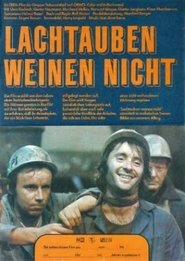
Lachtauben weinen nicht

Lachtauben weinen nicht

The film tells the story of the smelter brigade of a steel mill whose members are connected by a strong comradeship. Among the workers are, for instance, young Rolf, whom everybody just calls "Lachtaube" and who always comes through for his co-workers, or the likable Hubert, who works as a simple smelter again after being dismissed as the head of the steel mill. Then, there is also the stubborn Manfred, who should have become a brigadier long ago because of his experience and his competence, but this privilege is refused to him because Manfred is not a party member. Ironically, it is Manfred who hears by accident about the plans of the mill to close down the old Martin furnaces – and to lay off the smelters. When the other men learn about the plans they enter the barricades for their jobs and force the plant′s management to face the workers′ demands and criticism.
0.0

Year:

1979

Lachtauben weinen nicht

Lachtauben weinen nicht

The film tells the story of the smelter brigade of a steel mill whose members are connected by a strong comradeship. Among the workers are, for instance, young Rolf, whom everybody just calls "Lachtaube" and who always comes through for his co-workers, or the likable Hubert, who works as a simple smelter again after being dismissed as the head of the steel mill. Then, there is also the stubborn Manfred, who should have become a brigadier long ago because of his experience and his competence, but this privilege is refused to him because Manfred is not a party member. Ironically, it is Manfred who hears by accident about the plans of the mill to close down the old Martin furnaces – and to lay off the smelters. When the other men learn about the plans they enter the barricades for their jobs and force the plant′s management to face the workers′ demands and criticism.
0.0

Year:

1979

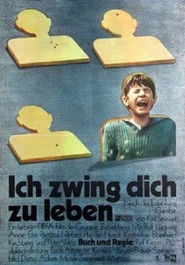
Ich zwing dich zu leben

Ich zwing dich zu leben

Germany at the end of World War II: Teacher Grübler lives in a small village in the Ore Mountains together with his 15-year old son Wolfgang. At school, the dutiful Grübler, a member of the NSDAP, teaches his pupils to volunteer for military service, but when his own son volunteers for the Waffen SS, he is nevertheless shocked and fears for his boy′s life. But Wolfgang starts to hate his father for his doubts: He thinks his father is a coward. In his desperation, Grübler chains and kidnaps his son to hide him in a dugout in the forest until the end of the war. In their shelter, father and son are fighting bitterly but when the Nazis who still believe in the "Endsieg" discover their hideout, Grübler sacrifices his life to save Wolfgang.
0.0

Year:

1978

Ich zwing dich zu leben

Ich zwing dich zu leben

Germany at the end of World War II: Teacher Grübler lives in a small village in the Ore Mountains together with his 15-year old son Wolfgang. At school, the dutiful Grübler, a member of the NSDAP, teaches his pupils to volunteer for military service, but when his own son volunteers for the Waffen SS, he is nevertheless shocked and fears for his boy′s life. But Wolfgang starts to hate his father for his doubts: He thinks his father is a coward. In his desperation, Grübler chains and kidnaps his son to hide him in a dugout in the forest until the end of the war. In their shelter, father and son are fighting bitterly but when the Nazis who still believe in the "Endsieg" discover their hideout, Grübler sacrifices his life to save Wolfgang.
0.0

Year:

1978

Unterm Birnbaum

Unterm Birnbaum

Abel Hradscheck, the owner of an inn in the Oderbruch country, faces financial ruin. For this state of affairs, Ursula, his wife and former actress, is by no means free of blame. She is a "newcomer" to the area and even after eleven years in the area, still a "stranger". A Cracow company announces that a money-collector is on his way to the innkeeper. Mr. Szulski arrives and the debts are settled - with money supposedly stemming from an inheritance. The next day, Szulski departs but according to the maid and the stable-boy, behaves in a very strange manner. Soon afterwards, his carriage is discovered in the Oder River, but there is no trace of the drowned man. Hradscheck's neighbor starts casting suspicion on the innkeeper. The Counselor of Justice, who heads the investigations has the spot under the pear tree dug out. A dead body is exhumed...
5.0

Year:

1973

Unterm Birnbaum

Unterm Birnbaum

Abel Hradscheck, the owner of an inn in the Oderbruch country, faces financial ruin. For this state of affairs, Ursula, his wife and former actress, is by no means free of blame. She is a "newcomer" to the area and even after eleven years in the area, still a "stranger". A Cracow company announces that a money-collector is on his way to the innkeeper. Mr. Szulski arrives and the debts are settled - with money supposedly stemming from an inheritance. The next day, Szulski departs but according to the maid and the stable-boy, behaves in a very strange manner. Soon afterwards, his carriage is discovered in the Oder River, but there is no trace of the drowned man. Hradscheck's neighbor starts casting suspicion on the innkeeper. The Counselor of Justice, who heads the investigations has the spot under the pear tree dug out. A dead body is exhumed...
5.0

Year:

1973

The Devil's Elixirs

The Devil's Elixirs

Young seminary student Franziskus (Benjamin Besson) has been ceremonially ordained. He wants to escape the harshness and injustice of the world and devote himself to the service of God in the quiet seclusion of a monastery. He is also hoping to forget the beautiful lady Aurelie (Jaroslava Schallerová), whose life he saved in a flooded brook and with whom he spent an amorous night. He knows that her father would never allow her to marry him. But the devil dressed in a monk's habit and under the name Viktorin (Andrzej Kopiczynski) intervenes in Franziskus's destiny and attempts to lead him astray. To do so he first uses the diabolical elixirs kept at the monastery as a rare relic. When the young monk gets expelled from the monastery, Viktorin prepares another trap with the help of Aurelie's stepmother Euphemie (Milena Dvorská).
5.0

Year:

1973

The Lost Angel

The Lost Angel

August 24, 1937: a day in the life of expressionist sculptor and author Ernst Barlach (Fred Düren). Barlach lives in the small town of Güstrow, keeping to himself and wanting to steer clear of politics. On this day he learns that the Nazis have dragged his famous 1927 sculpture The Hovering Angel out of the Güstrow Cathedral. Barlach begins to reflect on his life of “inner emigration” and on his work.
6.5

Year:

1971

The Lost Angel

The Lost Angel

August 24, 1937: a day in the life of expressionist sculptor and author Ernst Barlach (Fred Düren). Barlach lives in the small town of Güstrow, keeping to himself and wanting to steer clear of politics. On this day he learns that the Nazis have dragged his famous 1927 sculpture The Hovering Angel out of the Güstrow Cathedral. Barlach begins to reflect on his life of “inner emigration” and on his work.
6.5

Year:

1971

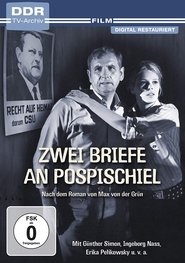
Zwei Briefe an Pospischiel

Zwei Briefe an Pospischiel

East German television film.
0.0

Year:

1970

Zwei Briefe an Pospischiel

Zwei Briefe an Pospischiel

East German television film.
0.0

Year:

1970

Netzwerk

Netzwerk

Film by Ralf Kirsten.
0.0

Year:

1970

Netzwerk

Netzwerk

Film by Ralf Kirsten.
0.0

Year:

1970

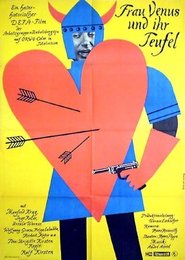
Frau Venus und ihr Teufel

Frau Venus und ihr Teufel

Hans Müller finds himself on a trip in Thüringen, accompanied by his loving female friend, Moritz. Hans doesn't understand much about trust, which constantly leads to problems between the two of them. During one of their fights, Lady Venus intervenes and sends the young man back to the Middle Ages - so he can learn the true meaning of love. Disguised as Tannhäuser, he has to stand his ground against a horde of minstrels. At a singing competition, he blunders, without the support of Moritz, who had also been thrown back into the 13th century. And with the help of Frau Venus, his adventure will surely turn out even worse...
6.0

Year:

1967

Frau Venus und ihr Teufel

Frau Venus und ihr Teufel

Hans Müller finds himself on a trip in Thüringen, accompanied by his loving female friend, Moritz. Hans doesn't understand much about trust, which constantly leads to problems between the two of them. During one of their fights, Lady Venus intervenes and sends the young man back to the Middle Ages - so he can learn the true meaning of love. Disguised as Tannhäuser, he has to stand his ground against a horde of minstrels. At a singing competition, he blunders, without the support of Moritz, who had also been thrown back into the 13th century. And with the help of Frau Venus, his adventure will surely turn out even worse...
6.0

Year:

1967

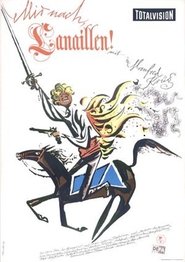
Mir nach, Canaillen

Mir nach, Canaillen

A wild story set in eighteenth-century Prussia. Alexander can do everything that a real devil of a fellow must be able to do: ride, shoot, love and devise clever plots. As a result, he is able to climb the ladder from herder to chamber master, where he makes a fool of the feudal lords.
6.4

Year:

1964

Mir nach, Canaillen

Mir nach, Canaillen

A wild story set in eighteenth-century Prussia. Alexander can do everything that a real devil of a fellow must be able to do: ride, shoot, love and devise clever plots. As a result, he is able to climb the ladder from herder to chamber master, where he makes a fool of the feudal lords.
6.4

Year:

1964

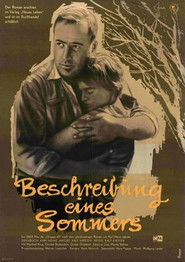
Chronicle of a Summer

Chronicle of a Summer

In the late fifties a large industrial complex was built near Schwedt, in the GDR. This low budget film tells about the voluntary participation of the brigades of the Freie Deutsche Jugend in the building up …
6.0

Year:

1963

Chronicle of a Summer

Chronicle of a Summer

In the late fifties a large industrial complex was built near Schwedt, in the GDR. This low budget film tells about the voluntary participation of the brigades of the Freie Deutsche Jugend in the building up …
6.0

Year:

1963

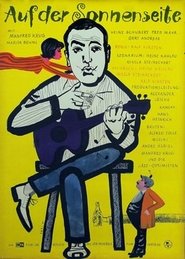
Auf der Sonnenseite

Auf der Sonnenseite

The story of the steel melter Martin Hoff, whose factory delegates him to a drama school, corresponds to the real life of the actor Manfred Krug. Like his (film) hero, Krug works as a steel melter, does artwork, sings and acts, and is sent to drama school. Like his hero, who behaves anarchically and conspicuously, Krug is soon expelled from school.
0.0

Year:

1962

Auf der Sonnenseite

Auf der Sonnenseite

The story of the steel melter Martin Hoff, whose factory delegates him to a drama school, corresponds to the real life of the actor Manfred Krug. Like his (film) hero, Krug works as a steel melter, does artwork, sings and acts, and is sent to drama school. Like his hero, who behaves anarchically and conspicuously, Krug is soon expelled from school.
0.0

Year:

1962

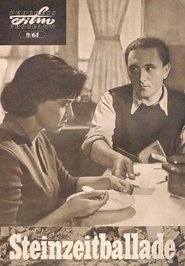
Steinzeitballade

Steinzeitballade

0.0

Year:

1961

Steinzeitballade

Steinzeitballade

0.0

Year:

1961

Meetings In The Dark

Meetings In The Dark

A pianist from Poland visits a town in West Germany and starts to remember details about her life during the war.
0.0

Year:

1960

Bahrenburg Stories

Bahrenburg Stories

A story about a group of children in German town of Bahrenburg who are trying to build themselves a swimming pool.
0.0

Year:

1957

Bahrenburg Stories

Bahrenburg Stories

A story about a group of children in German town of Bahrenburg who are trying to build themselves a swimming pool.
0.0

Year:

1957

Fools Among Us

Fools Among Us

0.0

Year:

1955

Fools Among Us

Fools Among Us

0.0

Year:

1955