

Rima Yamazaki
ProducerDirector
-
Birthday
-
Zodiac Sign
-
Genres
0
Total Films
Also known as (female)
Place of Birth
-
Birthday
-
Zodiac Sign
-
Genres
0
Total Films
-
Also Known As (female)
-
Place of Birth
-
Birthday
-
Zodiac Sign
-
Genres
0
Total Films
Also known as (female)
Place of Birth
-
Birthday
-
Zodiac Sign
-
Genres
0
Total Films
-
Also Known As (female)
-
Place of Birth
actor
0 Works
producer
6 Works
director
14 Works
writer
0 Works
other
6 Works

The Artist's Studio: Carroll Dunham
In an effort to work without the distractions of the city, artist Carroll Dunham moved his studio from Manhattan to a small village in Connecticut, not far from where he grew up. Finding himself to be more at peace in the calm, rural setting, Dunham feels the freedom to create wildly bold and visually stimulating work, painting his way through expression and sexuality. Continuously holding a mirror up to society, Dunham aims to examine the ways in which we interpret images and ideas surrounding the physical human form and our contrived notions of appropriate depictions of it through art and media. Dunham's large canvas works are flooded with vivid color and striking imagery that grabs the attention of its audience and encourages a reconsideration of form and gaze. "The Artist's Studio: Carroll Dunham" documents a visit with critic Roberta Smith as she observes his new captivating work: a series entitled "In the Flowers" and a large canvas "The Beach".Year:
2014

Greg Lynn: Archaeologist of the Digital
Greg Lynn, one of the leading figures in computer-aided architectural design, visits the first in a series of exhibitions initiated by the Canadian Centre for Architecture for which he is the curator. The exhibitions, which will travel to the Yale School of Architecture Gallery, are meant to explore the role of digital technologies in the design process since its beginnings. The first exhibition, entitled "Archaeology of the Digital", features four individuals who are pioneers in applying new technologies to architectural design: Peter Eisenman, Frank Gehry, Chuck Hoberman, and Shoei Yoh. At the exhibition Lynn is joined by three of the four practitioners: Eisenman, Gehry and Hoberman, who each explain their path to the digital at the time.Year:
2014

Lee Ufan: Marking Infinity
"Marking Infinity", Lee Ufan's recent retrospective exhibition at the Guggenheim charts the artist's creation of a visual, conceptual, and theoretical language that has radically expanded the possibilities for sculpture and painting over the past forty years. Deeply versed in modern philosophy, Lee is also an influential writer and is recognized as the key theorist of Mono-ha, an anti-formalist, materials-based art movement that developed in Tokyo in the late 1960s. Active internationally over the last four decades, Lee is acclaimed for an innovative body of Post-Minimalist work that promotes process and the experiential engagement of viewer and site.Year:
2012

The Artist's Studio: E.W. NAY
A visit to the studio of Ernst Wilhelm Nay, a remarkable, if somewhat solitary German artist, who established his status at age 30, just before the advent of the Nazi takeover. Nay belonged to the persecuted generation of German artists who, just as their work began to blossom, were forced out by Hitler's art dictatorship. Labeling the art "decadent", the Hitler regime called for the removal of Nay's paintings from museum collections and the artist was banned from showcasing his new work. After the end of World War II, Nay returned to painting and worked tirelessly to make up for lost time, producing new pieces year after year and quickly becoming one of Germany's leading painters. Ernst Wilhelm Nay died in 1968 at the age of 65 yet his studio, still intact, offers a retrospective of his work starting from the 1920s. His wife, Elisabeth Nay walks us through the studio, offering insights into her husband's process and creative intent.Year:
2012
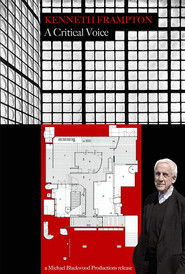
Kenneth Frampton: A Critical Voice
Critic Kenneth Frampton is a masterful commentator on the architecture of our time. At the start of his long-spanning career Frampton worked as an architect in London before settling into his writing and teaching, which mainly took place at Columbia University. Over the past fifty years Frampton has certified himself as a prolific and influential contributor towards a progressive interpretation of the role of architecture in modern society. In "Kenneth Frampton: A Critical Voice", architect Stan Allen interviews the renowned critic and questions him about his architectural contemporaries, notable past projects, and published writings.Year:
2012
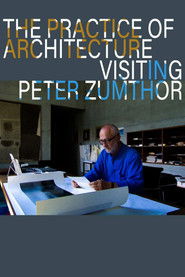
The Practice of Architecture: Visiting Peter Zumthor
Architect Peter Zumthor lives and works in the remote village of Haldenstein in the Swiss Canton of Graubünden where he can keep the politics of architecture at a comfortable distance as he enjoys status and praise for his unique modernist buildings. In "The Practice of Architecture", critic Kenneth Frampton visits Zumthor at his studio where the two are surrounded by models, designs and plans for current and future projects throughout Europe and the United States. Frampton questions the renowned architecture on the motives and methods behind some of his most famous works, including his Zinc-Mine-Museum in Norway and the highly acclaimed Therme Vals, a stunning hotel and spa built over the thermal springs in Graubünden. While walking us through his career, Zumthor discusses his penchant for minimalism, the importance of landscape, light and material, and the architectural theory behind his stunningly precise styleYear:
2012