Аватар персоны Robert Badinter

Robert Badinter

Actor
Robert Badinter (born 30 March 1928) is a French lawyer, politician and author who enacted the abolition of the death penalty in France in 1981, while serving as Minister of Justice under François Mitterrand. He has also served in high-level appointed positions with national and international bodies working for justice and the rule of law. Robert Badinter was born 30 March 1928 in Paris to Simon Badinter and Charlotte Rosenberg. His Bessarabian Jewish family had immigrated to France in 1921 to escape pogroms. During World War II, after the Nazi occupation of Paris, his family sought refuge in Lyon. His father was captured in the 1943 Rue Sainte-Catherine Roundup and deported with other Jews to the Sobibor extermination camp, where he died shortly thereafter. Badinter graduated in law from Paris Law Faculty of the University of Paris. He then went to the United States to continue his studies at Columbia University in New York City where he got his MA. He continued his studies again at the Sorbonne until 1954. In 1965, Badinter was appointed as a professor at University of Sorbonne. He continued as an Emeritus professor until 1996. Badinter started his career in Paris in 1951, as a lawyer in a joint work with Henri Torrès. In 1965, along with Jean-Denis Bredin, he founded the law firm Badinter, Bredin et partenaires, (now Bredin Prat) where he practiced law until 1981. Badinter's activism against the death penalty began after Roger Bontems's execution on 28 November 1972. Along with Claude Buffet, Bontems had taken a prison guard and a nurse hostage during the 1971 revolt in Clairvaux Prison. While the police were storming the building, Buffet slit the hostages' throats. Badinter served as defense counsel for Bontems. Although it was established during the trial that Buffet alone was the murderer, the jury sentenced both men to death. Badinter was outraged by unfair impositions of the death penalty and, after witnessing the executions, further dedicated himself to the abolition of the death penalty. In this context, he agreed to defend Patrick Henry. In January 1976, 8-year-old Philipe Bertrand was kidnapped. Henry was soon picked up as a suspect, but released because of a lack of proof. He gave interviews on television, saying that those who kidnapped and killed children deserved death. A few days later, he was again arrested, and shown Bertrand's corpse hidden in a blanket under his bed. Badinter and Robert Bocquillon defended Henry, making the case not about Henry's guilt, but against applying the death penalty. Henry was sentenced to life imprisonment and paroled in 2001. ... Source: Article "Robert Badinter" from Wikipedia in English, licensed under CC-BY-SA 3.0.

30-03-1928

Birthday

Aries

Zodiac Sign

-

Genres

12

Total Films

Also known as (male)

Paris, France

Place of Birth

Popular works

Creative career

actor

12 Works

producer

0 Works

director

1 Works

writer

1 Works

other

0 Works

Robert Badinter, la vie avant tout

Robert Badinter, la vie avant tout

In September 2021, France will celebrate the 40th anniversary of the abolition of the death penalty. A decision so strong that it will symbolize, in itself, the first seven years of François Mitterrand. For Robert Badinter, it was the fight of a lifetime, rooted in a personal history marked by the rejection of injustice, which began after the arrest of his father by the Gestapo in 1943. A story told through archives and by his family and closest friends.
10.0

Year:

2021

10 mai 1981 : Changer la vie ?

10 mai 1981 : Changer la vie ?

Fourty years ago, in May 1981, with François Mitterrand's election, some people were letting themselves dream about a better life while others were predicting the coming of soviet tanks upon the Champs-Élysées. If we gladly remember the turning point of austerity in 83, there were also the wage rises, the fifth week of paid leave, the abolition of death penalty, the decriminalisation of homosexuality, or the advent of independent radio stations. Rare archives and accounts by those who were at the heart of this story give an overview of it and shed light on lesser-known aspects.
8.0

Year:

2021

The Spark: The Origins of Pride

The Spark: The Origins of Pride

A story of the LGBT struggle from the 1960s to the present, after the Stonewall riot sparked the militant action in New York that was to spread around the world. From San Francisco to Paris via Amsterdam, between the first Gay Pride, the election of Harvey Milk, the French "decriminalization", the AIDS epidemic and the first homosexual marriages, these few decades of struggle are embodied through numerous testimonies of actors and actresses of this revolution rainbow.
6.1

Year:

2019

Ministre ou rien

Ministre ou rien

This is the unlikely story of 21 ministers and prime ministers who have crossed or are crossing the french Fifth Republic today. Twenty-one politicians who, from one day to the next, find themselves at the head of a ministry by the grace of a President of the Republic and his Prime Minister. The formation of the government, conflicts of attribution, reshuffles, rumours of appointments, evictions, casting errors: it is all the capricious backstage of the games of power examined here under the angle of confidence and which sheds light on the prestigious but unknown function of minister. An original and instructive political saga on the reality of those who hold or have held this prestigious position.
0.0

Year:

2014

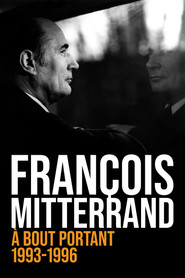
François Mitterrand, à bout portant : 1993-1996

François Mitterrand, à bout portant : 1993-1996

"What could be more unsettling than a man close to death whose profound arrogance drives him relentlessly to hang onto both his power and his writing, to the bitter end?" In the twilight of his second seven-year term, François Mitterrand was alone. Ravaged by illness and abandoned by a large majority of the Socialist Party, who would not forgive him for the disastrous outcome of the March 1993 elections, the Head of State was preparing to tackle a second round of cohabitation with the right wing. However a series of unexpected tragedies and revelations would arise, casting a shadow over the end of his reign…
9.0

Year:

2011

My Enemy's Enemy

My Enemy's Enemy

A look at the history of one-time Gestapo commander Klaus Barbie, infamously known as "The Butcher of Lyon." This documentary's main focus will be on Barbie's post-war activities, in which he became a counter-intelligence agent who worked for the same countries that pursued him during WWII.
7.1

Year:

2007

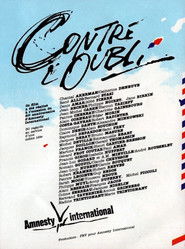
Against Oblivion

Against Oblivion

Contre l'Oubli (Against Oblivion) is a compilation of 30 French filmmakers, Alain Resnais and Jean Luc Godard among them, who use film to make a plea on behalf of a political prisoner. Jean Luc Godard and Anne Marie Mieville's film concerns the plight of Thomas Wanggai, West Papuan activist who has since died in prison. The short films were commissioned by Amnesty International.
6.5

Year:

1991